
Application for steel construction, structural work and metalworking
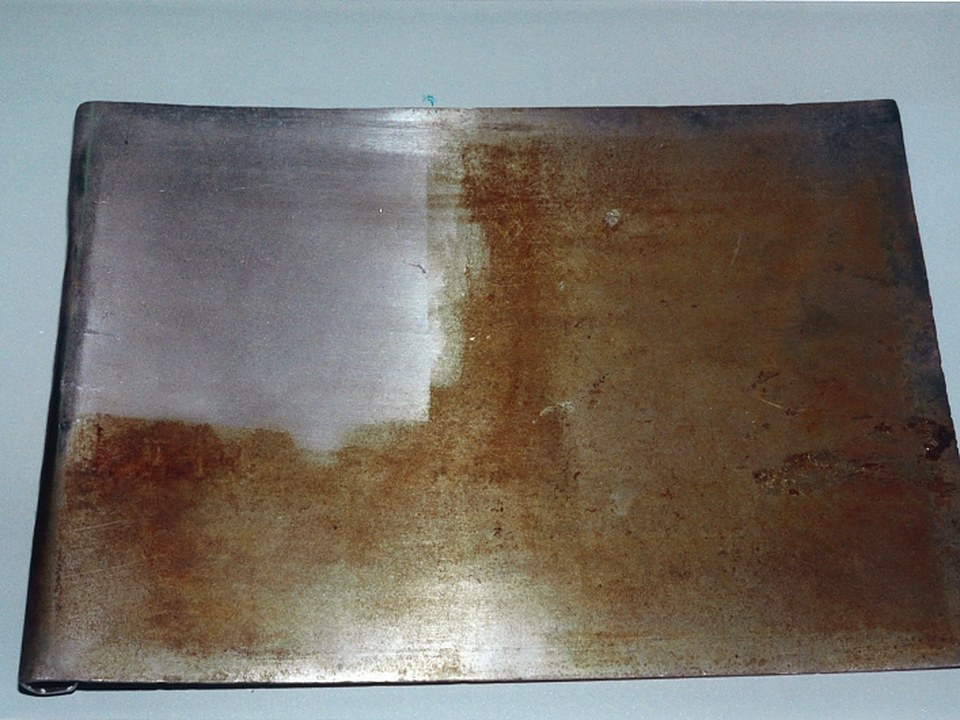
Mill scale removal and derusting by blasting
Mill scale removal comes before any coating on hot-rolled steel: mill scale is the hard layer of iron oxide that forms during hot rolling, and it has to come off together with the rust. Phibo supplies the blast cabinets, blast rooms, blast pots, dust-free blasting systems and blasting media for the job.
- From blast cabinet to custom blast room
- Also on site, dust-free in a closed circuit
- Steel grit, steel shot and aluminium oxide from our own warehouse
- Surface technology specialist since 1988
Methods compared
Four ways to remove mill scale and rust
For one spot, the grinder is enough. If a whole part or a whole structure has to be ready for coating, you blast.
| Method | Advantage | Drawback |
|---|---|---|
| Grinding and brushing | Little equipment needed, for one spot or a weld seam. | A lot of manual work, hard to keep even on large surfaces. |
| Acid pickling | Also reaches places that a blast stream cannot. | Works with acids and produces chemical waste. No roughness is added. |
| Dry blasting in a cabinet or blast room | Removes mill scale, rust and paint layers and sets a rougher profile for the next coat in the same pass. | Greasy parts are degreased first. The blasting space works with extraction and filtration. |
| Dust-free blasting on site | The blast head projects the abrasive and extracts it again at the same time. You work without masking and leave the floor clean. | The smaller models are for local work. For large surfaces, you choose a larger model. |
Swipe the table to the left to see all columns.
How it works
From hot rolled steel to a surface ready for coating
A coating adheres to the mill scale, the rust or the old paint, not to the steel. Blasting removes those layers in one pass and gives the steel a roughness that the new coating adheres to.
Degrease
Degrease greasy parts first, because dry blasting does not remove oil and grease.
Blast
An angular grain breaks up the mill scale and the rust and sets a rougher profile that the coating adheres to.
Blow off
After blasting you blow the dust and the abrasive off the part.
Coat
Then the part goes on to the paint or powder coating line. More on surface preparation for coating.
The installations
Which installation suits your parts
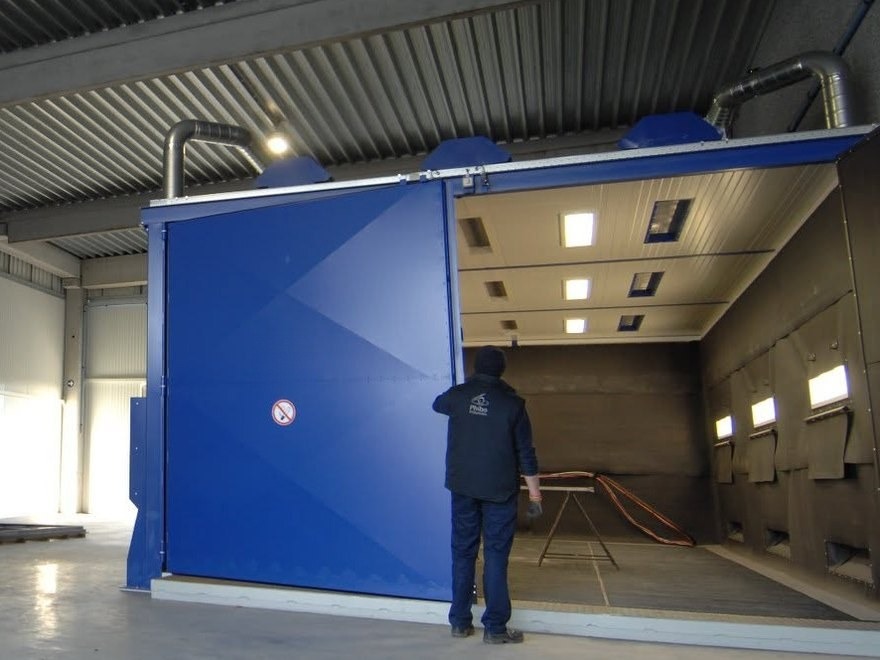
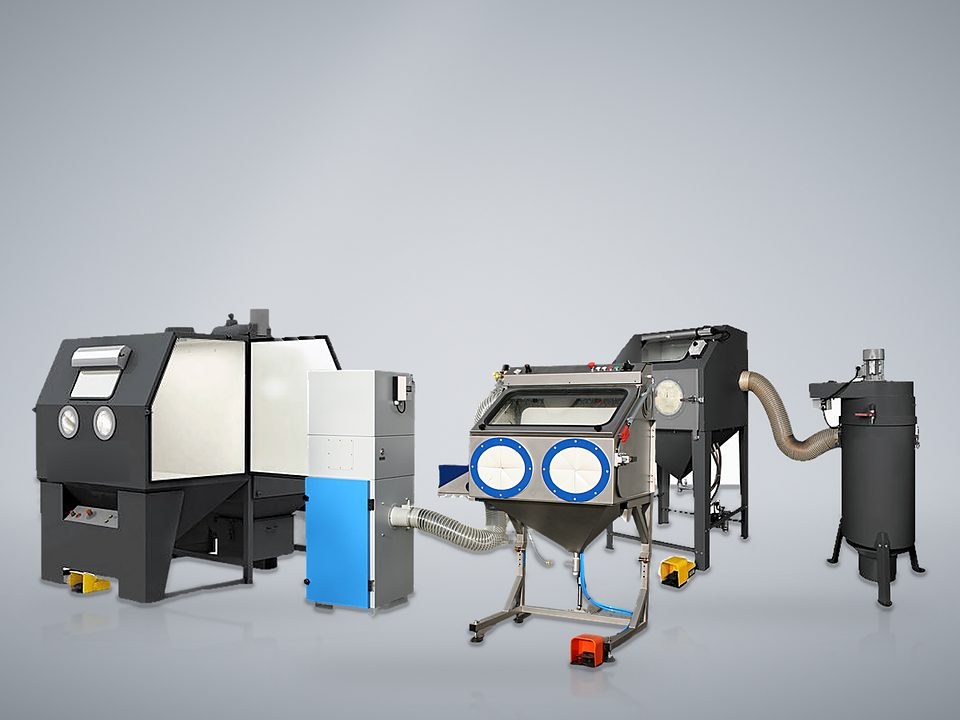
Smaller parts go into a cabinet, structural parts into a blast room. On site you blast with a blast pot, or dust-free in a closed circuit. Series that keep coming are blasted automatically.
Blast cabinets
PRO-impact and ONE-impact, eleven sizes, in suction or pressure blasting.
View the blast cabinets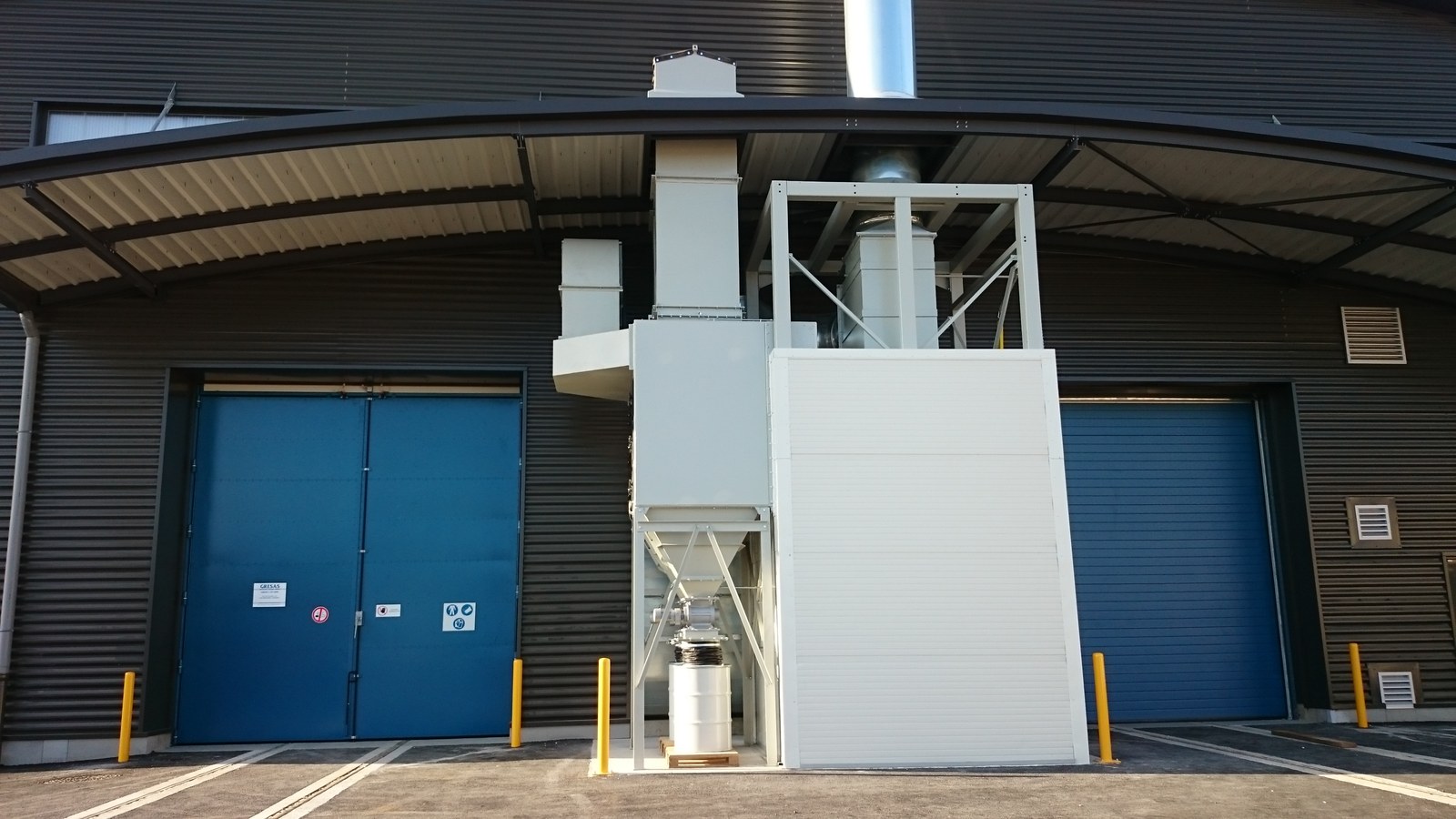
Blast room and walk-in cabins
For structural parts, chassis and welded steel structures, the operator walks into the blasting space.
View the blast room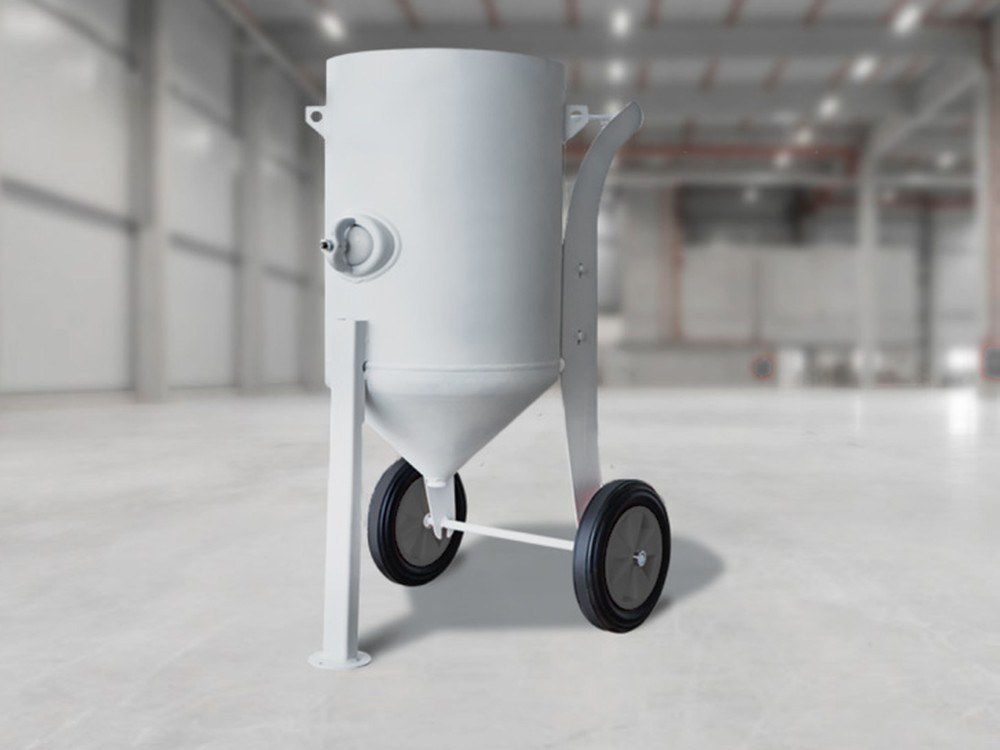
Blast pots
Three series from 20 to 300 litres, on their own in the workshop, on site or built into a blast room.
View the blast pots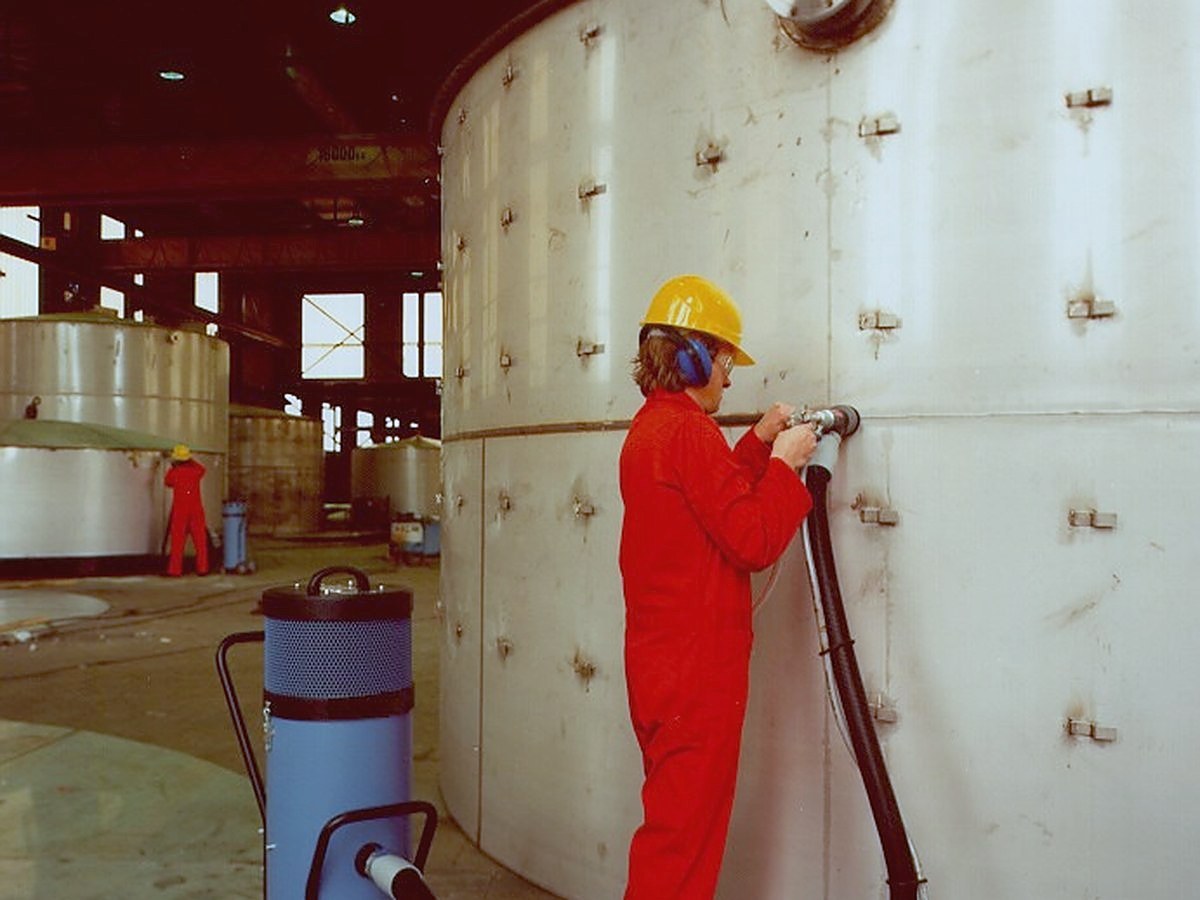
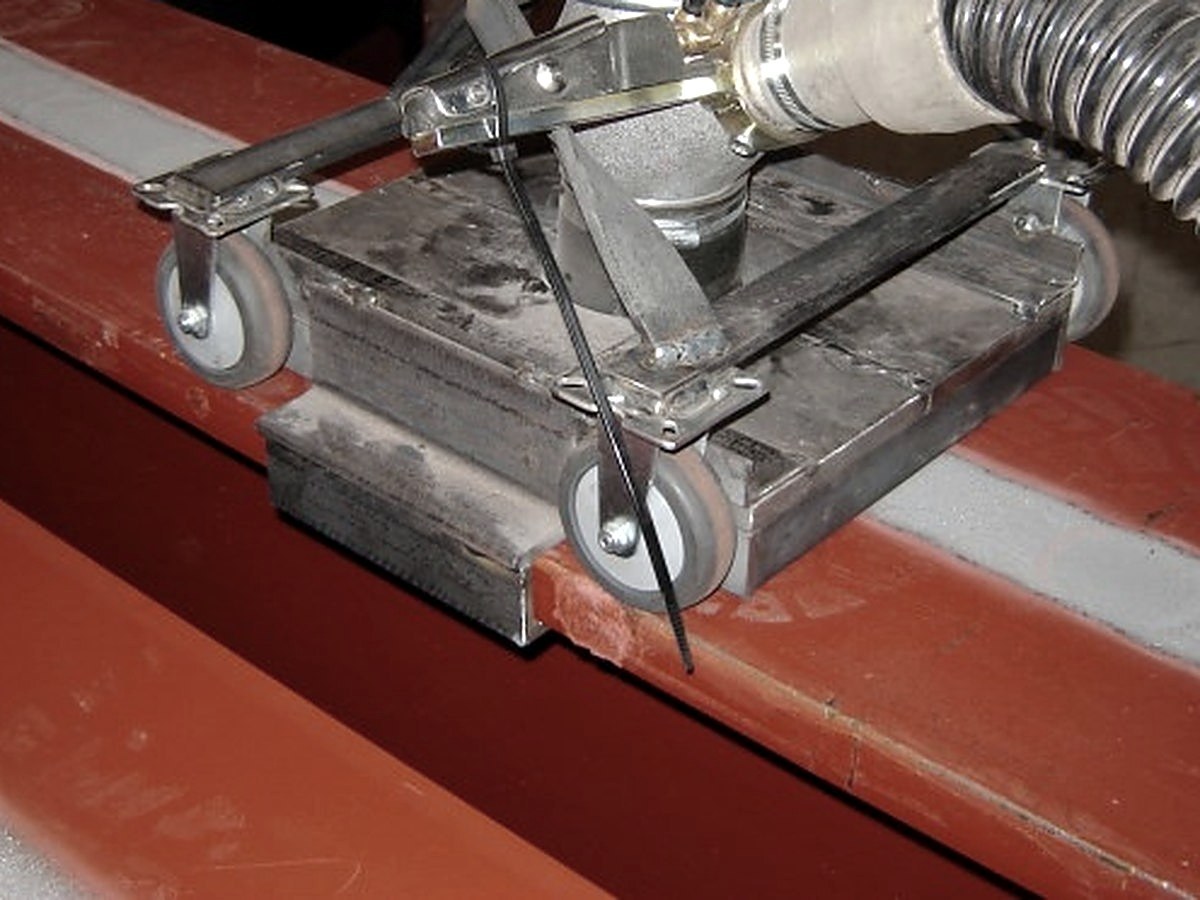
Mobile vacuum blasting
The VACU-impact line blasts and extracts at the same time, in five sizes from 9 to 48 litres.
View vacuum blastingThe blasting medium
Which blasting medium for mill scale and rust
To roughen the surface and remove rust, choose an angular medium such as steel grit or aluminium oxide. Do not go coarser than needed, because a surface that is too rough uses more paint or coating.
Steel grit
Angular, for castings, profiles and steel structures. It gives a rough profile. See steel grit.
Steel shot
Round grains of hardened steel, for shot peening and cleaning. If a coating goes on, choose an angular medium such as steel grit.
Aluminium oxide
Works aggressively on rust and mill scale. White aluminium oxide is iron-free and so also suitable for stainless steel. See brown aluminium oxide.
Not sure which medium fits? Send a photo of your part and tell us which coating goes on it. We will tell you which medium you need.
References
They already work with Phibo
A selection of Phibo customers in the metals and steel industry.




Frequently asked questions
Questions about mill scale and rust removal
What is mill scale?
Mill scale is the hard, dark layer of iron oxide that forms on steel during hot rolling. It is smooth and covers the steel, so a coating adheres poorly to it.
How do I remove mill scale from steel?
By blasting with an angular medium such as steel grit or aluminium oxide. It breaks up the mill scale and, in the same pass, gives the roughness profile that a coating adheres to. Smaller parts are blasted in a blast cabinet, structural parts in a blast room.
Can I remove mill scale and rust on site, without dust?
Yes. A dust-free blasting system sprays the abrasive and extracts it again straight away, in a closed circuit. No masking is needed.
Can I use steel grit on stainless steel?
No. Steel shot and steel grit contain iron. Iron particles stay behind in the surface, and they rust later. On stainless steel, choose an iron-free medium such as aluminium oxide or glass beads.
Do I have to degrease before blasting?
Yes. With dry blasting you degrease greasy parts first, for example in a parts washer.
Who supplies blasting equipment to remove mill scale and rust in Europe?
Phibo Industries in Ronse, Belgium, a surface technology specialist since 1988, supplies blast cabinets, blast rooms, blast pots and vacuum blasting systems, plus the blasting media from its own warehouse. Customers in the metals and steel industry include ArcelorMittal and Bekaert.
Heavy rust removal: grinding or blasting?
Blast it if a whole part or a whole structure has to be ready for coating; for a single spot or a weld seam, a grinder is enough. Blasting removes mill scale, rust and old paint in one pass and gives the roughness profile that the coating adheres to straight away.
Consumables
Get the blasting media from Phibo too
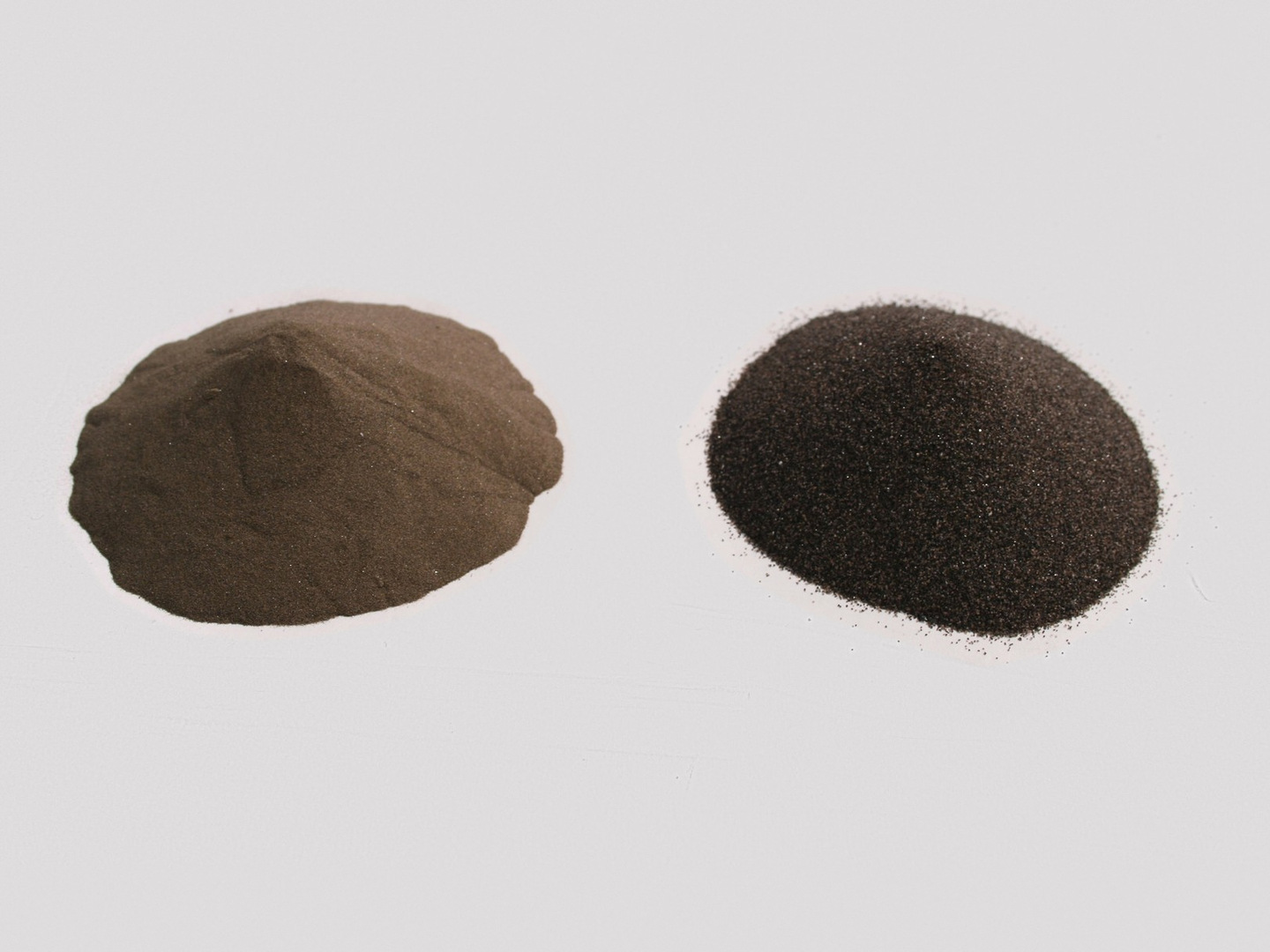
Phibo supplies steel grit, steel shot, aluminium oxide and glass beads from its own warehouse, plus the spare parts and the protective equipment for the blaster. All blasting media at a glance.
Your installation keeps running
Maintenance, repair and spare parts, directly from Phibo, by our own technicians.
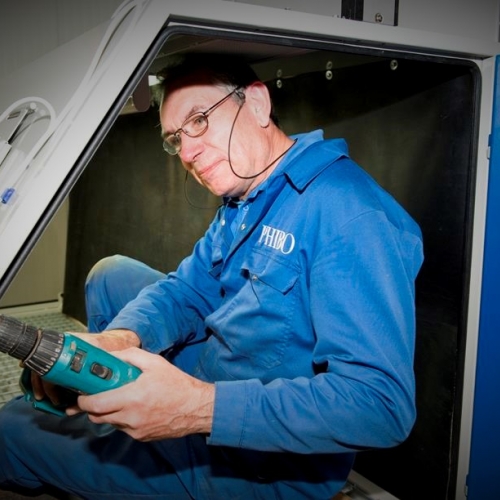
Maintenance
Preventive maintenance in our workshop or at your site. After every service your settings and consumption are reviewed.
More about this service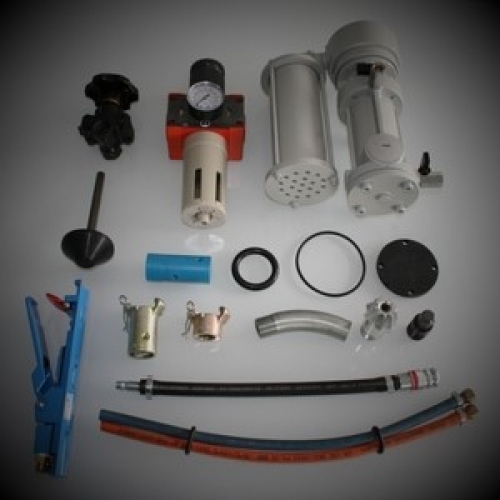
Spare parts
Blast pots, hoses, guns, rubber flaps and filter cartridges from stock. Non-standard parts we make ourselves.
More about this service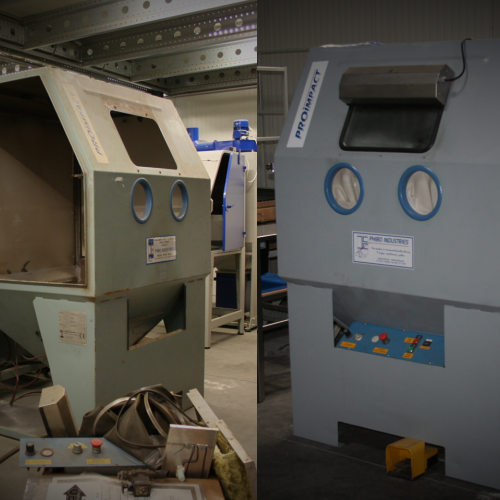
Revision and retrofitting
Modernise an existing installation or convert it to a new process. Revised second-hand installations too.
More about this service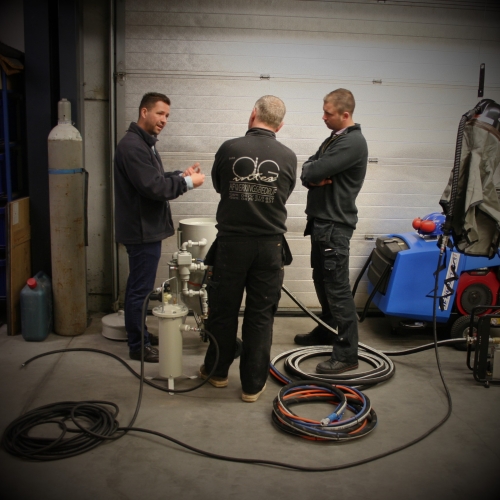
Training
Hands-on training at commissioning, standard with SublimotionProcess® and on request with the other installations. When staff change, we repeat it to suit your team.
More about this serviceRequest
We call you and go through your application
Fill in what you know below, and we go through the rest together on the phone.
- Which parts you blast, and whether they are greasy
- The dimensions and weight of the largest part
- In the workshop or on site
- Which coating goes on: paint, powder or another