Application for maintenance workshops, overhaul and production
Metal degreasing and industrial parts cleaning
Metal degreasing is removing oil, grease, carbon deposits and other dirt from components without attacking the base material, so you can measure, assemble or reuse them. Phibo supplies parts washers, wet blasting for degreasing and dry blasting for rust and paint, with a selection guide by part.
- Nine types of parts washer, from manual sink to conveyor washer
- Wet blasting degreases and cleans in one treatment
- Closed circuit with filtration
- Surface technology specialist since 1988
The result
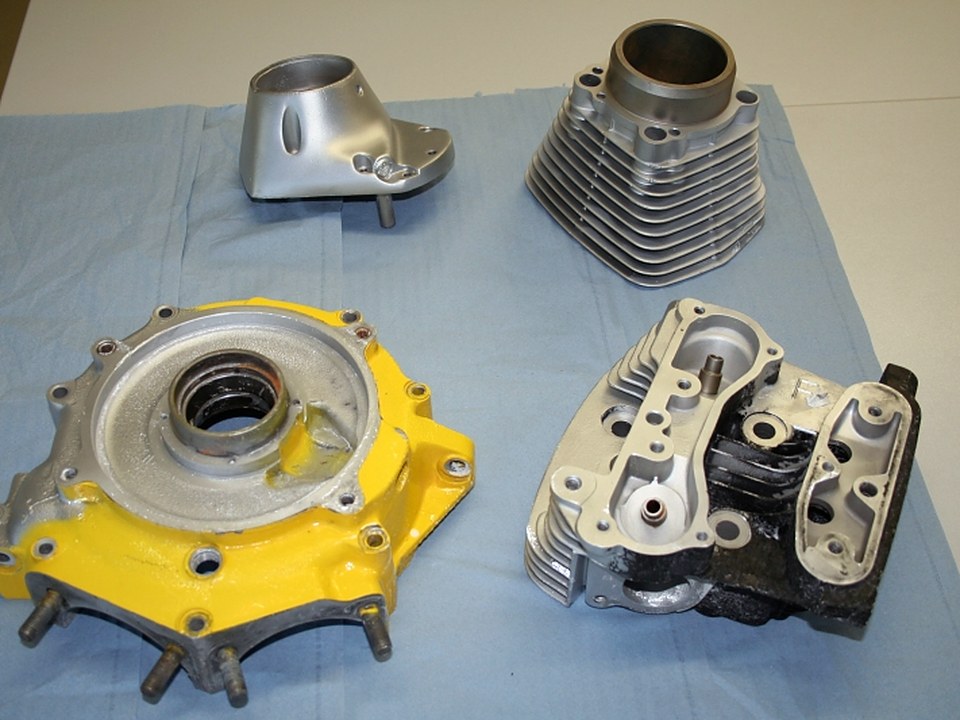
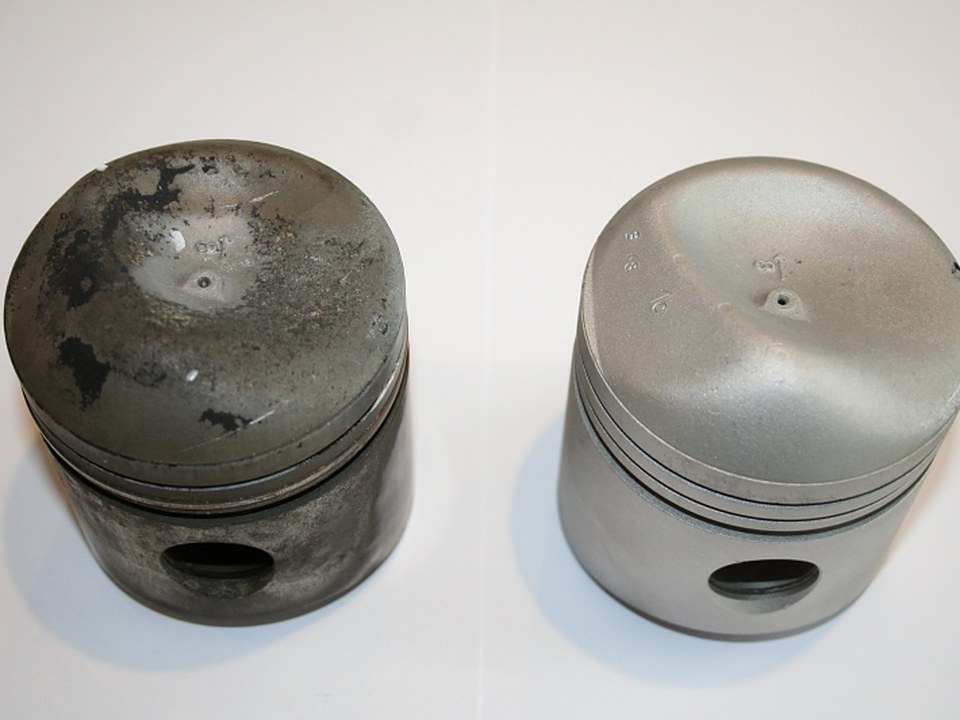
Cleaned next to fouled
Only once a part is clean can your technician see its real condition. On that basis they decide whether to reuse it or replace it.
How it works
Four things decide how you clean a part
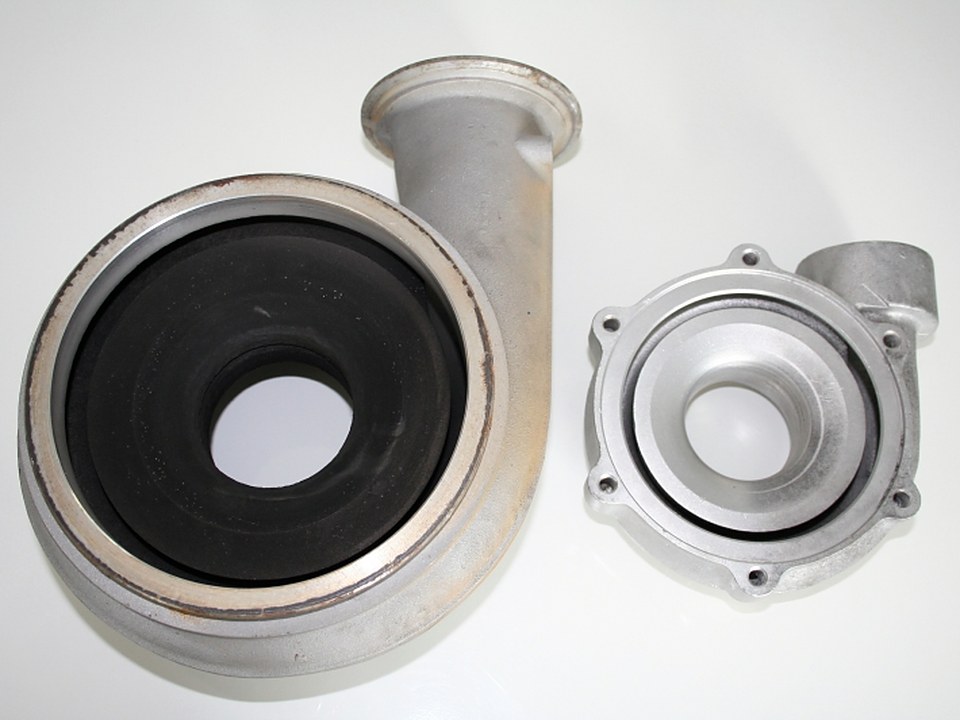
Industrial parts cleaning is done by spraying, by immersion, with ultrasonics, with a solvent or by blasting. Which technique suits your parts depends on four things.
The shape of the part
Blind holes, threads and cavities need a technique that reaches inside, such as ultrasonic cleaning or immersion.
The material
Steel, cast iron, aluminium, copper, brass or plastic. For aluminium, for example, you choose a non-aggressive cleaner.
The type of contamination
Oil and grease, chips, carbon deposits, resins, adhesives, paint or corrosion. The more firmly the dirt sticks, the more the technique matters.
The finish you need
Is a clean part enough, or must it also come out dry and spot-free for assembly, coating or bonding? In that case you rinse and dry in the same cycle.
Selection guide
Which installation suits your part?
Find the installation that fits your part and its contamination, then click through for the models and their full specifications.
| Your part and contamination | Installation | Why |
|---|---|---|
| Small to medium parts with oil, grease or chips, up to 450 kg | Top loading parts washer | You load from above into a rotating basket. Spray nozzles spray heated water with detergent onto every side. |
| Heavy or bulky parts up to 850 kg, loaded by crane or forklift | Front loading parts washer | The basket rolls out through the front door. The machine cleans fully automatically. |
| Local, stubborn contamination on complex or valuable parts | High-pressure parts washer cabinet | The operator sprays exactly where needed with heated water under pressure, inside an enclosed cabinet. |
| Blind holes, threads and fine channels, carbon deposits or polishing paste | Ultrasonic cleaner | Ultrasonic waves loosen the dirt, even in cavities that no spray nozzle reaches. |
| Cleaning as a process step before assembly, coating or bonding | Washing, rinsing and drying machine | Washing, rinsing and drying in one cycle. No detergent is left on the part. |
| Assemblies with cavities, or full baskets of small parts, up to 1000 kg | Immersion parts washer | The load is fully submerged and moved in the bath, so the fluid reaches everywhere. |
| Continuous flow: crates, pallets, bolts and nuts | Conveyor or crate washer | Washing, rinsing and drying in one pass, at the pace of your line. |
| Heavy oils, waxes and resins, or parts that must come out absolutely dry and spot-free | Solvent cleaning or vapour degreasing | A solvent instead of water, always in a closed system. |
| Small everyday parts, by hand | Manual parts washer | A heated cleaning fluid that runs through the brush, in a stainless steel sink. |
| Degreasing and cleaning together, even with paint, corrosion or carbon, without dust | Wet blasting | Water and abrasive, atomised by compressed air. Degreasing, cleaning and finishing in one treatment. |
| Removing rust, mill scale or paint before a new coat | Dry blasting | Dry abrasive that sets a rougher profile for the next coat. The part comes out dry. More on mill scale and rust removal. |
Swipe the table to the left to see all columns.
The weights are the upper limits of the standard range. For non-standard dimensions or a specific process, a custom build is possible.
Washing or blasting
Three ways to degrease a part
Phibo supplies parts washers, wet blasting installations and dry blasting installations. The difference lies in what happens to the surface of your part.
Washing in a parts washer
Heated water and detergent, sprayed, by immersion or with ultrasonics. The dirt comes off without the surface being worked, and the bath is filtered and reused.
Wet blasting
Oil, grease and carbon deposits, resins, adhesives, paint and corrosion come off without attacking the base material. No dust. The part is then rinsed with fresh water.
Dry blasting
Removes rust, mill scale and paint layers and sets a rougher profile for the next coat. The cabinet works with extraction and filtration.
Not sure which technique fits? Send a photo of a dirty part. We'll tell you which installation is right for you.
References
They already work with Phibo
A selection of Phibo customers, including companies in automotive and transport and aerospace.






The installations
Installations for cleaning parts
Nine types of industrial parts washer, plus wet and dry blasting installations.
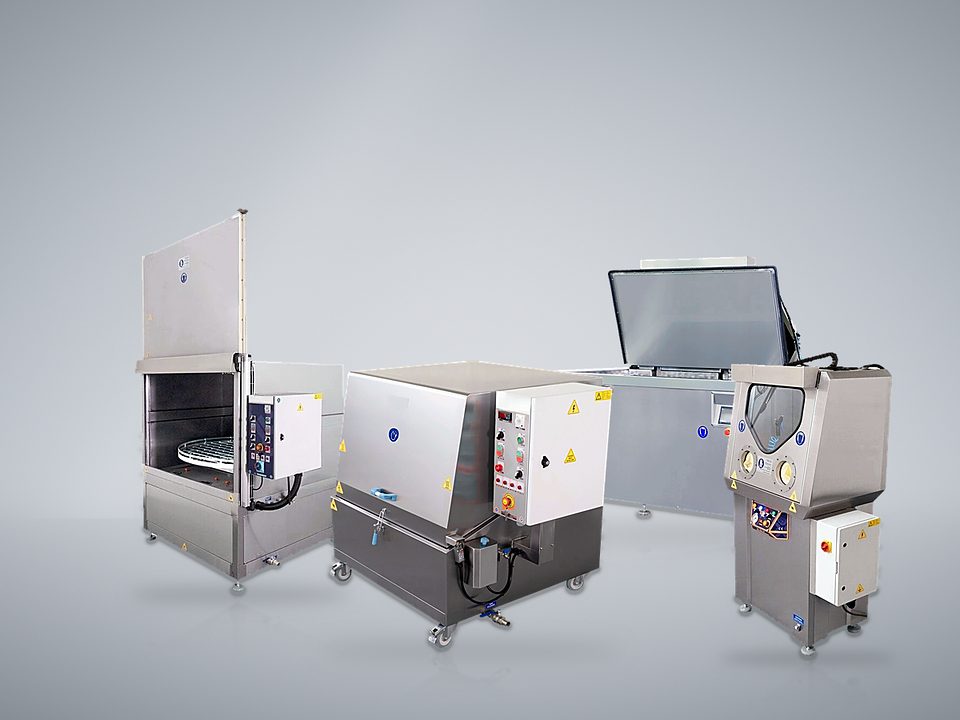
Industrial parts washers
Nine types, from top loader to crate washer, with a load capacity of 50 to 1000 kg.
View the parts washers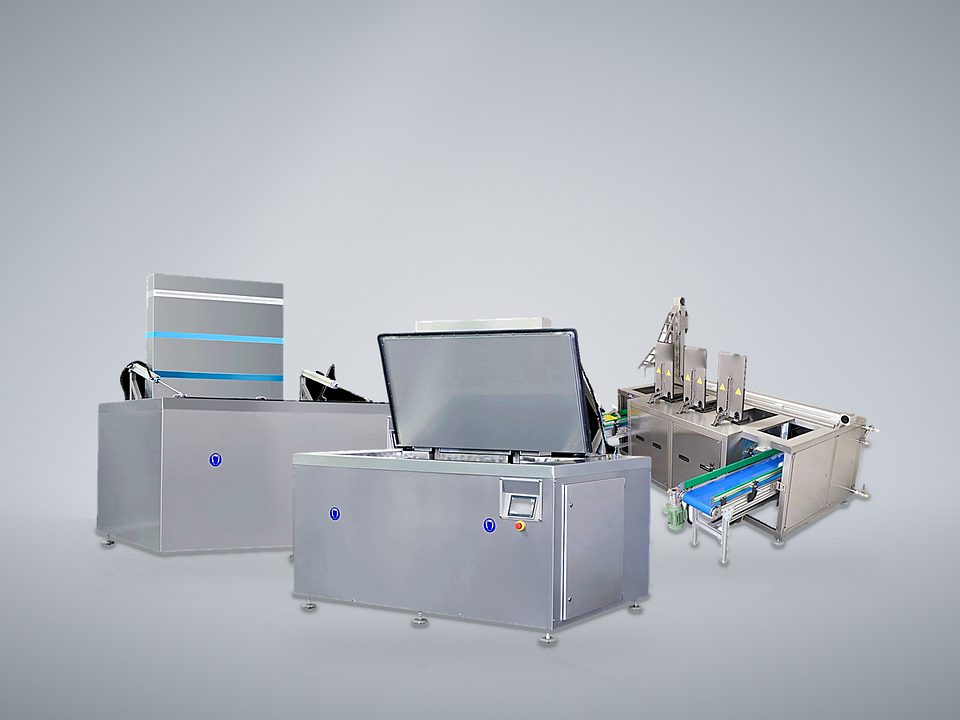
Ultrasonic cleaners
Cleaning right into bores and threads, with a tank of 100 to 2000 litres.
View the ultrasonic cleaners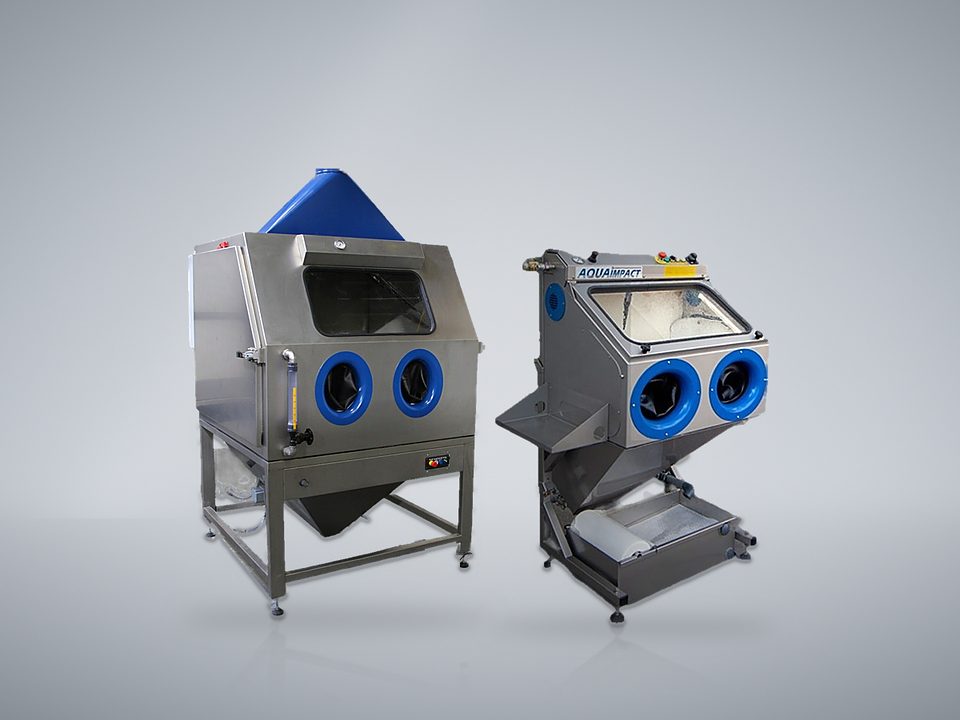
Wet blast cabinets
The compact wet blasting cabinet, the spacious Neptuna and a wet blasting platform.
View wet blasting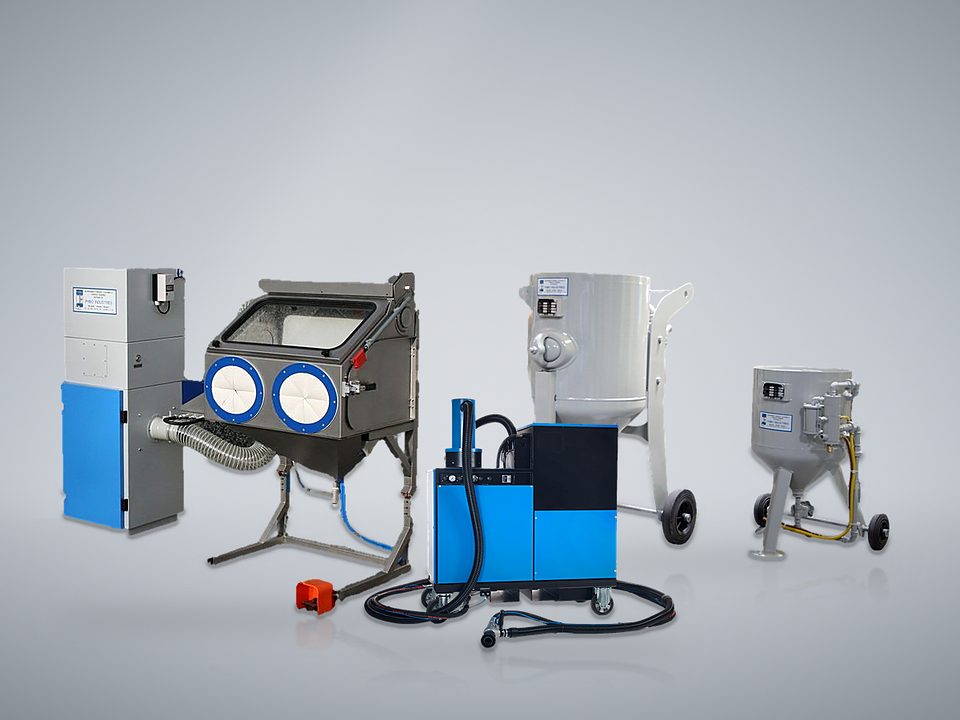
Dry blasting installations
Blast cabinets, blast rooms, blast pots and microblasting equipment.
View dry blastingFrequently asked questions
Questions about cleaning parts
Which type of parts washer suits a maintenance workshop?
That depends on the dimensions and weight of your largest part, the material, the contamination and the number of parts per day. Small to medium parts go into a top loader, heavy parts into a front loader. For small everyday parts a manual parts washer is enough. If there are blind holes or fine channels, an ultrasonic cleaner is the answer.
Aqueous or solvent degreasing: which should I choose?
Aqueous cleaning works for the great majority of applications. For heavy oils, waxes, resins and inks, or when the part has to be absolutely spot-free and dry, solvent is the answer. Phibo's solvent machines always work in a closed system.
When is blasting better than washing for cleaning components?
If degreasing and cleaning must happen together and no dust may be released, wet blasting is the process. If rust, mill scale or paint must come off before a new coat, choose dry blasting. If only dirt has to go without working the surface, a parts washer is the right choice.
How do I remove carbon deposits from engine and machine parts?
Carbon deposits and burnt oil come off in an ultrasonic cleaner or a high-pressure parts washer cabinet. Wet blasting removes carbon deposits from alternators, brake calipers, starters and engines, among others. More on automotive and transport applications.
How do you clean an engine block in industry?
In an industrial parts washer. The engine block sits on a rotating basket and is sprayed from all sides with heated water and detergent, in a closed circuit. Heavy blocks go into a front loader that you load with a crane or forklift.
When should I choose ultrasonic cleaning instead of a spray washer?
When the dirt sits where you cannot reach it, or when the part is too delicate to spray. Ultrasonic waves form microscopic gas bubbles that implode on the surface and loosen the dirt, even in cavities and blind holes.
What degreaser do you use in a parts washer?
We supply the cleaner with the machine, because it helps determine the result. Phibo has its own range of water-based cleaners and additives, such as the corrosion inhibiting cleaner V95². For aluminium we use a non-aggressive cleaner. We help you choose the product and dosage, based on your contamination and the material of your parts.
Consumables
Get the cleaner from Phibo too
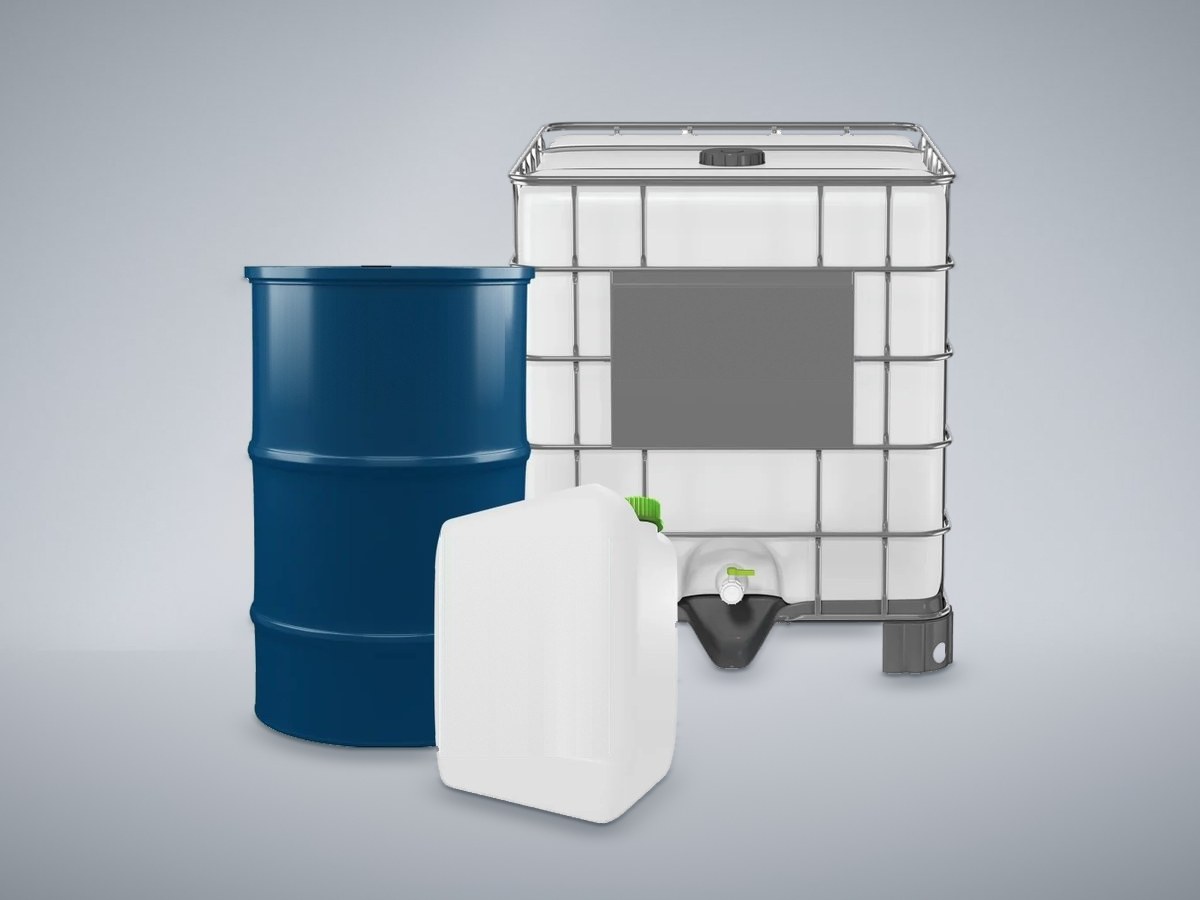
Phibo supplies cleaners and additives for your parts washers, ultrasonic cleaners and wet blasting installations, such as the corrosion inhibiting cleaner V95² and the ultrasonic cleaner V70. We help you choose the right product and dosage for your parts. The blasting media for wet and dry blasting come from the same warehouse.
Your installation keeps running
Maintenance, repair and spare parts, directly from Phibo, by our own technicians.
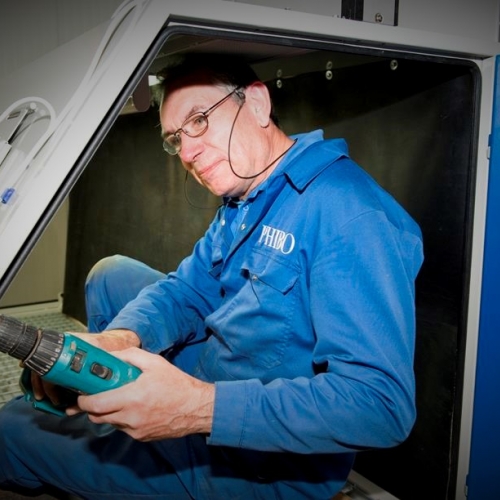
Maintenance
Preventive maintenance in our workshop or at your site. After every service your settings and consumption are reviewed.
More about this service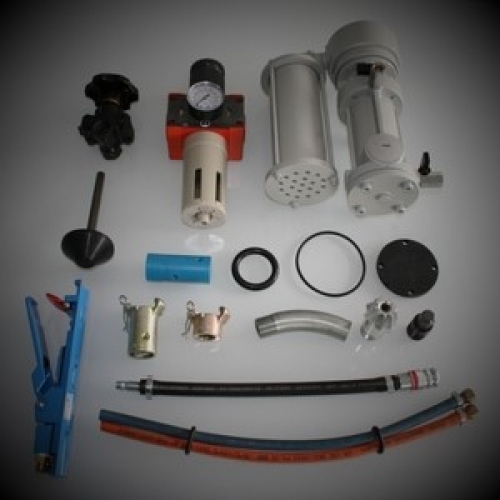
Spare parts
Blast pots, hoses, guns, rubber flaps and filter cartridges from stock. Non-standard parts we make ourselves.
More about this service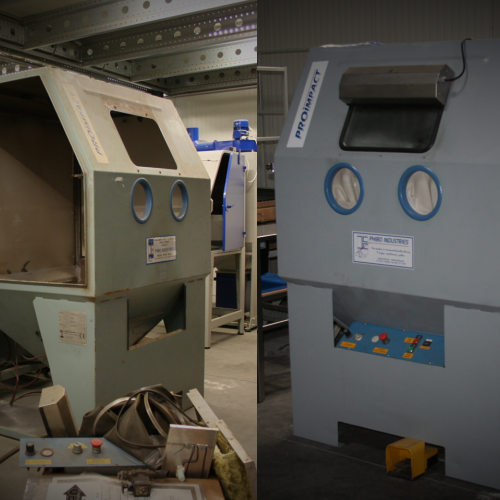
Revision and retrofitting
Modernise an existing installation or convert it to a new process. Revised second-hand installations too.
More about this service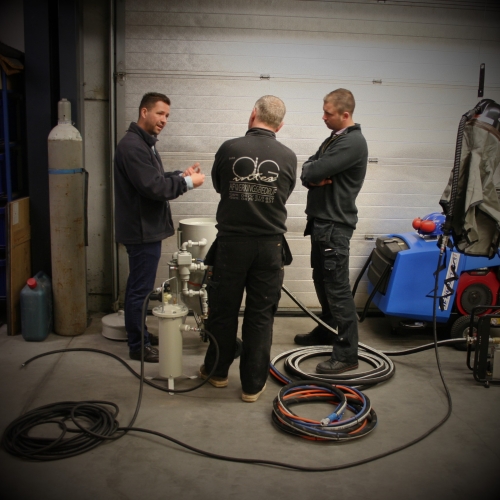
Training
Hands-on training at commissioning, standard with SublimotionProcess® and on request with the other installations. When staff change, we repeat it to suit your team.
More about this serviceRequest
We call you and go through your application
Fill in what you know below, and we go through the rest together on the phone.
- The dimensions and weight of your largest part
- The material: steel, cast iron, aluminium, copper or plastic
- The contamination that has to come off, by name
- The number of parts per day, and a photo via WhatsApp if you like