
Blackfast process
Black oxide at room temperature
Room temperature black oxide, also called cold blackening, is a surface treatment that turns steel and cast iron parts black in a series of process baths at around 20 °C. At Phibo this process is called Blackfast.
- Surface treatment specialist since 1988
- Blacking at around 20 °C, instead of above 140 °C
- The original dimensions of your parts stay unchanged
- Better corrosion resistance, suitable for indoor use
Two options
Immersion process or blacking paste
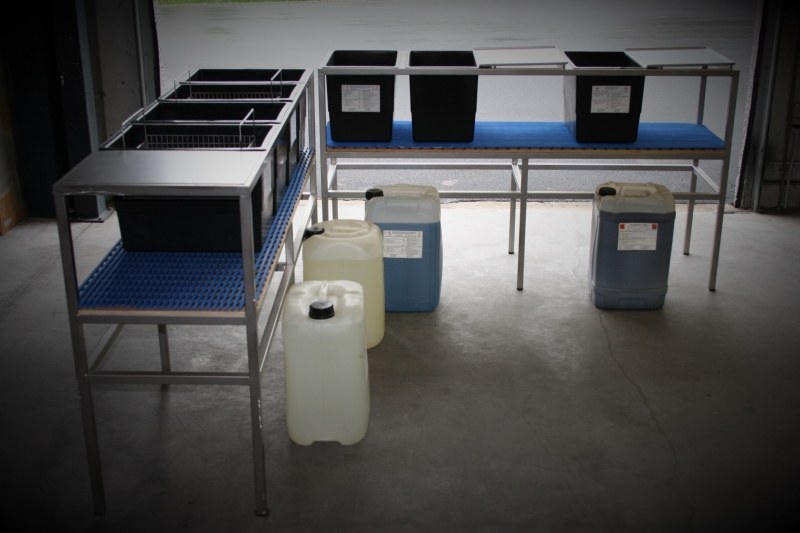
Anyone who decides to blacken at room temperature has two options. The difference is how often parts have to go through.
The immersion process, for frequent blacking
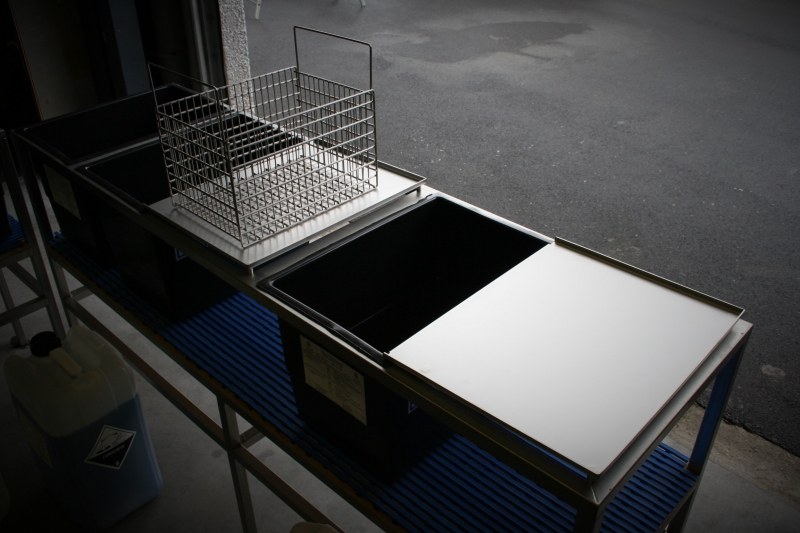
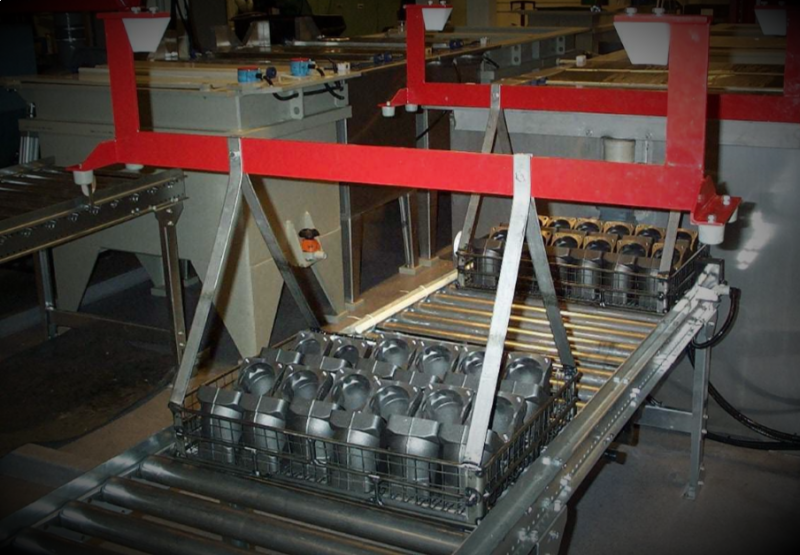
A series of process baths, each one a step in the process. Parts go into the bath by hand, and a semi-automatic or fully automatic line is possible too. The system stays ready to run.
The blacking paste, for occasional blacking
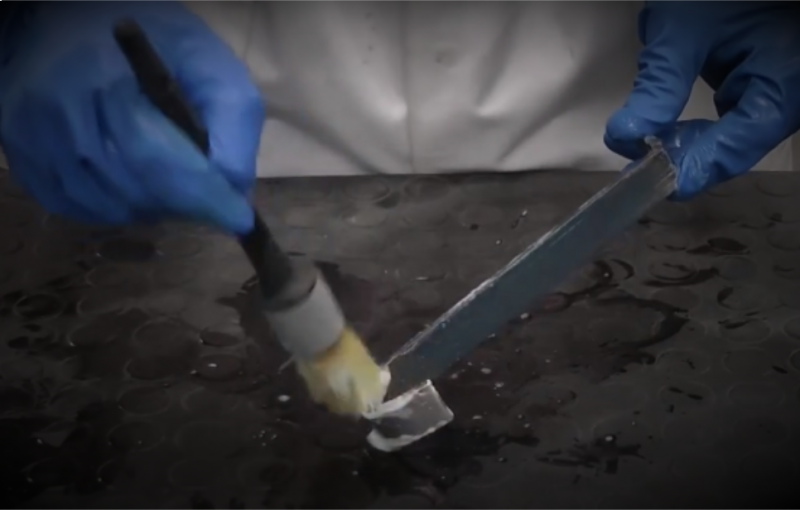
After thorough degreasing you apply the paste with a brush. That lets you blacken steel and cast iron without investing in a complete installation.
Why room temperature
Four differences with hot blacking
Hot blacking happens above 140 °C, in a boiling bath. The Blackfast process works at around 20 °C, and one minute in the blacking bath is enough. That changes four things.
The original dimensions stay unchanged
No material loss and no build-up, even on fits and threads. Hot blacking can distort your parts.
Safe on the shop floor
Safe chemicals that are simple to use, instead of splashes and fumes from a boiling bath.
Low start-up and running costs
No boiling bath and no complex extraction. Hot blacking requires an expensive installation and high energy costs.
Cast iron turns black, not brown
In hot blacking, cast iron turns brown. At room temperature you get a uniform deep black, with better corrosion resistance for indoor applications.
From fluid to line
From the fluids to the complete line
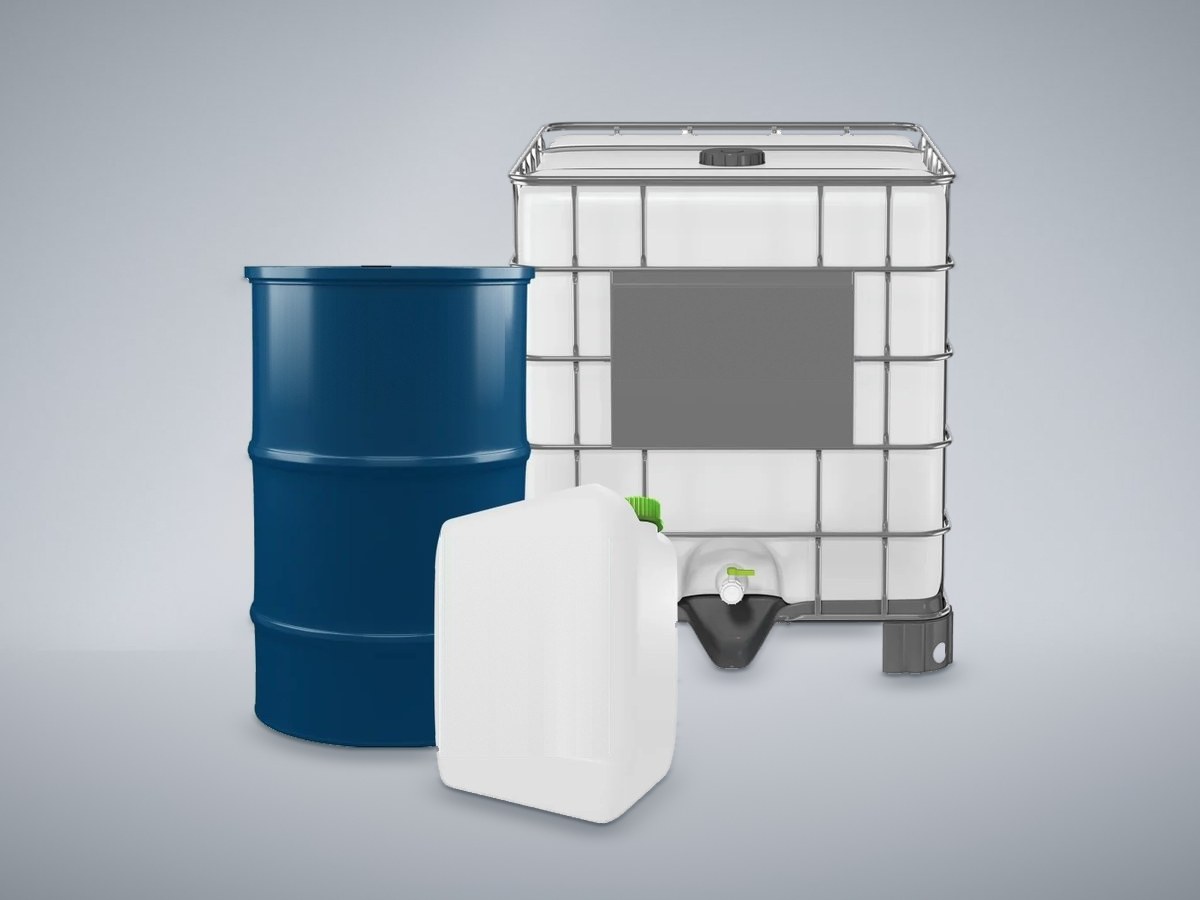
Process fluids and equipment
Degreaser, conditioner, blacking fluid and corrosion protector, plus the process tanks and the paste.
View
Versus hot blacking
The nine points from our brochure, side by side, from temperature to the colour of cast iron.
View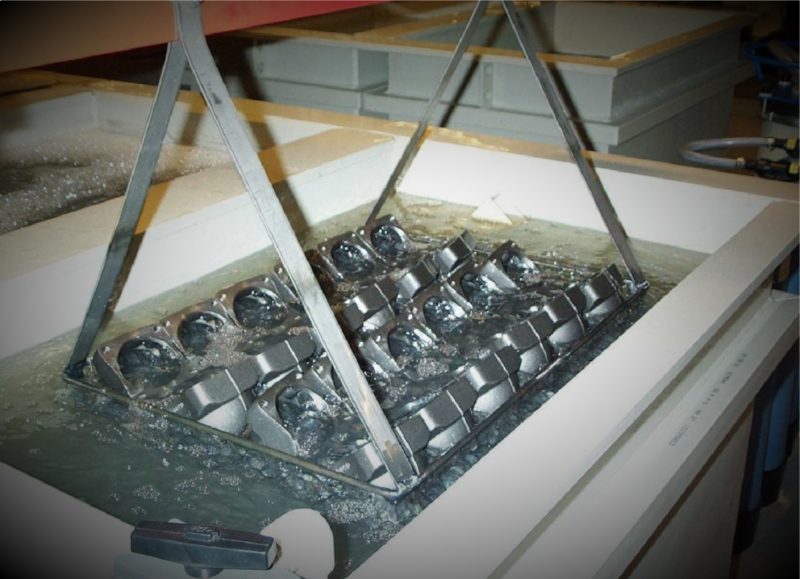
Standard 25 litre line
The entry level set-up for blacking parts up to 300 x 200 x 200 mm by hand.
ViewReferences
They rely on Phibo for surface treatment






In practice
What room temperature blacking looks like
Applications
Who blackens at room temperature
The process suits any precision part in steel or cast iron, turned or milled. Think of gears, bolts and nuts, hydraulic parts and tooling components.
- Machine building
- Tool manufacturing
- Precision engineering
- Hydraulics
- Firearms manufacturing
- Fasteners
- Gears
Consumables
The fluids that run through your tanks
A blacking line runs on a degreaser, a conditioner, a blacking fluid and a corrosion protector.
From our own warehouse
The process fluids, the blacking paste and the protective equipment are in stock. You order them from the same partner that supplies your line.
- Degreaser and conditioner
- Blacking fluid for steel and cast iron
- Corrosion-protecting, water-displacing oil
- Blacking paste for manual work
Your installation keeps running
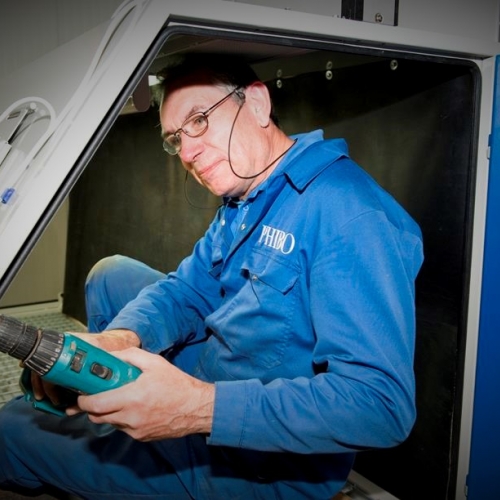
Maintenance, repair and spare parts, directly from Phibo, by our own technicians.
Maintenance
Preventive maintenance in our workshop or at your site. After every service your settings and consumption are reviewed.
More about this service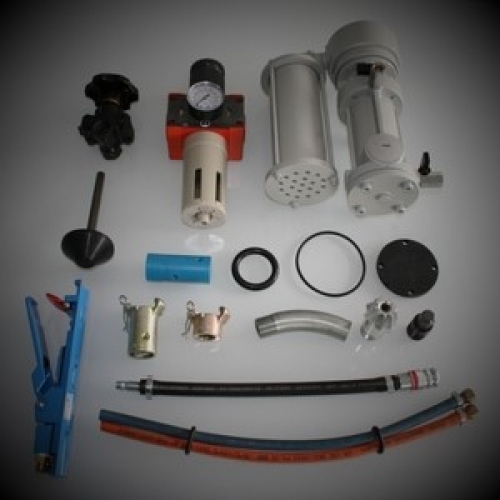
Spare parts
Blast pots, hoses, guns, rubber flaps and filter cartridges from stock. Non-standard parts we make ourselves.
More about this service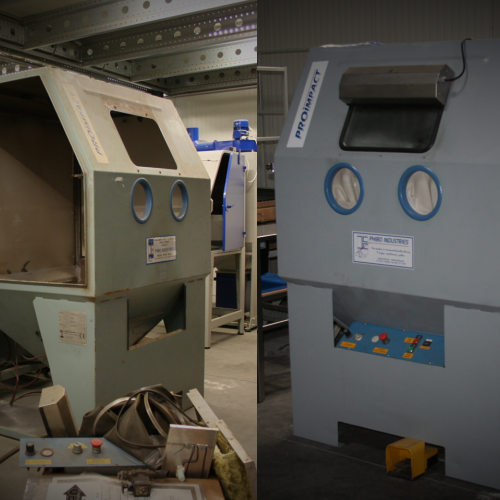
Revision and retrofitting
Modernise an existing installation or convert it to a new process. Revised second-hand installations too.
More about this service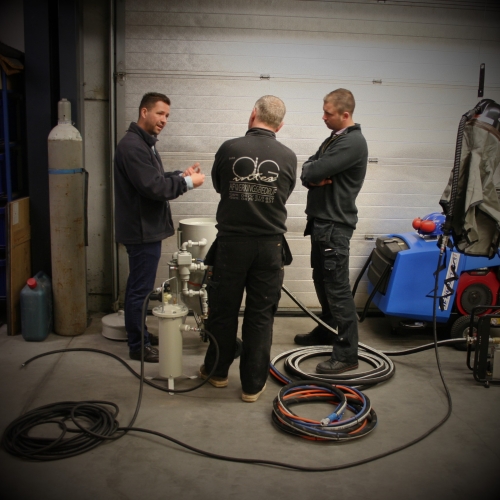
Training
Hands-on training at commissioning, standard with SublimotionProcess® and on request with the other installations. When staff change, we repeat it to suit your team.
More about this serviceWe call you and go through your application
Send us the material of your parts, their dimensions and the number per day. You will receive a proposal with the blacking line that fits. One partner, from the first conversation to the last spare part.