
Dry blasting
Dry blasting removes rust, mill scale and paint from the part with a dry abrasive and compressed air, without water. Phibo supplies blast pots, blast cabinets, blast rooms, mobile dust-free systems, a mobile air gumming system, automated installations and microblasting equipment.
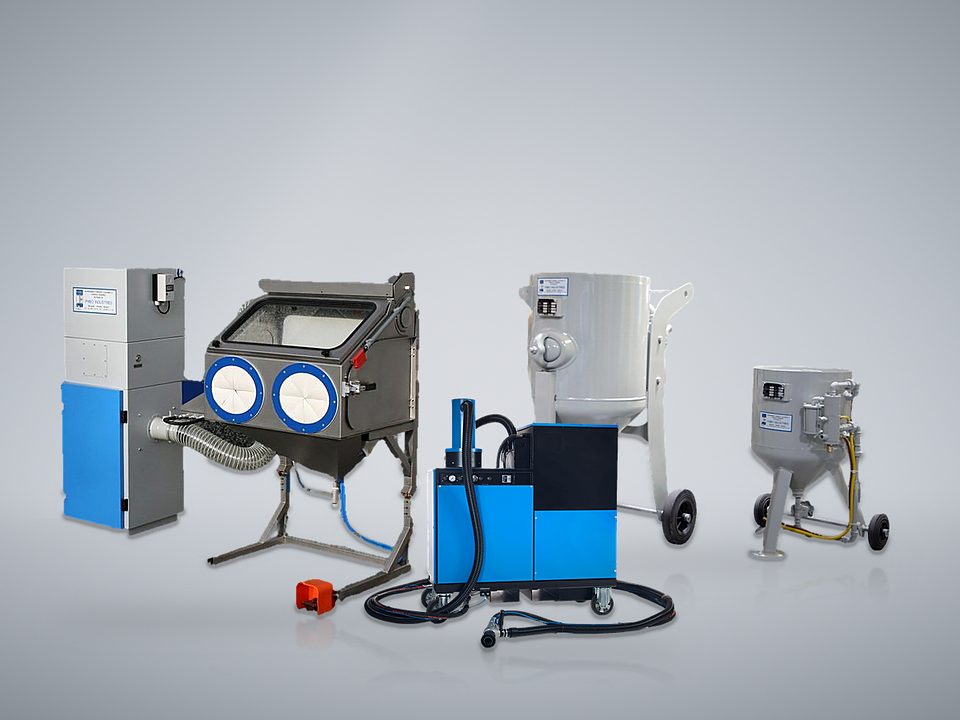
Seven types of installation
Sandblasting and grit blasting are both dry blasting: only the abrasive differs. The installations differ in what fits inside, and in whether the operator stands beside it, walks into it or takes it to the part.
Not sure? Read the four questions or the difference between wet and dry first.
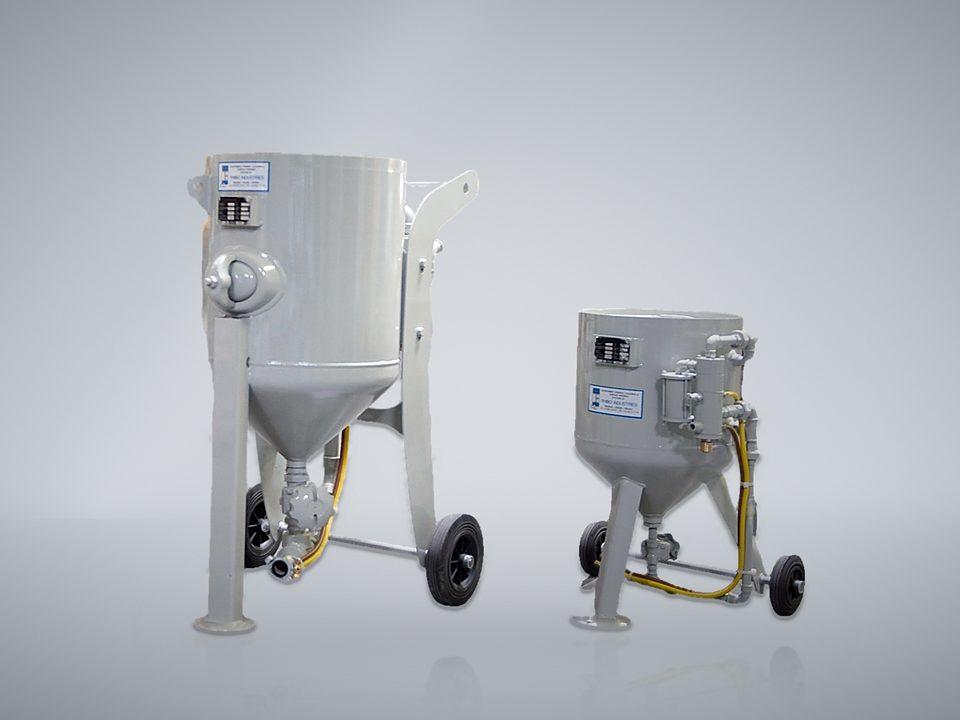
A pressure vessel that feeds abrasive to the nozzle. Eighteen sizes from 20 to 300 litres, for the workshop, the site or a cabinet.
View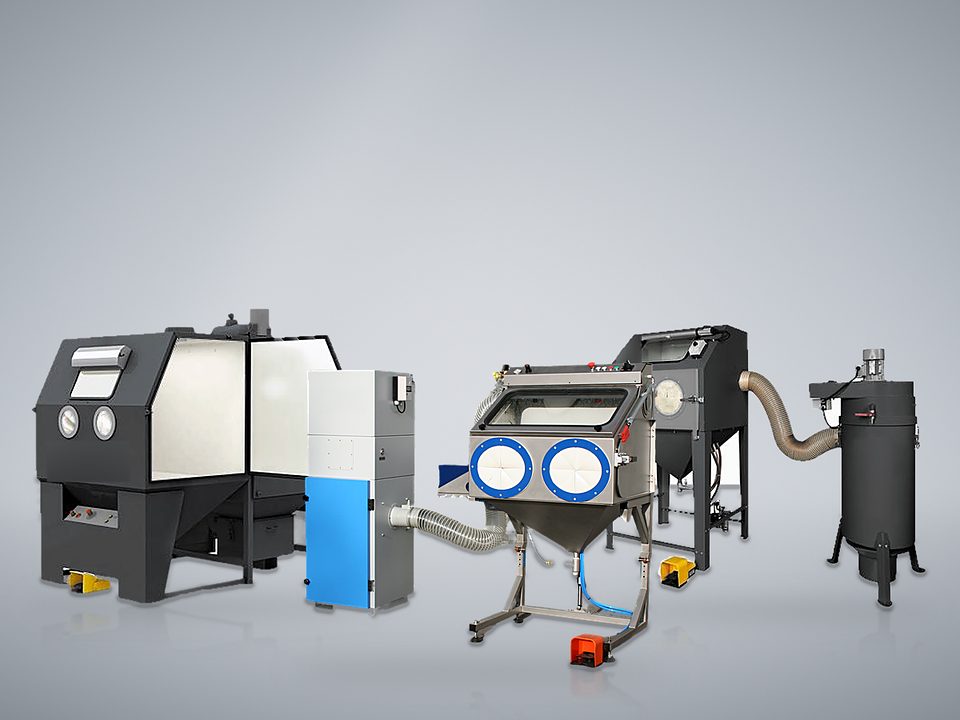
For loose parts: the operator blasts through gloves inside a closed cabinet. The PRO-impact and ONE-impact lines, plus the ECO cabinet.
View
For steelwork and chassis the operator walks into the room. HALL-impact is the turnkey blast room, STEP-impact the equipment for a walk-in blast room in your own space, HALL-impact Mobile the blasting container.
View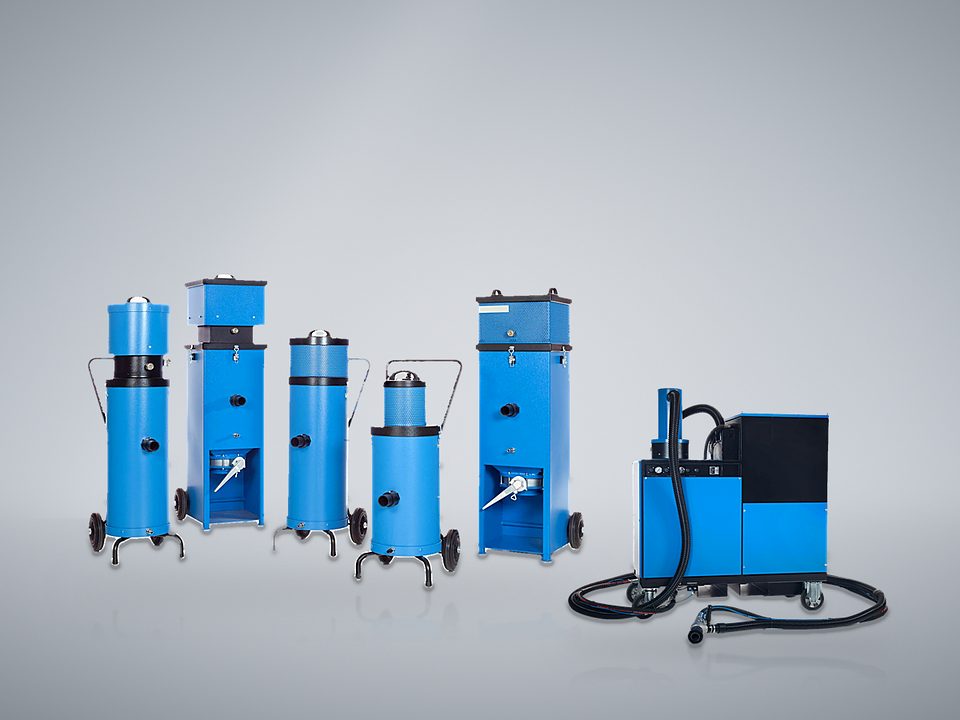
The blast head projects the abrasive and extracts it at the same time, in a closed circuit. Five sizes, from 9 to 48 litres of abrasive.
View
The MCS² works at low pressure, between 2.5 and 4 bar. It takes paint, graffiti and deposits off wood, natural stone, metal and glass.
ViewYou will find the air gumming system and the MVS² for dust-free detail work together on the portable blasting equipment page.

Blast cabinets in a special version: a turntable, oscillating blast guns, a drum or a pass-through system. Every part gets the same path, distance and time.
View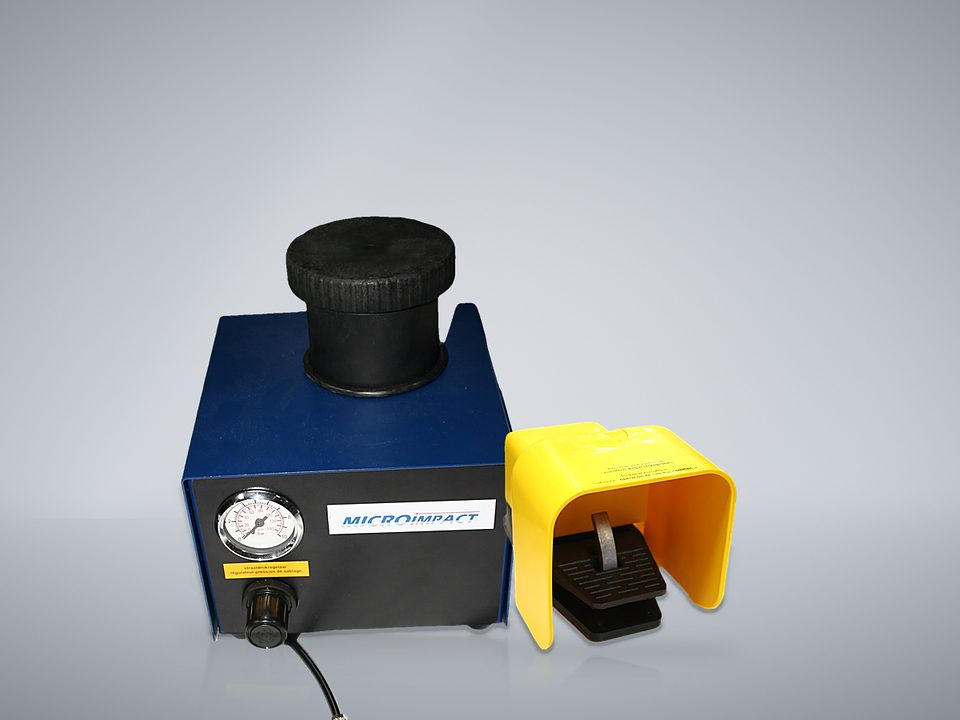
The Phibo MI200 blasts very small parts with a nozzle of 0.8 to 1.8 mm. For matting, deburring, polishing and satin finishing.
ViewReferences
A selection of Phibo customers in metalworking, aerospace, defence, rail, energy and chemicals.
 Metalworking
 Aerospace
 Defence
 Rail
Rail Energy and nuclear
 Chemicals
Before you choose
We go through them with you on the phone before we draw up a proposal.
Loose parts on a turntable call for a blast cabinet. Frames, chassis and welded structures call for a room the operator walks into.
Blasting now and then needs no more than a cabinet in the suction version. If the installation runs all day, the pressure version blasts up to three times faster.
In the workshop a cabinet or blast room will do. If you have to blast on location, without dust around you, you choose a mobile system in a closed circuit.
For series: a cabinet with a turntable, oscillating blast guns, a drum for batch treatment or a pass-through system.
Maintenance and spare parts. They come from Phibo: our own technicians, and abrasives and spare parts from our warehouse.
Wet or dry
In wet blasting, a mixture of water and abrasive is driven onto the part by compressed air. In dry blasting, the abrasive hits the part dry, also driven by compressed air. That single difference, the water, decides what comes off the surface and how the part comes out.
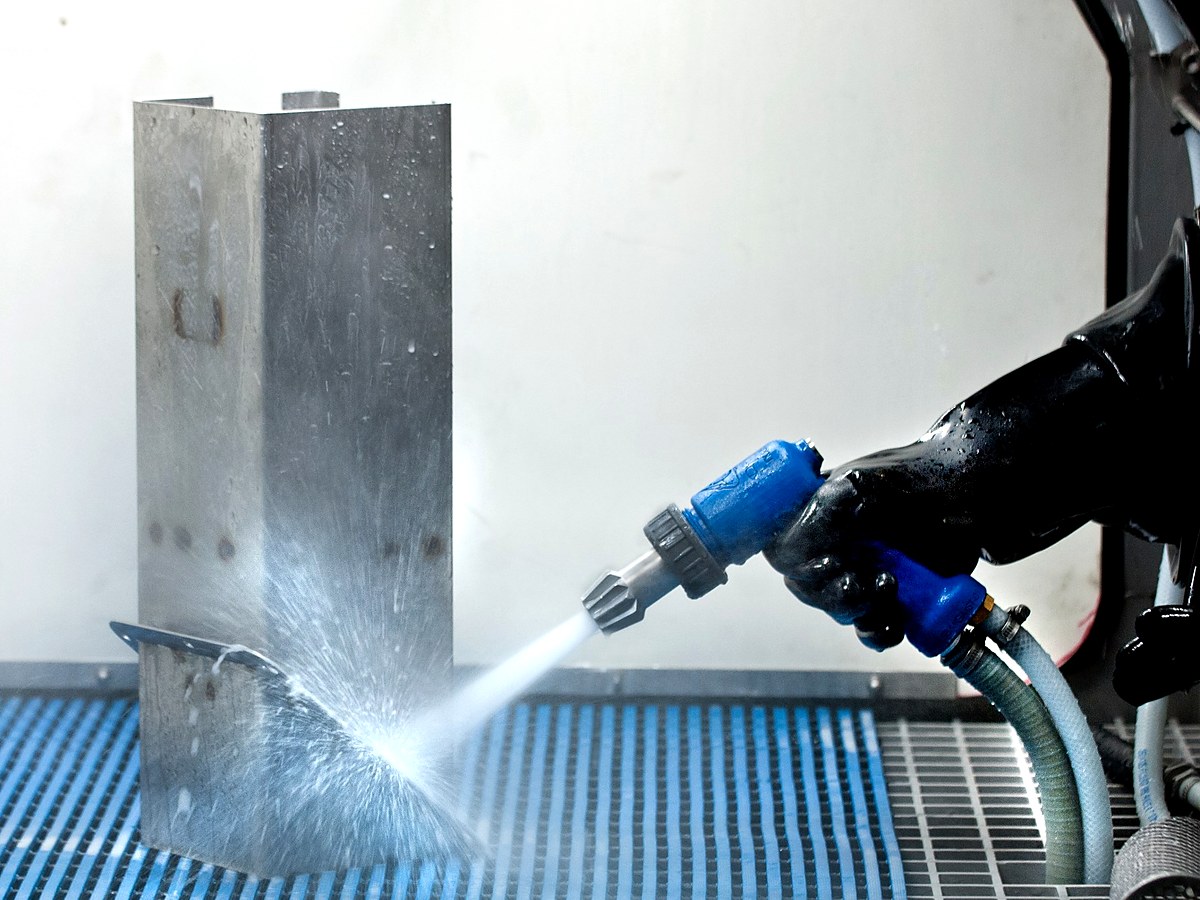
Water and abrasive together, atomised by compressed air. Degreasing, cleaning and finishing happen in one treatment, without dust and without harmful products. The part comes out of the cabinet wet and is rinsed with fresh water.
View the wet blasting installations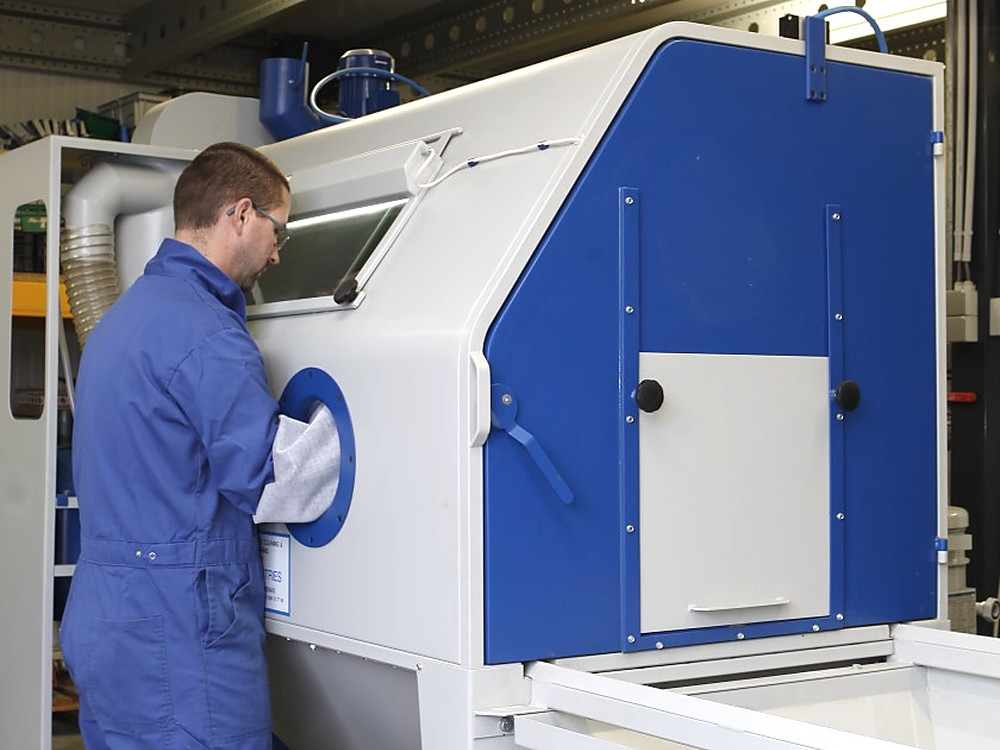
Abrasive in dry form, driven onto the part by compressed air. It removes rust, mill scale and paint layers and sets a rougher profile for the next coat. The cabinet works with extraction and filtration, and the part comes out dry.
View the dry blasting installations| Feature | Wet blasting | Dry blasting |
|---|---|---|
| What reaches the part | A mixture of water and abrasive, atomised by compressed air | Abrasive in dry form, driven by compressed air |
| Dust | No dust | The cabinet works with extraction and filtration |
| In one treatment | Degreasing, cleaning and finishing together | Cleaning and roughening the surface |
| What it does to the surface | The water buffer keeps the fine grains from embedding in the surface | Sets a rougher profile for the next coat |
| What you choose it for | Parts that have to be degreased and cleaned after overhaul or machining | Removing rust, mill scale and paint before the next coat |
| How the part comes out | Wet; it is rinsed with fresh water | Dry |
If degreasing and cleaning have to happen together and no dust may be released, wet blasting is the process. If only the soiling has to go without treating the surface, you end up at the industrial parts washers, which work by spraying and immersion.
Consumables
The same installation gives a different surface depending on what you send through it. Glass beads matt the surface, aluminium oxide and steel grit work more aggressively.
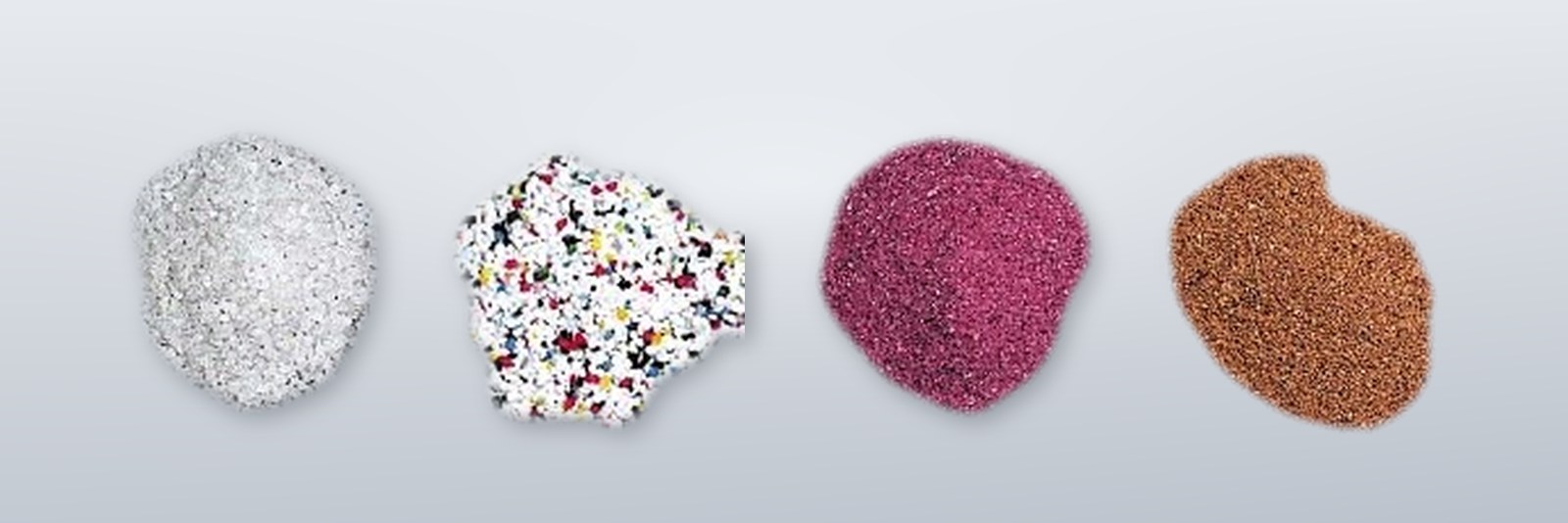
We keep abrasives, spare parts and protective equipment in stock, so you order them from the same partner as the installation.
Assistance and service
Maintenance, repair and spare parts are arranged directly with Phibo. Our own technicians do the work.
We plan the inspection of your installation and follow it up. You agree the content with us.
Spare parts come from our own warehouse. Our technicians carry out the repair.
At commissioning, your operators learn to run and set up the installation.
Surface treatment
Does the part also need degreasing, or are you after a black protective layer? You will find the installation here.
Send us the dimensions and weight of your parts, what has to come off (rust, mill scale or old paint) and how many parts you blast per day. You get a proposal with the installation that fits. One partner, from the first conversation to the last spare part.
Your request
Send them to us through the contact page. You get a proposal with the installation that suits your parts.