
VACU-impact line
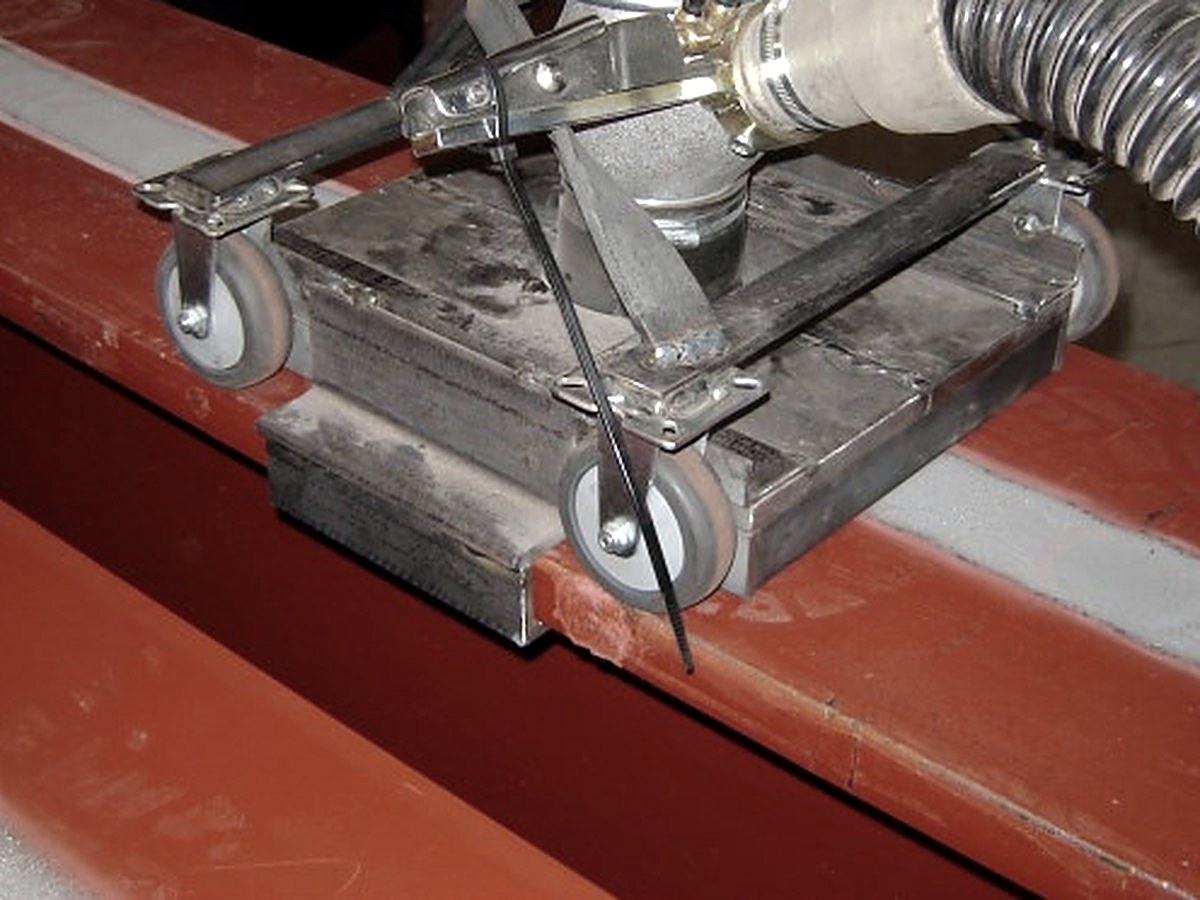
Vacuum blasting in a closed circuit is blasting in which the blast head projects the abrasive and extracts it at the same time. The abrasive travels in that circuit and the dust stays inside the machine. You work without masking and leave the floor clean. For wood, natural stone and facades you move to air gumming with the MCS².

How it works
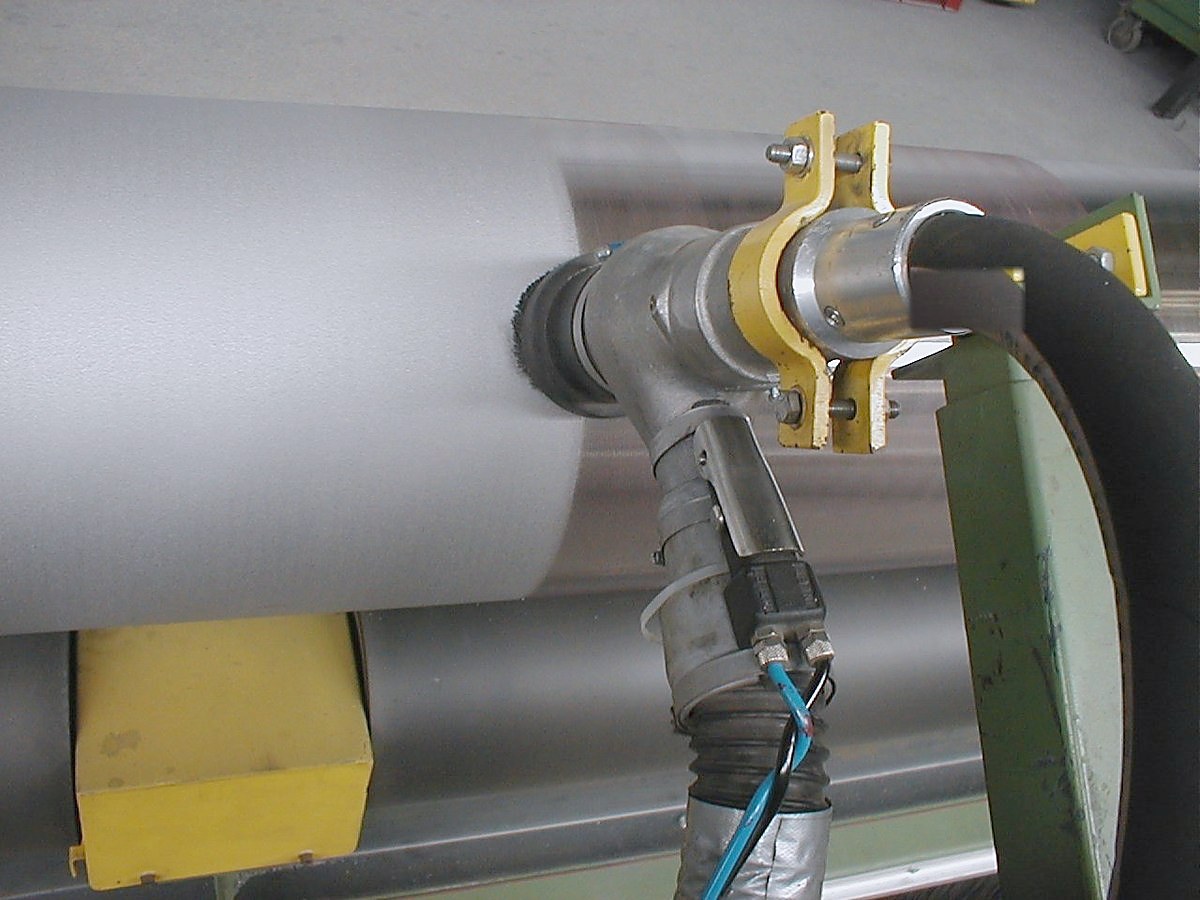
Vacuum blasting is blasting in which the blast head projects the abrasive and extracts it at the same time, so that the abrasive and the removed contamination stay inside the machine. A sealing brush around the blast head follows the surface, and the extracted air flow is larger than the flow leaving the nozzle. The abrasive passes through a separator, where the reusable part is separated from dust and dirt.
The abrasive is drawn from an open hopper to the blasting gun. That is how the VS9, the VS17 and the VS28 work. This is the light version, for local work and smaller surfaces.
A pressure pot pushes the abrasive towards the blast head, which gives far more output. That is how the VP24 and the VP48 work, each also in a stronger Pro version. With a double chamber you blast without stopping.
References
 Rail
Rail Chemicals
 Metalworking
 Aerospace
 Pharma
 Automotive
Why dust free
Masking, sweeping and the disposal of contaminated abrasive all disappear. Which personal protective equipment remains necessary depends on your coating and your workplace; we go through that with you at enquiry.
You do not have to cordon off the area or cover the surroundings. Colleagues keep working right next to you.
In chemical and petrochemical plants a zone is cleaned without stopping production or dismantling the installation.
The abrasive never reaches the floor. There is no sweeping and no disposal cost for contaminated abrasive.
The abrasive is cleaned on the way and used again. Only the worn part and the dirt end up in the dust bag.
Because the abrasive and the dust stay inside the machine, far less is released than in open blasting. What you wear follows from your own risk assessment.
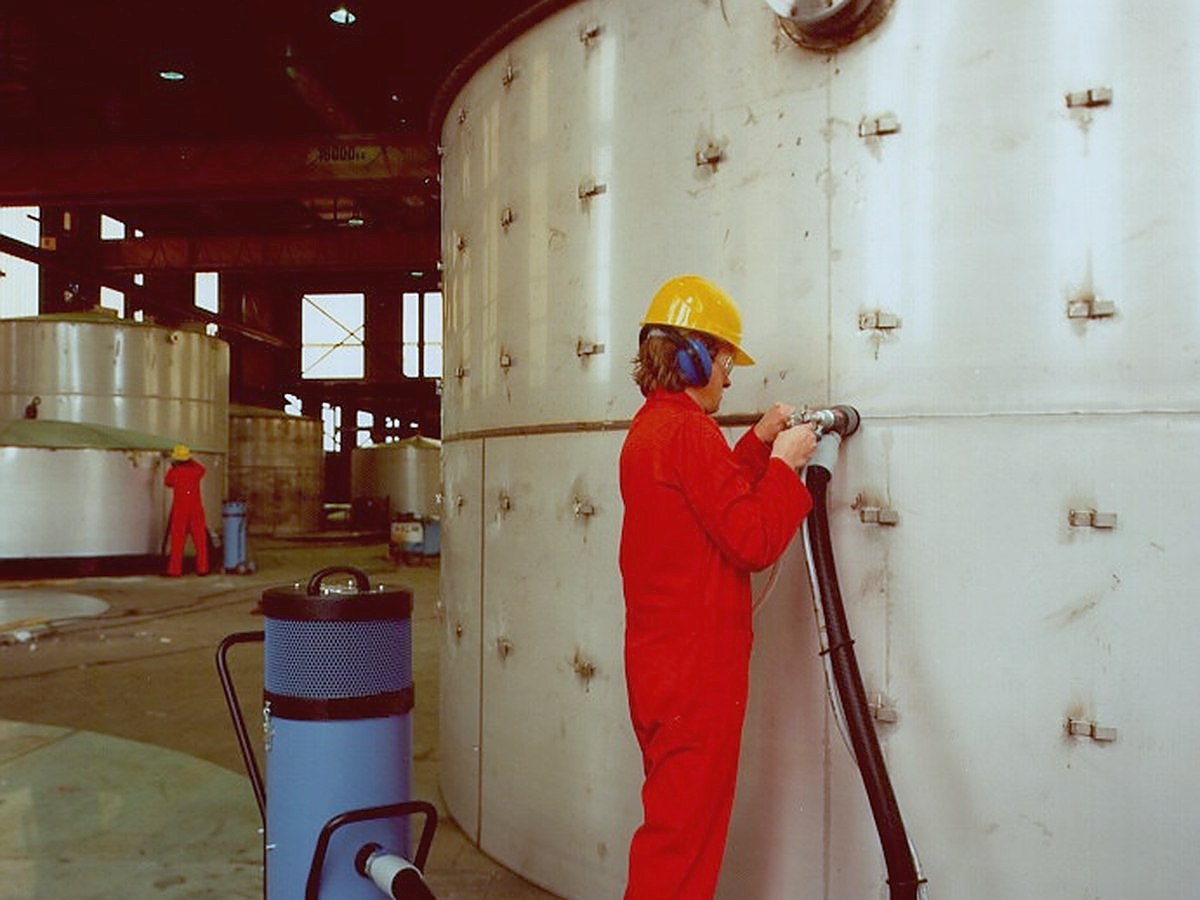
On the pneumatic Pro version the hose runs 45 to 60 metres, and 40 metres and more vertically. The machine stays at ground level while the operator works above.
Where it is used
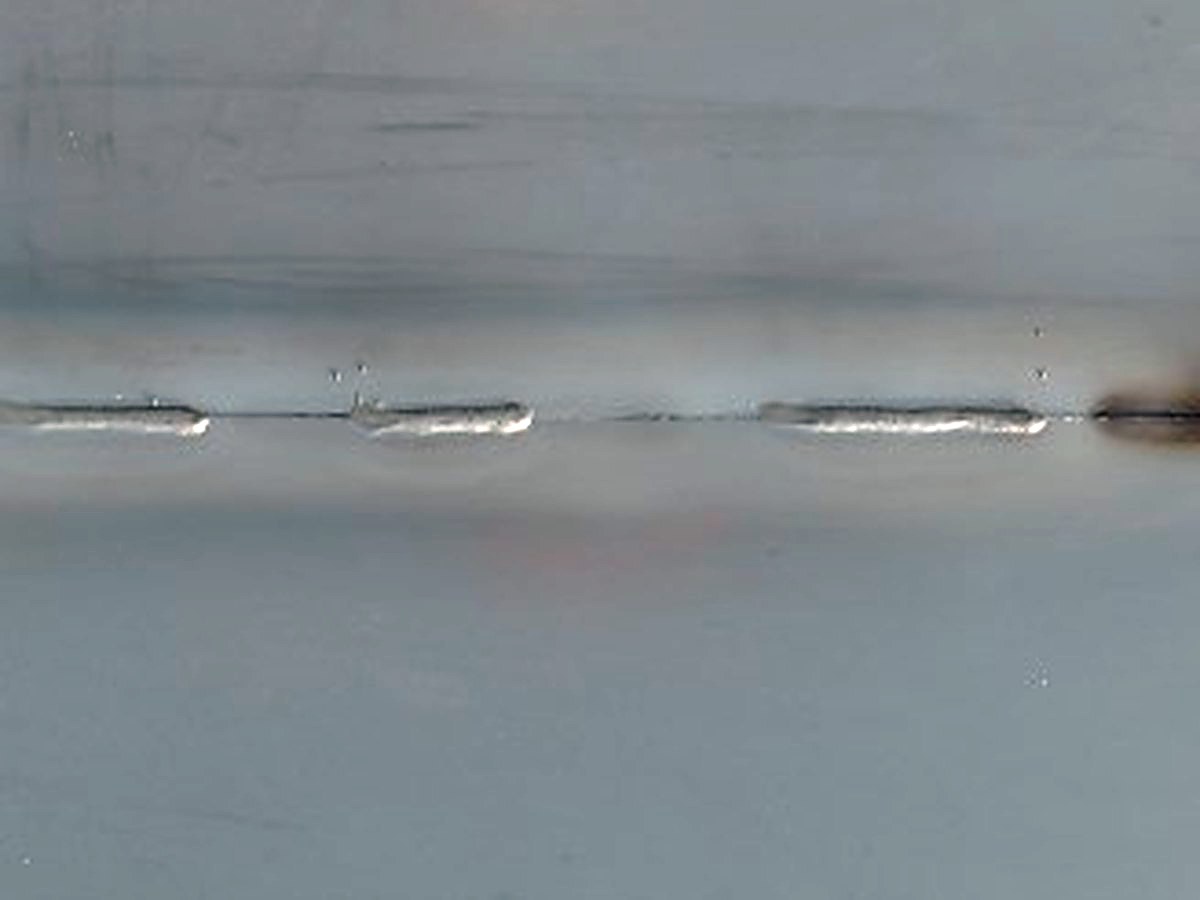
The same technique covers very different jobs. What changes is the blast head, the brush and the abrasive.
The models
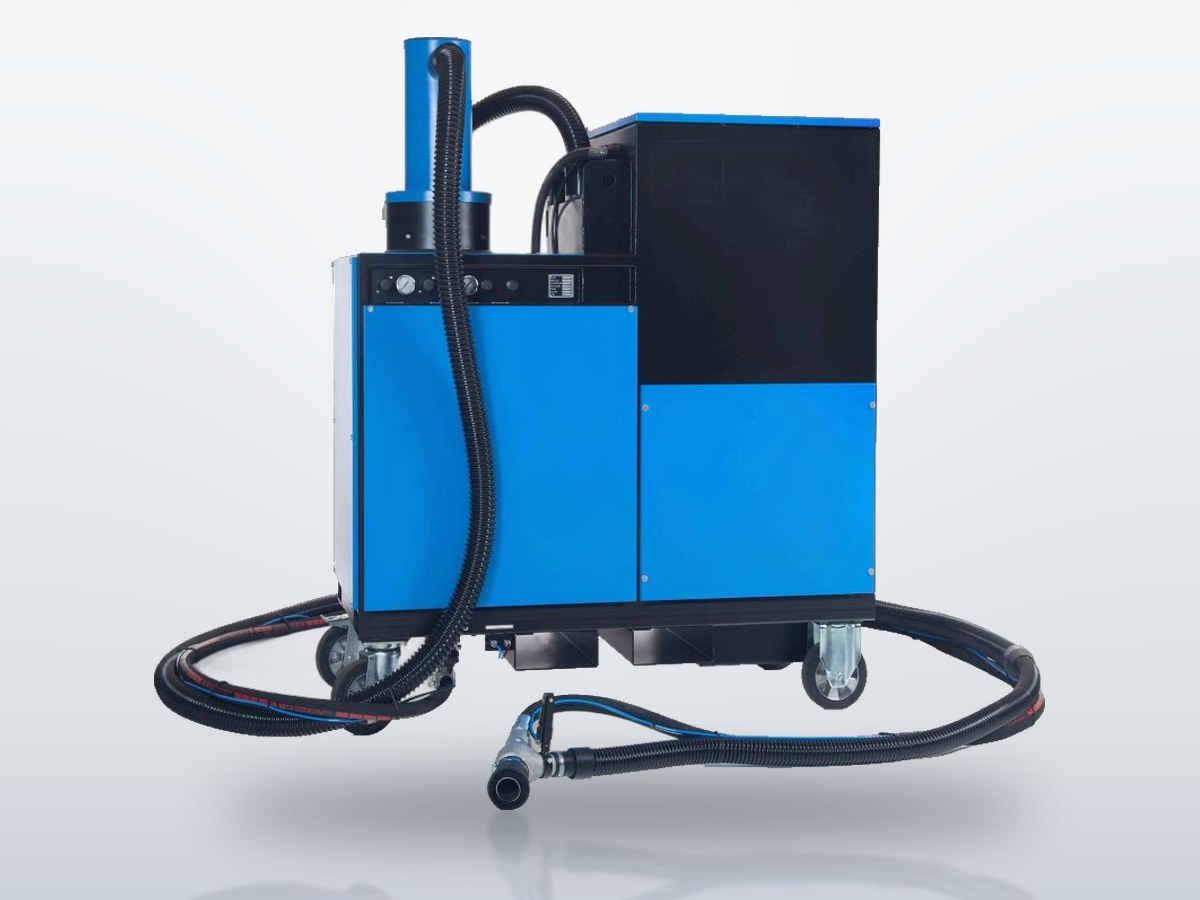
Three things decide the choice. How large is the surface? How hard does the rust or the coating sit? How much compressed air do you have on site?
The VS machines work with an injector and stay light enough to carry up a staircase. The VP machines work with a pressure pot and reach a far higher output: up to 9 square metres of rusted steel per hour. The Pro version goes up to 8 bar. Its stronger vacuum system also handles steel grit and stainless grit.
| Abrasive | Your compressed air | Rusted steel | Weld in stainless | Hose | |
|---|---|---|---|---|---|
| VS9 | 9 litres | 480 l/min | spot blasting | 20 to 40 m/h | 5 m |
| VS17 | 17 litres | 1,000 to 2,300 l/min | 0.5 to 1.0 m²/h | 20 to 40 m/h | 5 m |
| VS28 | 28 litres | 1,600 to 3,500 l/min | 1.2 to 1.5 m²/h | 40 to 50 m/h | 5 m (8 m) |
| VP24 | 24 litres | 1,000 to 10,000 l/min | 4 to 9 m²/h | 60 to 120 m/h | 10 to 60 m |
| VP48 | 48 litres | 1,000 to 10,000 l/min | 4 to 9 m²/h | 60 to 70 m/h | 10 to 60 m |
The outputs apply to corundum on rusted steel, up to SA 2.5-3. They differ per version and per abrasive; the longest blasting hose goes with the pneumatic machines.
| VS9 | VS17 | VS17 Pn | VS28 | VS28 Pn | |
|---|---|---|---|---|---|
| Dimensions l x d x h | 41 x 53 x 93 cm | 41 x 53 x 114 cm | 41 x 53 x 132 cm | 53 x 61 x 132 cm | 51 x 61 x 140 cm |
| Empty weight | 25 kg | 34 kg | 34 kg | 70 kg | 68 kg |
| Abrasive in the hopper | 9 litres | 17 litres | 17 litres | 28 litres | 28 litres |
| Largest grain | 1 mm | 1 mm | 1 mm | 1.2 mm | 1.2 mm |
| Air consumption | 480 l/min | 1,000 l/min | 2,300 l/min | 1,600 l/min | 3,500 l/min |
| Electrical power | 1,000 W | 2,000 W | none | 3,300 W | none |
| Supply voltage | 220/240 V | 220/240 V | none | 400 V | none |
| Length of the power cable | 5 m | 5 m | none | 5 m | none |
| Maximum blasting pressure | 6 bar | 7 bar | 7 bar | 7 bar | 7 bar |
| Effective blast width | 15 to 17 mm | 20 to 22 mm | 20 to 22 mm | 28 to 32 mm | 28 to 32 mm |
| Corundum consumption | 3 to 5 kg/h | 4 to 6 kg/h | 4 to 6 kg/h | 6 to 8 kg/h | 6 to 8 kg/h |
| Glass bead consumption | 4 to 6 kg/h | 5 to 7 kg/h | 5 to 7 kg/h | 8 to 10 kg/h | 8 to 10 kg/h |
| Maximum hose length | 5 m | 5 m | 5 m | 5 m (8 m) | 5 m (8 m) |
| Filter surface | 1 x 1.5 m² | 1 x 1.5 m² | 1 x 1.5 m² | 1 x 2.0 m² | 1 x 2.0 m² |
| Filter material | PES 5 | PES 5 | PES 5 | PES 5 | PES 5 |
| Automatic filter cleaning | not available | option | option | option | option |
| Rusted steel with corundum | spot blasting | 0.5 to 1.0 m²/h | 0.5 to 1.0 m²/h | 1.2 to 1.5 m²/h | 1.2 to 1.5 m²/h |
| Welds in stainless steel | 20 to 40 m/h | 20 to 40 m/h | 20 to 40 m/h | 40 to 50 m/h | 40 to 50 m/h |
| Natural stone, light deposit | spot blasting | spot blasting | spot blasting | 1.5 to 2 m²/h | 1.5 to 2 m²/h |
| Removing coatings | spot blasting | spot blasting | spot blasting | 0.5 to 2 m²/h | 0.5 to 2 m²/h |
The number in the name is the abrasive capacity in litres. Pn is the fully pneumatic version; without that addition the machine is electro-pneumatic. The last four rows give the average output per application. Spot blasting means the machine is meant for local work, not for large surfaces.
| VP24 | VP24 Pn | VP24 Pro | VP24 Pro Pn | |
|---|---|---|---|---|
| Dimensions l x w x h | 157 x 75 x 166 cm (186 cm) | 157 x 75 x 166 cm (186 cm) | 157 x 75 x 166 cm (186 cm) | 157 x 75 x 166 cm (186 cm) |
| Empty weight | 535 kg | 500 kg | 565 kg | 500 kg |
| Abrasive in the pot | 24 litres | 24 litres | 24 litres | 24 litres |
| Largest grain | 1.5 mm | 1.5 mm | 1.5 mm | 1.5 mm |
| Vacuum control | not applicable | standard | not applicable | standard |
| Air consumption | 1,000 to 3,500 l/min | 3,500 to 7,000 l/min | 3,500 to 5,000 l/min | 3,500 to 10,000 l/min |
| Electrical power | 4,000 W at 400 V | none | 9,200 W at 400 V | none |
| Blasting pressure | 1.5 to 5.5 bar | 1.5 to 5.5 bar | 1.5 to 8 bar | 1.5 to 8 bar |
| Effective blast width | 50 mm or 75 mm | 50 mm or 75 mm | 50 mm or 75 mm | 50 mm or 75 mm |
| Corundum consumption | 20 to 25 kg/h | 20 to 25 kg/h | 20 to 25 kg/h | 20 to 25 kg/h |
| Steel grit consumption | 1.6 to 2 kg/h | 1.6 to 2 kg/h | 1.6 to 2 kg/h | 1.6 to 2 kg/h |
| Glass bead consumption | 25 to 30 kg/h | 25 to 30 kg/h | 25 to 30 kg/h | 25 to 30 kg/h |
| Hose length with corundum | 10 m | 30 m | 15 m | 45 to 60 m |
| Hose length with steel grit | 10 m | 30 m | 15 m | 40 m |
| Filter surface | 2 x 10 m² | 2 x 10 m² | 2 x 10 m² | 2 x 10 m² |
| Filter material | polyester (BIA) | polyester (BIA) | polyester (BIA) | polyester (BIA) |
| Filter cleaning | manual, by back flush | manual, by back flush | manual, by back flush | manual, by back flush |
| Dust removal | dust bag via butterfly valve | dust bag via butterfly valve | dust bag via butterfly valve | dust bag via butterfly valve |
| Lifting and handling | short fork pockets, lifting eyes in the frame | short fork pockets, lifting eyes in the frame | short and long fork pockets, lifting eyes in the frame | short and long fork pockets, lifting eyes in the frame |
| Option | digital hour counter | digital hour counter | digital hour counter | digital hour counter |
| Rusted steel and mill scale | 4 to 6 m²/h (SA 2.5-3) | 4 to 6 m²/h (SA 2.5-3) | 6 to 9 m²/h (SA 2.5-3) | 6 to 9 m²/h (SA 2.5-3) |
| Heavily rusted steel | 2 to 5 m²/h (SA 2.5-3) | 2 to 5 m²/h (SA 2.5-3) | 3 to 6 m²/h (SA 2.5-3) | 3 to 6 m²/h (SA 2.5-3) |
| Welds in stainless steel | 60 to 70 m/h | 60 to 70 m/h | 60 to 70 m/h | 90 to 120 m/h |
| Natural stone, light deposit | 8 to 18 m²/h | 8 to 18 m²/h | 8 to 18 m²/h | 8 to 18 m²/h |
| Removing coatings | 4 to 10 m²/h | 4 to 10 m²/h | 4 to 12 m²/h | 4 to 12 m²/h |
Pro is the stronger version: higher blasting pressure, longer hose and more output. Pn is fully pneumatic. The blast width depends on the nozzle: 50 mm with the small one, 75 mm with the large one. Air consumption rises with the blasting pressure and with the setting of the vacuum control.
| VP48 | VP48 Pn | VP48 Pro | VP48 Pro Pn | |
|---|---|---|---|---|
| Dimensions l x w x h | 157 x 75 x 166 cm (186 cm) | 157 x 75 x 166 cm (186 cm) | 157 x 75 x 166 cm (186 cm) | 157 x 75 x 166 cm (186 cm) |
| Empty weight | 560 kg | 525 kg | 590 kg | 525 kg |
| Abrasive in the pot | 48 litres | 48 litres | 48 litres | 48 litres |
| Largest grain | 1.5 mm | 1.5 mm | 1.5 mm | 1.5 mm |
| Vacuum control | not applicable | standard | not applicable | standard |
| Air consumption | 1,000 to 3,500 l/min | 3,500 to 7,000 l/min | 3,500 to 5,000 l/min | 3,500 to 10,000 l/min |
| Electrical power | 4,000 W at 400 V | none | 9,200 W at 400 V | none |
| Blasting pressure | 1.5 to 6 bar | 1.5 to 6 bar | 1.5 to 8 bar | 1.5 to 8 bar |
| Effective blast width | 50 mm or 75 mm | 50 mm or 75 mm | 50 mm or 75 mm | 50 mm or 75 mm |
| Corundum consumption | 20 to 25 kg/h | 20 to 25 kg/h | 20 to 25 kg/h | 20 to 25 kg/h |
| Steel grit consumption | 1.6 to 2 kg/h | 1.6 to 2 kg/h | 1.6 to 2 kg/h | 1.6 to 2 kg/h |
| Glass bead consumption | 25 to 30 kg/h | 25 to 30 kg/h | 25 to 30 kg/h | 25 to 30 kg/h |
| Hose length with corundum | 10 m | 30 m | 15 m | 45 to 60 m |
| Hose length with steel grit | 10 m | 30 m | 15 m | 40 m |
| Filter surface | 2 x 10 m² | 2 x 10 m² | 2 x 10 m² | 2 x 10 m² |
| Filter material | polyester (BIA) | polyester (BIA) | polyester (BIA) | polyester (BIA) |
| Filter cleaning | manual, by back flush | manual, by back flush | manual, by back flush | manual, by back flush |
| Dust removal | dust bag via butterfly valve | dust bag via butterfly valve | dust bag via butterfly valve | dust bag via butterfly valve |
| Lifting and handling | short fork pockets, lifting eyes in the frame | short fork pockets, lifting eyes in the frame | short and long fork pockets, lifting eyes in the frame | short and long fork pockets, lifting eyes in the frame |
| Option | digital hour counter | digital hour counter | digital hour counter | digital hour counter |
| Rusted steel and mill scale | 4 to 6 m²/h (SA 2.5-3) | 4 to 6 m²/h (SA 2.5-3) | 6 to 9 m²/h (SA 2.5-3) | 6 to 9 m²/h (SA 2.5-3) |
| Heavily rusted steel | 2 to 5 m²/h (SA 2.5-3) | 2 to 5 m²/h (SA 2.5-3) | 3 to 6 m²/h (SA 2.5-3) | 3 to 6 m²/h (SA 2.5-3) |
| Welds in stainless steel | 60 to 70 m/h | 60 to 70 m/h | 60 to 70 m/h | 60 to 70 m/h |
| Natural stone, light deposit | 8 to 18 m²/h | 8 to 18 m²/h | 8 to 18 m²/h | 8 to 18 m²/h |
| Removing coatings | 4 to 10 m²/h | 4 to 10 m²/h | 4 to 12 m²/h | 4 to 12 m²/h |
During blasting the two chambers are filled alternately with recovered abrasive. You therefore never have to stop to refill. The number in the name is the abrasive capacity in litres, here split over two chambers of 24 litres.
| VP24 Duo | |
|---|---|
| Pressure vessel | single chamber, 24 litres |
| Blasting pressure | medium and high pressure |
| Hose sets | two sets of 15 metres |
| Blasting hose | 1 inch per set |
| Recovery hose | 2½ inch to 2 inch |
| Blast heads | two, in hardened aluminium |
| Nozzle | 6.4 mm boron carbide, per head |
| Inner tube | flat, per head |
| Brushes | set of flat brushes |
| Vacuum generator | electrically driven, 18.5 kW |
| Power cable | 5 metres |
| Documentation | manual with parts list, drawings and maintenance |
The blasting pressure, the air consumption and the output we match to your workpiece and go through with you at the request stage.
For large surfaces there is a version with two hoses and two blast heads on one machine, the VP24 Duo. Two operators then blast at the same time, with a single chamber pressure vessel and an electrically driven vacuum generator of 18.5 kW. You supply the compressed air yourself; the consumption runs from 1,000 to 10,000 litres a minute depending on the model. Tell us what your compressor delivers and at which pressure, and we will check whether that is enough.
What is included
Every machine leaves complete: the unit, the hoses, the couplings, the brushes and the manual. What exactly is included depends on the series.
The suction machines come with a 5 metre blasting and extraction hose. The pressure machines have a 15 metre set, with a separate control hose and a hardened aluminium blast head.
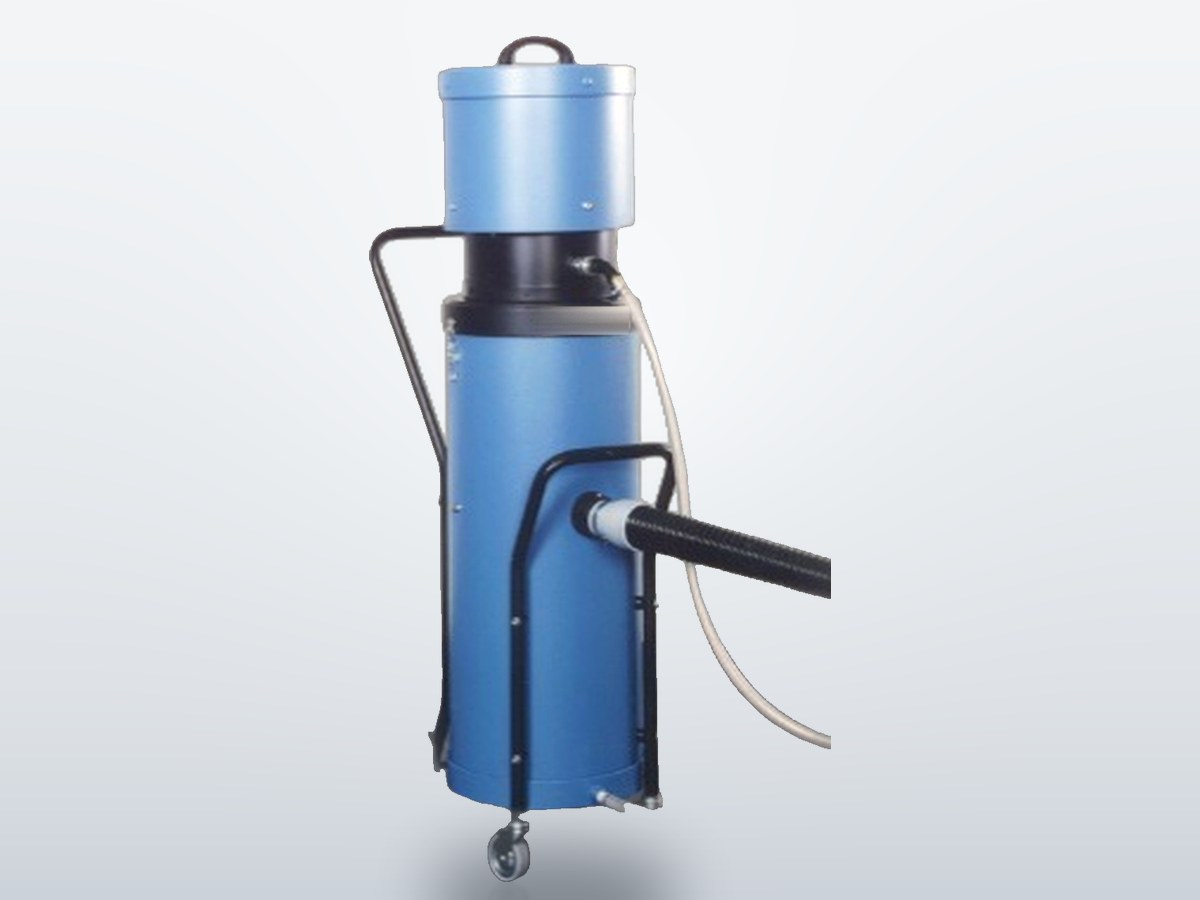
The gentler technique
Blasting in a closed circuit is made for steel, stainless steel and hard coatings. If the surface is softer or more fragile, you work better at low pressure. For that, Phibo supplies two other mobile sets for that, each with its own compressor.
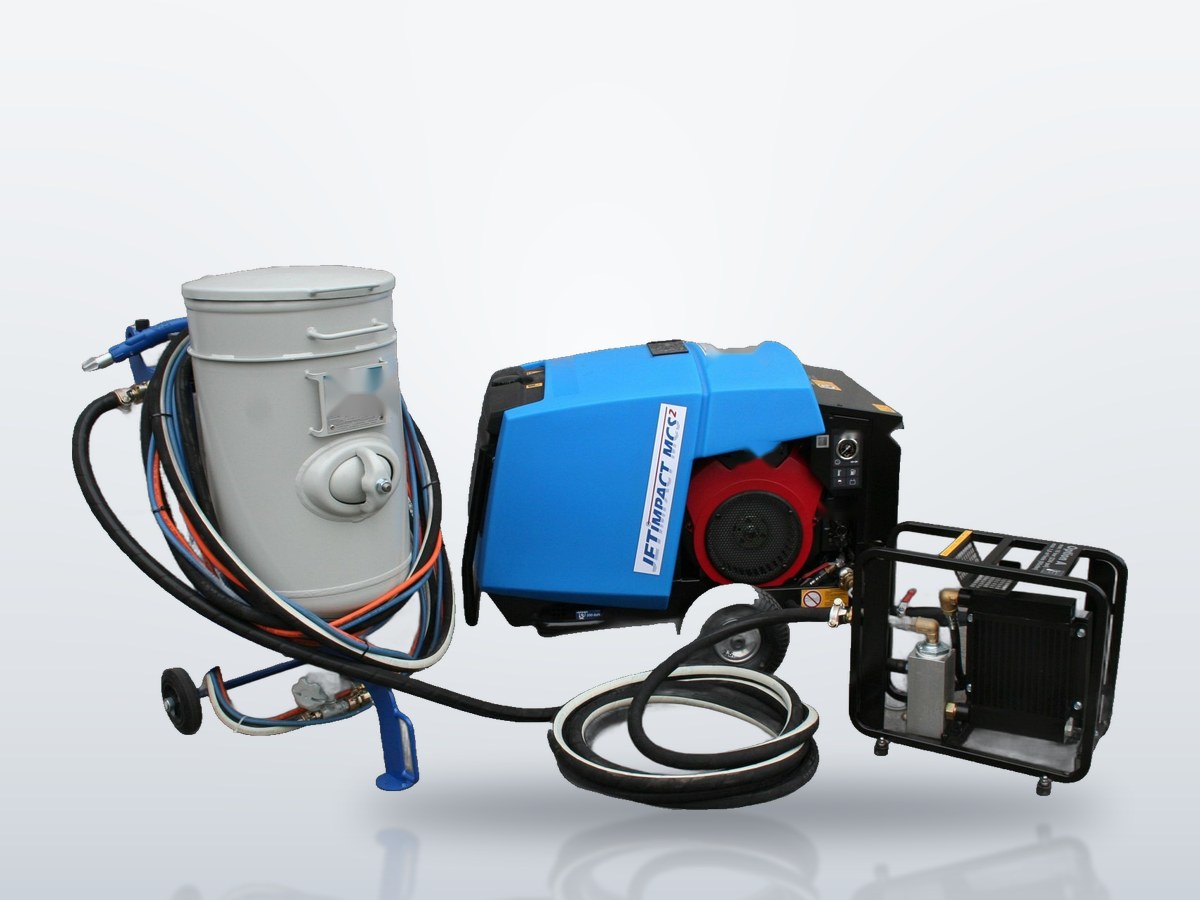
Air gumming at low pressure, with a 55 litre vessel and an 8 metre hose. For facades, natural stone, wood, cast iron and graffiti.
See the MCS² blasting and stripping system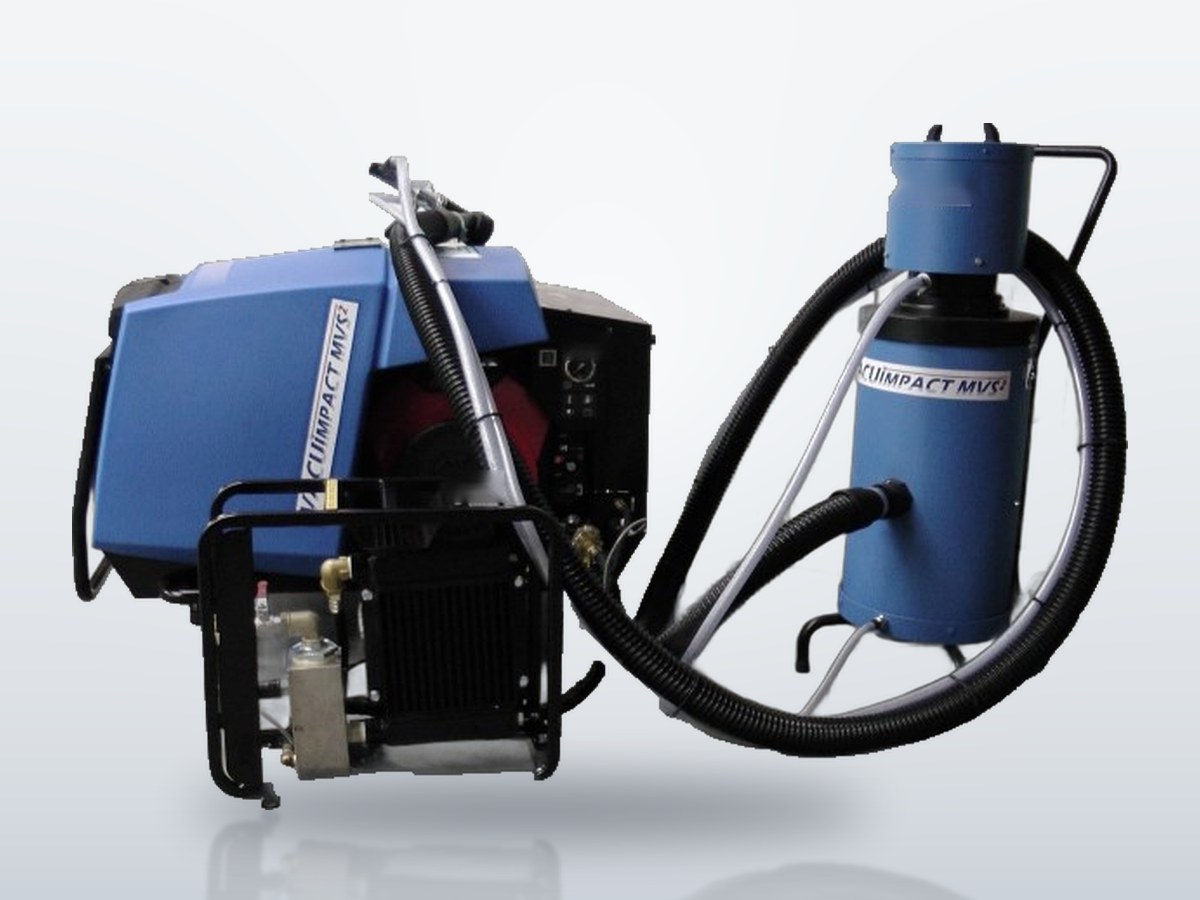
Micro blasting in a closed circuit, with a 10 litre hopper and three brushes. For glass, natural stone and weld discolouration in stainless steel.
See the MVS² micro blasting machineConsumables
In a closed circuit the life of the grain matters. Corundum works aggressively on rust and mill scale, glass beads leave a smoother surface, ceramic beads last longer. The machines handle grains up to 1.2 mm on the VS line and up to 1.5 mm on the VP line. We look at which grain suits your work together with you.
Service
The blast head, the brush and the filter wear under intensive use. How fast depends on the abrasive and on the hours you put in.
You have your installation checked by our own technicians, with no intermediary. You set out the visits in the contract.
Maintenance, repair and spare parts you arrange directly with Phibo. Nozzles, brushes, hoses and filter cartridges are in our own stock.
We show your people how to match the pressure, the abrasive and the brush to the job in front of them.
Elsewhere on the site
Tell us what you are blasting, how large the surface is and how much compressed air you have on site. A proposal with the right model follows after that.
Request
Fill in the form below and add these three things. The less we have to ask, the sooner the proposal is with you.