
Mobile blasting systems
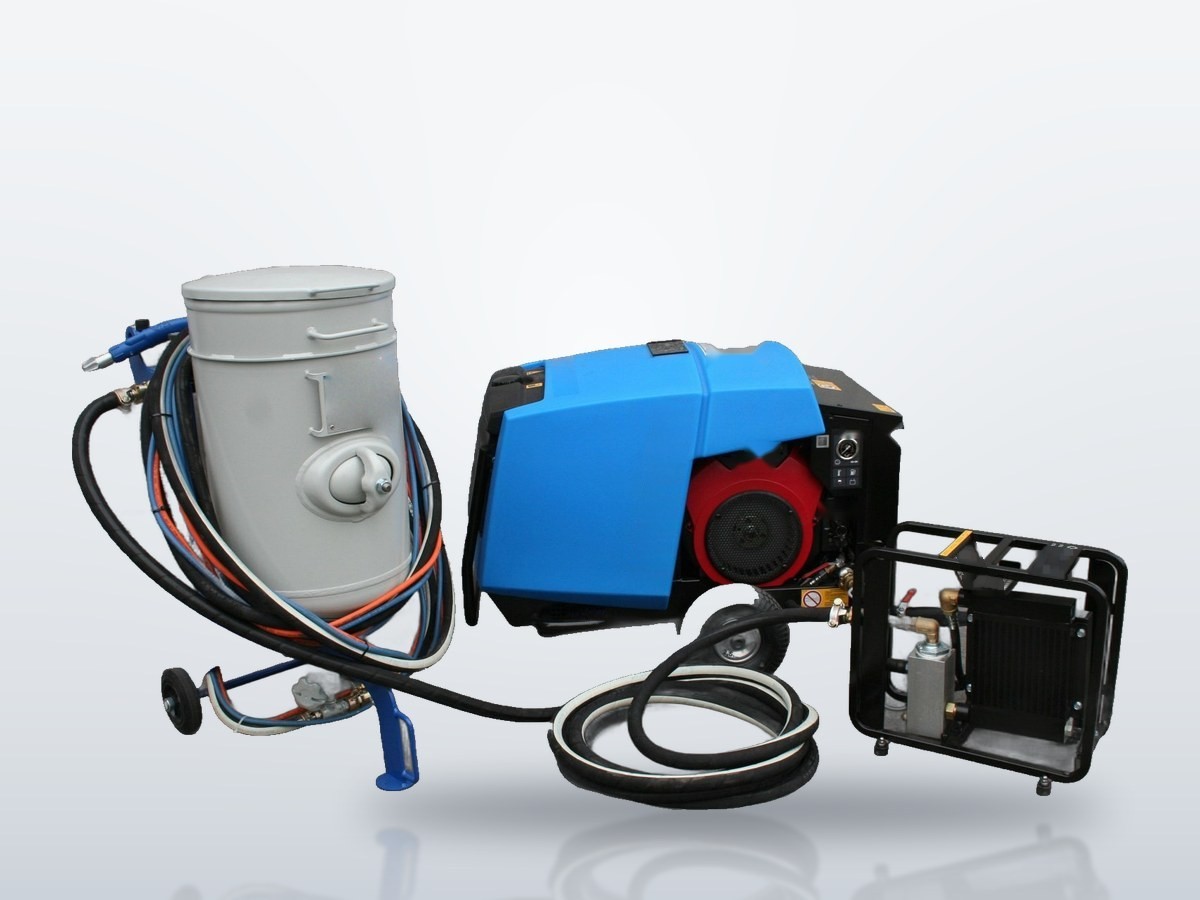
MCS² mobile blasting and stripping system
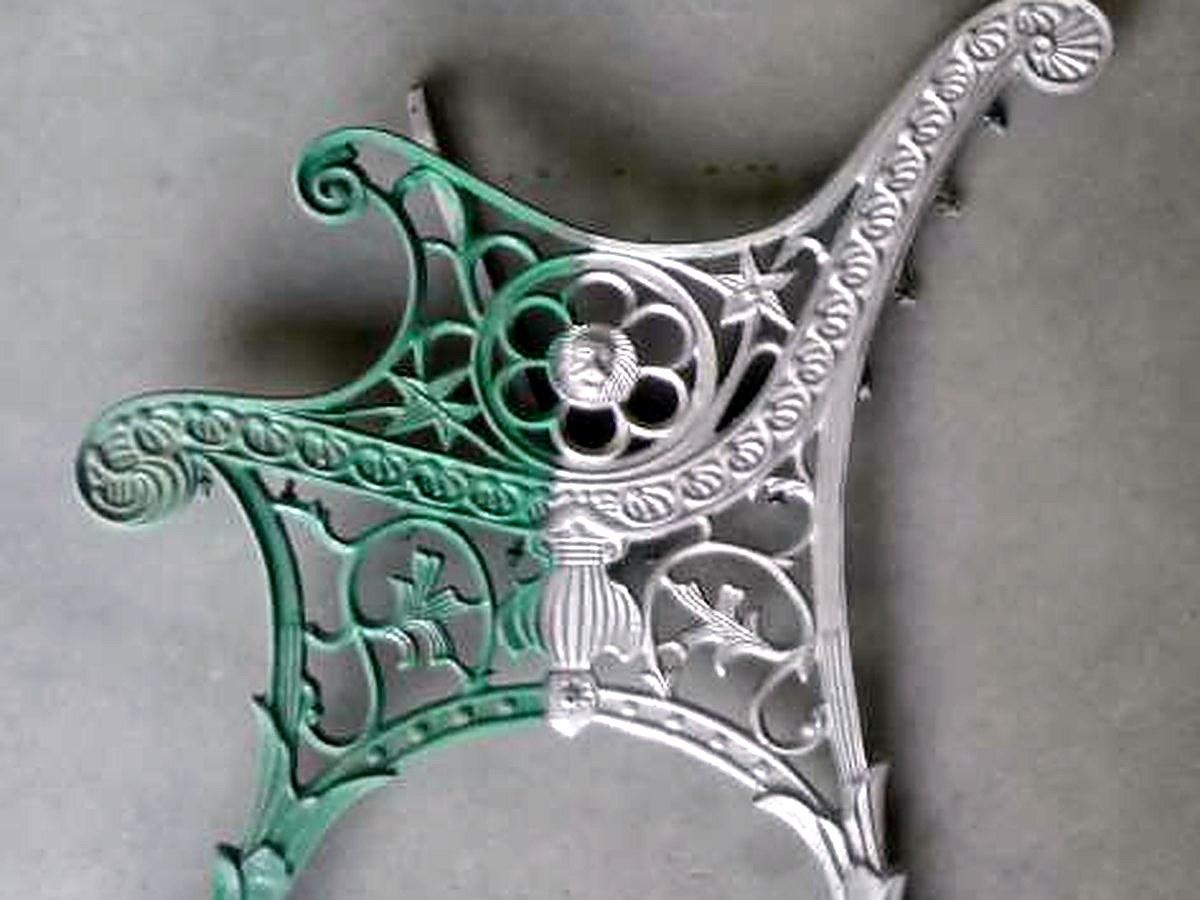
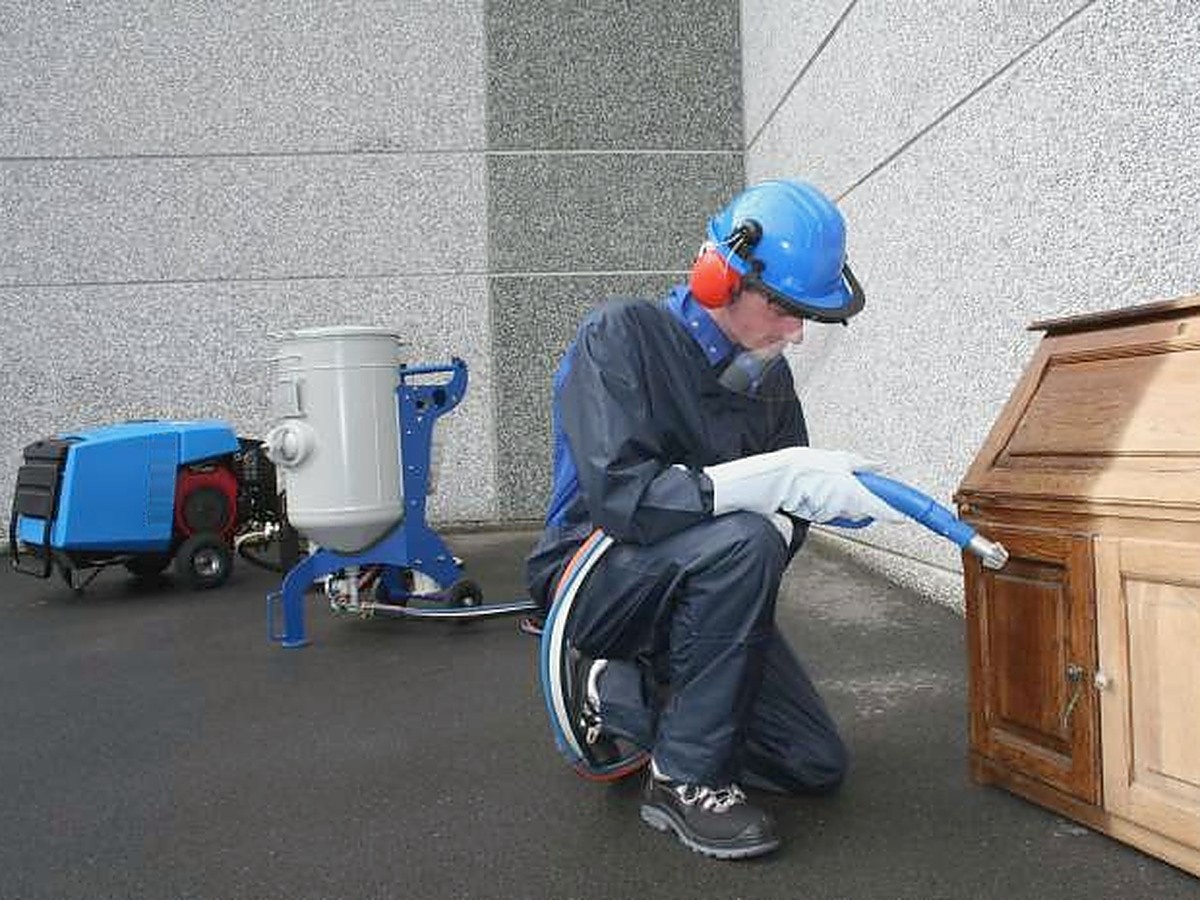
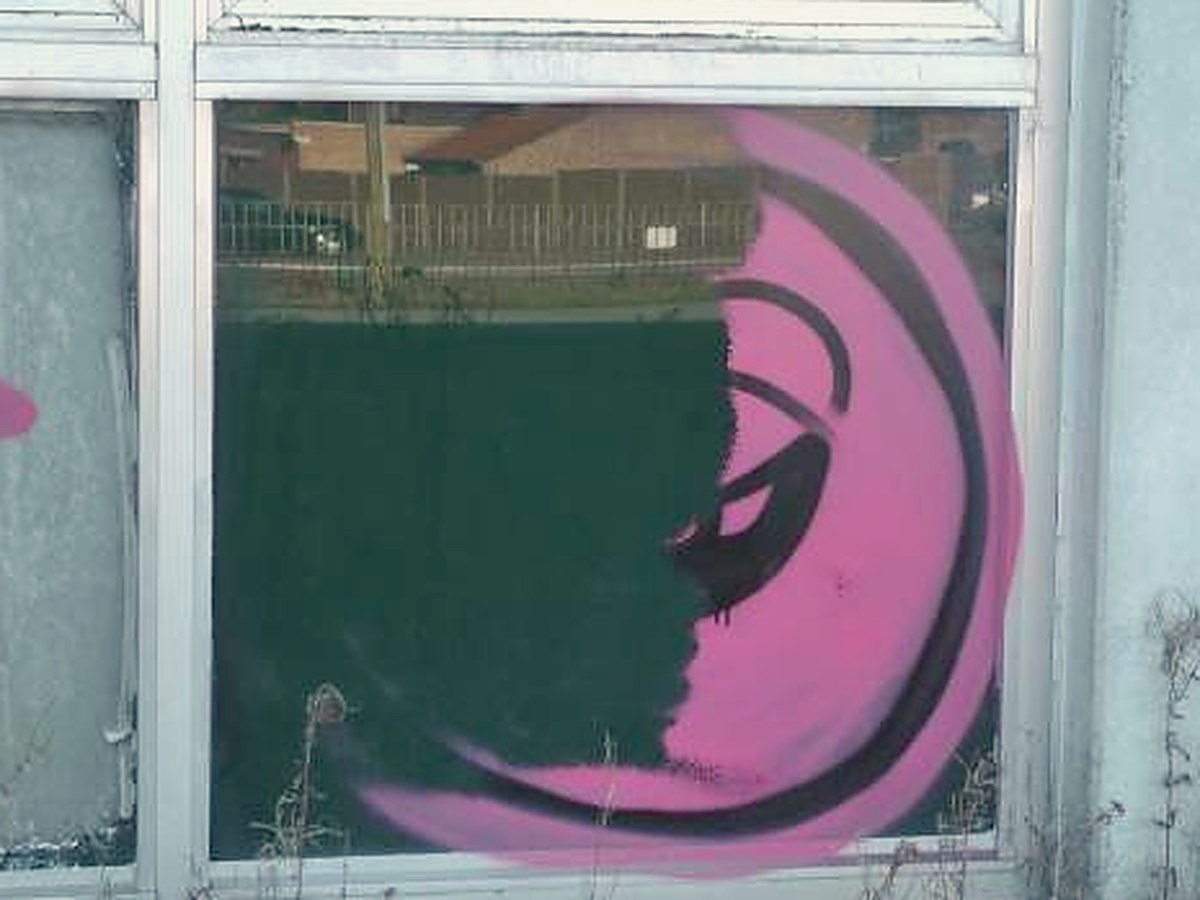
The MCS² is a mobile blasting and stripping system that works at low pressure, between 2.5 and 4 bar. It takes paint, graffiti and deposits off wood, natural stone, metal and glass.
- Pressure vessel of 55 litres, for 30 to 70 kg of abrasive
- Blasting hose of 8 metres with dead man control
- Compressor up to 1,300 l/min, 76 dB(A)
- EC declaration of conformity on delivery
The technique
What air-gumming is, and how it differs from sandblasting
Air-gumming is blasting at low pressure with a fine, homogeneous abrasive. The grain hits the surface at a shallow angle and takes the contamination with it, without attacking the carrier. That is why you can also work on wood, natural stone and glass.
Low pressure, fine grain
The working pressure usually sits between 2.5 and 4 bar. Fine grains up to 250 microns for soft substrates, coarser grains for paint on harder material.
The substrate stays intact
On natural stone the weathered surface skin is preserved; on wood the natural wood grain is left standing. That works because the working pressure stays between 2.5 and 4 bar and the grain hits the surface at a shallow angle.
You set the pressure, the grain and the distance
The filter pressure regulator holds the working pressure steady. You fix the setting on a hidden spot before you start on the visible side.
References
They trust the surface technology of Phibo






The set
What you receive with the MCS²
The set consists of the blast generator, the screw compressor, the aftercooler, an 8 m blasting hose and a 10 m air hose with safety couplings.
Blast generator
Pneumatically controlled, mobile, with sieve and lid, remote control with silencer and a filter pressure regulator.
Screw compressor
Compact and light, with a petrol or diesel engine of your choice and a flow up to 1,300 l/min. With the petrol engine: 15.5 kW and 76 dB(A).
Aftercooler
External, for condensate free compressed air, with the connecting lines permanently fitted.
Hoses and protection
Blasting hose of 8 m, air hose of 10 m with safety couplings, plus visual and hearing protection.
Applications
Where the MCS² is used
From small parts to entire facades. What changes is the grain and the pressure, not the installation.
Specifications
All the MCS² values: pressure, length and flow rate
The installation was reviewed for safety and found EC compliant. On delivery you receive the declaration of conformity for the assembled system.
- The pressure vessel is protected by a safety valve
- The start and stop button sits in the nozzle holder itself
- The aftercooler has a return line for the condensate
- Nozzles with lateral or radial projection are available as options
Technical data for the MCS²
| MCS² | |
|---|---|
| Pressure vessel of the generator | 55 litres as standard |
| Abrasive content | 30 to 70 kg, depending on the bulk density |
| Pressure test on the vessel | 17.16 bar |
| Working pressure | usually 2.5 to 4 bar, depending on the application |
| Blasting nozzle | boron carbide |
| Controls | pneumatic dead man remote control, with start and stop button in the nozzle holder |
| Blasting hose | 8 m |
| Air hose | 10 m, with safety couplings |
| Compressor | screw compressor with a petrol or diesel engine of your choice, up to 1,300 l/min |
| Engine power | 15.5 kW (petrol engine) |
| Sound pressure level of the compressor | 76 dB(A) |
| Compressed air | external aftercooler for condensate free air |
| Grain size | up to 250 microns for soft substrates, above 250 microns for paint and harder surfaces |
| Conformity | the applicable European directives for machinery and for pressure equipment |
| On delivery | EC declaration of conformity for the complete system |
| Options | nozzles with lateral projection from 40 to 90 degrees, nozzle with radial projection over 360 degrees |
Swipe the table to the left to see all columns.
The figures come from the technical data sheet of the MCS². The vessel is protected by a safety valve and fitted with a sieve and a lid.
Consumables
Which abrasive suits low pressure stripping
Here the grain decides the result: its chemical make-up, its shape, its hardness, its grain size and its bulk density. We supply the usual media from stock and choose what suits your substrate together with you. Our media contain no free crystalline silica.
From our own warehouse
- Soft media for natural stone, wood and plaster
- Corundum for rust, mill scale and hard coatings
- Glass beads for a smoother finish
- Delivery in the usual pack sizes and on pallets
Your installation keeps running
The nozzle, the hoses and the filter wear under intensive use. The grain size you choose is what decides how quickly the nozzle wears out.
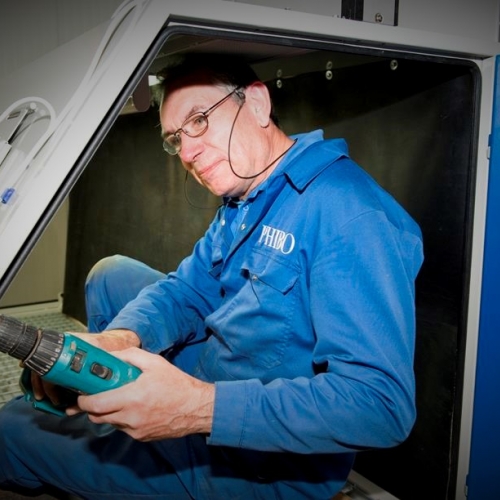
Maintenance
Preventive maintenance in our workshop or at your site. After every service your settings and consumption are reviewed.
More about this service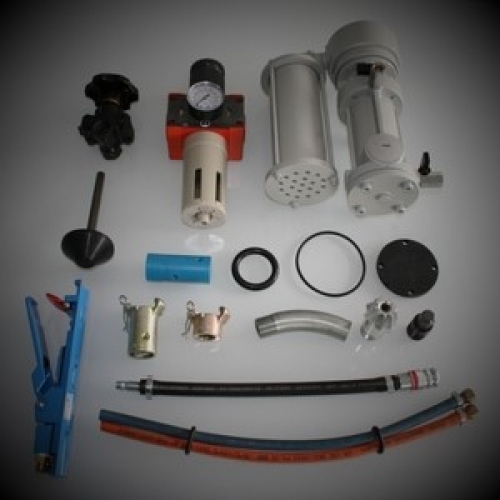
Spare parts
Blast pots, hoses, guns, rubber flaps and filter cartridges from stock. Non-standard parts we make ourselves.
More about this service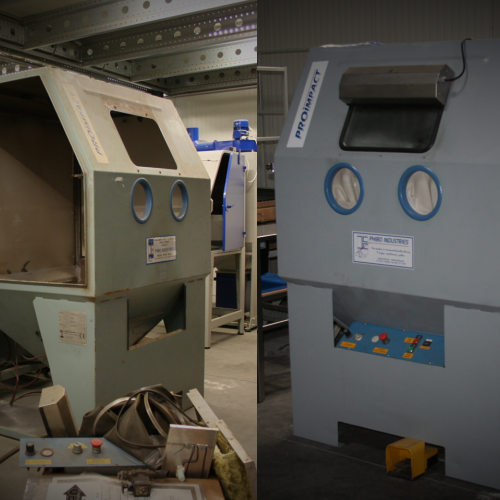
Revision and retrofitting
Modernise an existing installation or convert it to a new process. Revised second-hand installations too.
More about this service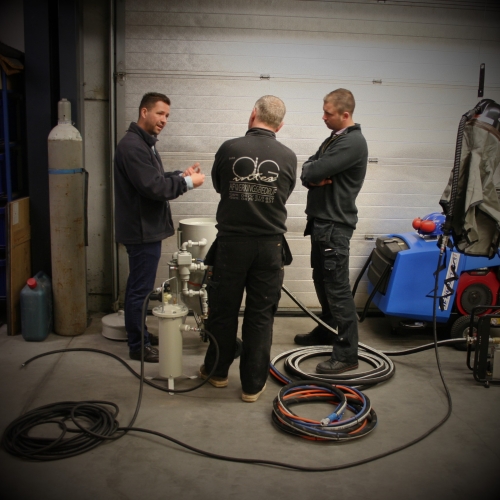
Training
Hands-on training at commissioning, standard with SublimotionProcess® and on request with the other installations. When staff change, we repeat it to suit your team.
More about this serviceElsewhere on the site
What goes with this page
Air-gumming versus sandblasting
The differences in pressure, grain and consumption.
Air-gumming hall
An enclosed hall built to size, with extraction and recovery.
MVS² dust-free blasting
The closed circuit, for work where no dust may escape.
All mobile blasting systems
The three systems side by side: the difference in pressure, in size and in what comes with the set.
We call you and go through your application
Tell us which substrate you are treating and what has to come off. A proposal with the right set and the right abrasive follows after that. Fill in the form below.
- What you are blasting, and how large the surface is
- The contamination by name: rust, coating, mill scale, deposit
- Where the work stands: on site, inside a building or in your workshop