How is this different from an ordinary pressure washer?
The cabinet keeps mist, spray water and dirt inside, instead of in your workshop. The water is heated and contains a cleaning fluid, which loosens grease far faster than cold tap water. And the bath is filtered and reused instead of flushed away, which saves you water and disposal costs over a year.
What is the difference between the C versions and the T versions?
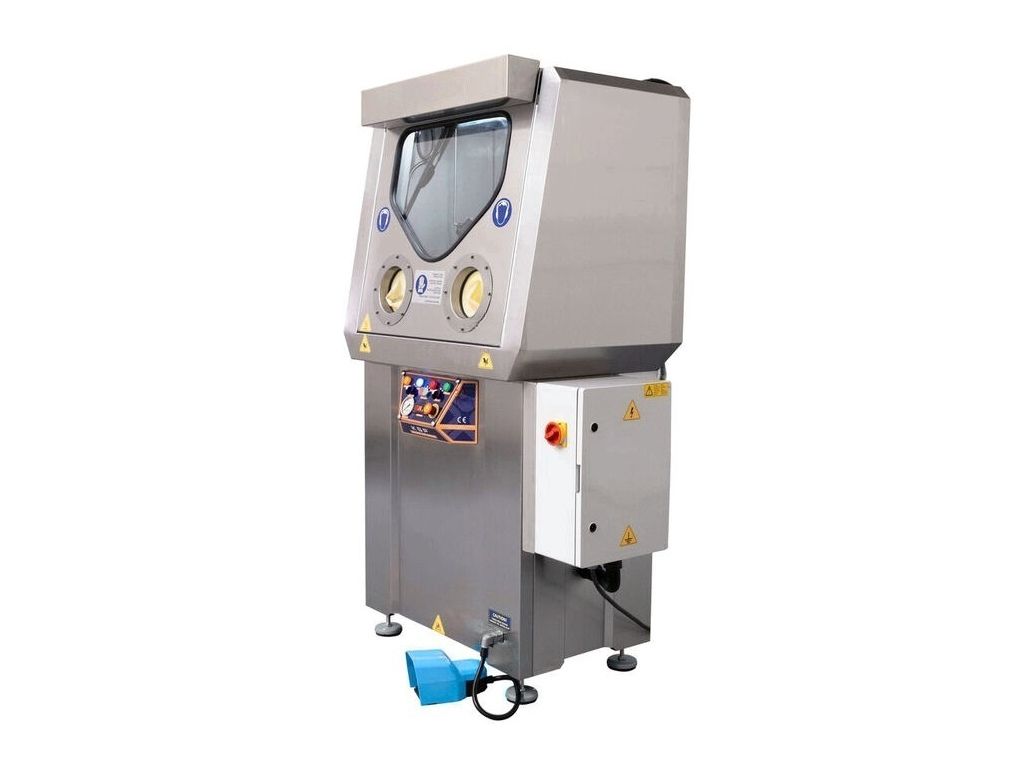
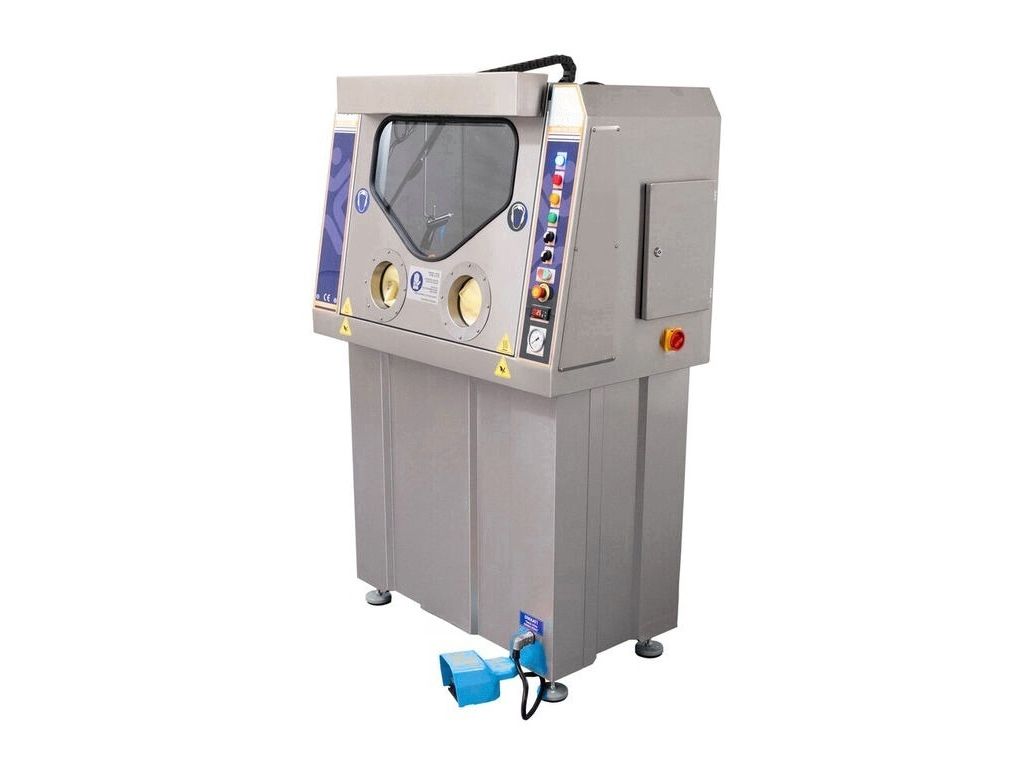
Only the way of loading. On the C800 and C1100 a pneumatic front door opens. On the T versions the entire cabinet tilts away, which gives freer access when you place the part. Work area, pressure, tank and heating are identical.
When do I choose a CR version instead of a C version?
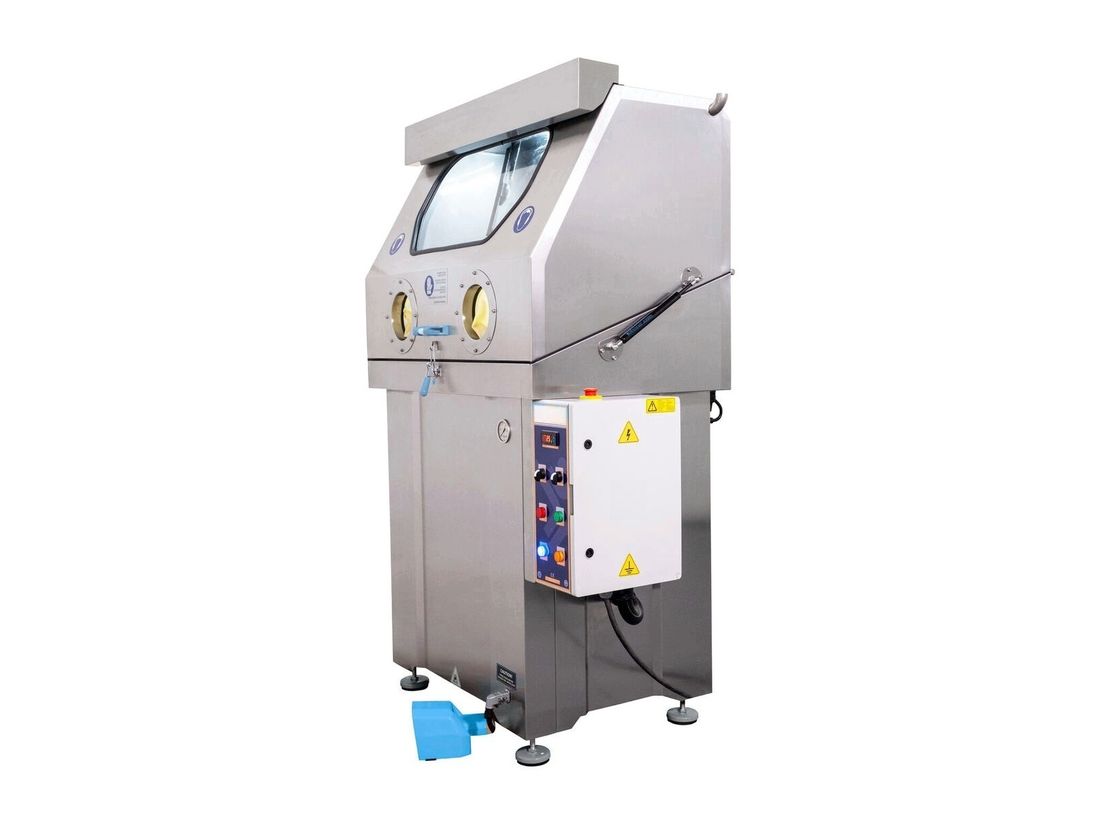
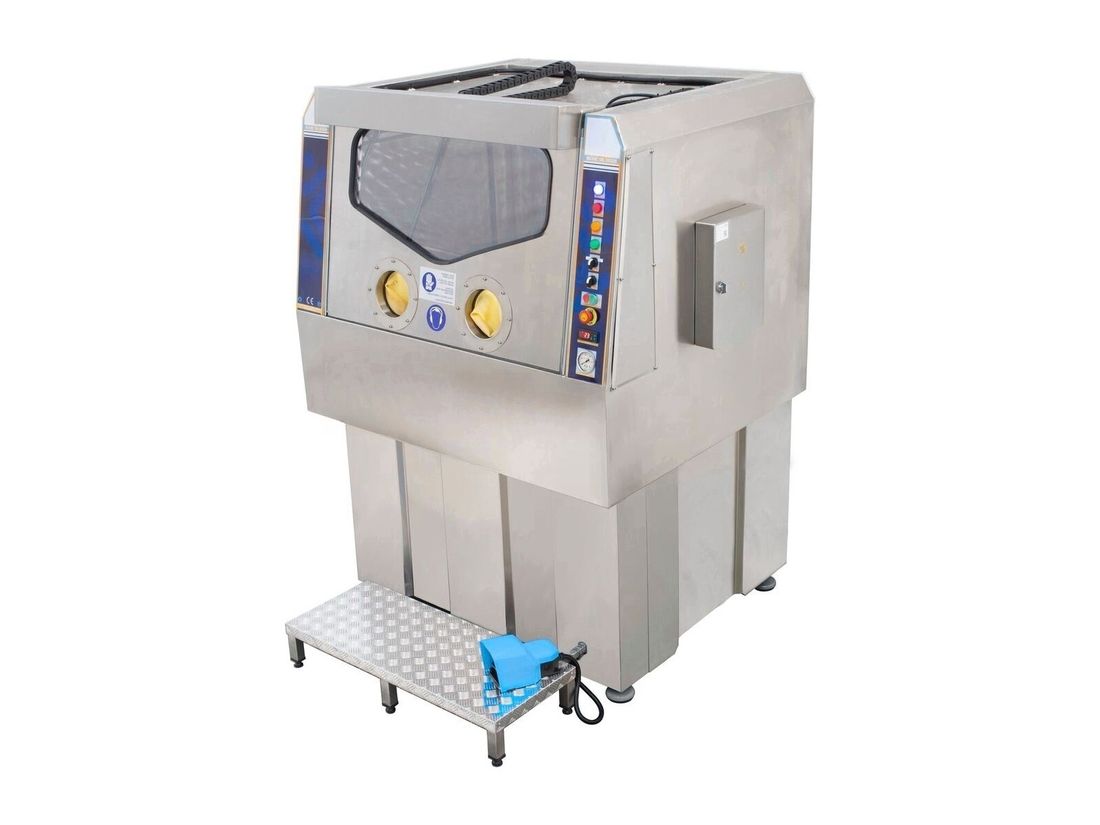
If your parts are heavy or if you want to be able to turn them while spraying. The CR versions have a turntable, a side door, a loading cart and a hand brush, and go up to 300 or 400 kg instead of 70 or 100 kg.
What pressure do I need?
As standard these cabinets work at 60 bar with a flow rate of 14 l/min. That is enough for most oil and grease contamination in combination with heated water. For carbon deposits and baked-on residues, 150 bar is available as an option. If you are unsure, go through it with us: based on your contamination and your material we will tell you whether 60 bar is enough, before you invest in the option.
How often does the bath have to be changed?
The machine has three filters: at the tank inlet, at the tank outlet and on the pump line. All three are washable and reusable. How long the bath lasts depends entirely on your contamination and on how much you wash. With the optional oil separator it lasts longer, because the floating oil is removed continuously. Tell us what you are cleaning off and how much you wash and we will give you a realistic estimate.
Which cleaner or additive do I use in this machine?
We supply the cleaner with the machine, because it helps determine the result. Phibo has its own range of water-based cleaners and additives, from corrosion-inhibiting cleaners to defoamers. We choose the product and the dosage that suit your parts together with you, based on your contamination and the material of your parts.
What happens after I send a request?
We call you. Before we work out a quotation, we go through your parts, your contamination and your volumes together, so that the proposal is right straight away. So you get a real conversation with someone who knows the machines, and not an automatic e-mail with a brochure.
Is the machine CE compliant, and does it have to be inspected every year?
You receive the machine with CE marking, with a declaration of conformity and a manual. An annual inspection keeps the installation safe and reliable. You can arrange that with us in a maintenance service contract, together with the periodic maintenance.
What happens after delivery?
Phibo remains your point of contact. After commissioning and the training of your operators you can cover what follows in a maintenance service contract, so that your installation is inspected periodically and keeps running as it did on day one. We match what goes into your contract to your machine and to how intensively you use it. We put that on paper together with the quotation.
How does it work for service and spare parts?
You arrange maintenance, repairs and overhauls directly with Phibo, and the spare parts as well. For parts that are not in stock, you receive a lead time straight away.
What warranty do I get, and what is the delivery time?
You get one year of warranty, on every machine. The delivery time depends on the installation you choose and is therefore always stated in your quotation.
Is the training of our operators included in the price?
Yes. On delivery and commissioning we train your operators, and that is included in the price. That way everyone who works with the machine knows how to operate and maintain it.