Application for the plastics, rubber, aluminium and glass industries
Extrusion die cleaning without damage
Extrusion die cleaning means removing deposits and production residue from dies, moulds and extruders without damaging the sharp edges, the fine profiles or the surface. Wet blasting as the recommended method, ultrasonic cleaning for fine contours and the high-pressure cabinet.
- Wet blasting at an operating pressure of around 4 bar
- Sharp edges and fine profiles are retained
- A neutral surface, ready for post-treatment
- Surface technology specialist since 1988
The result
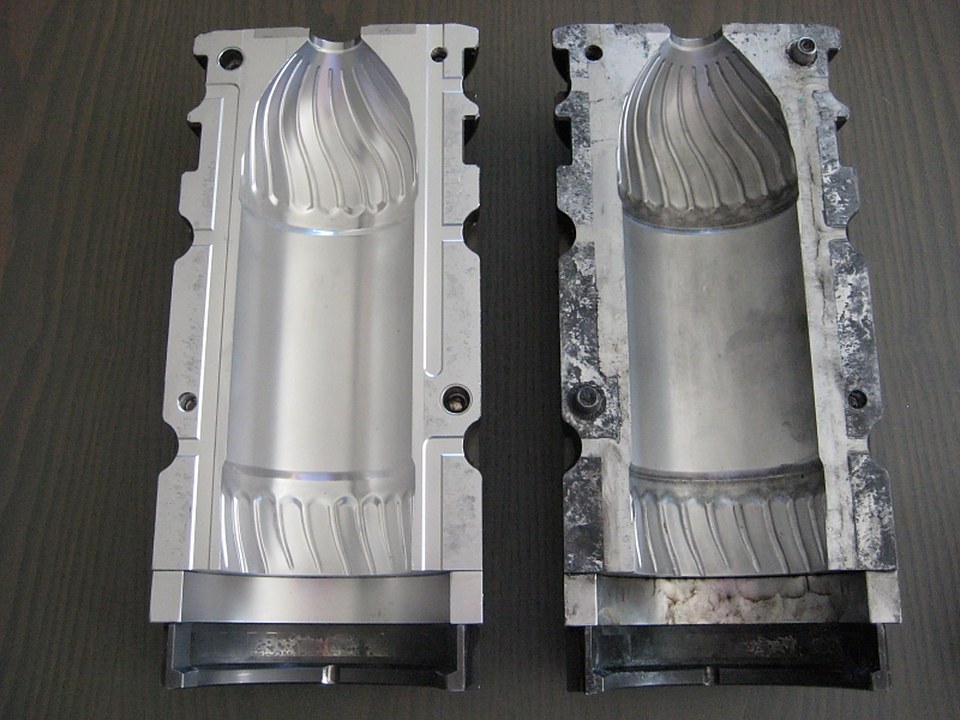
Half cleaned, half fouled
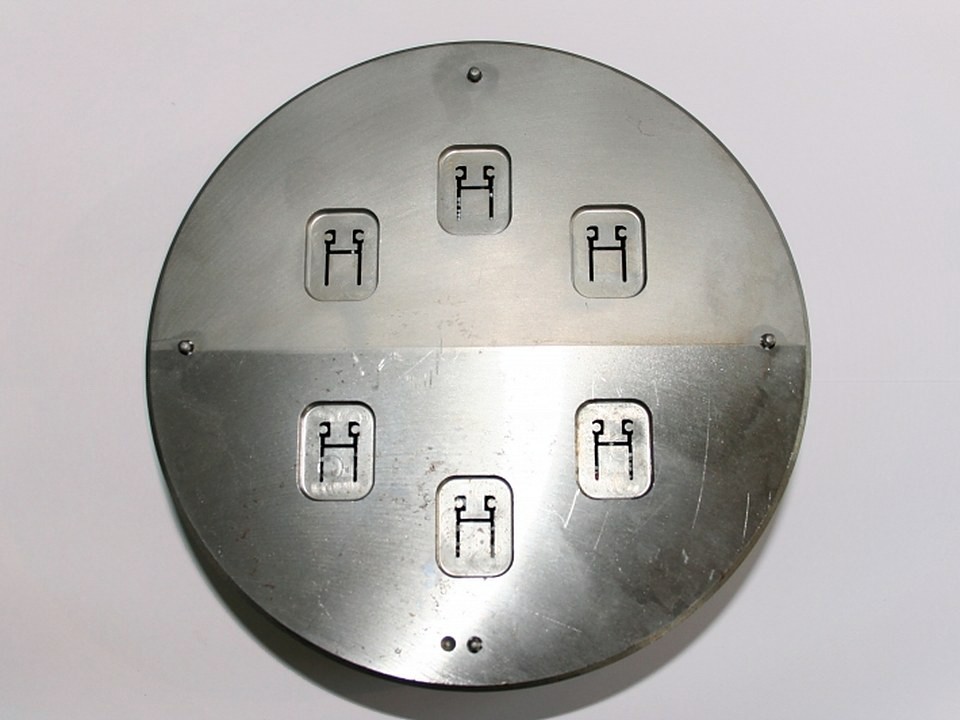
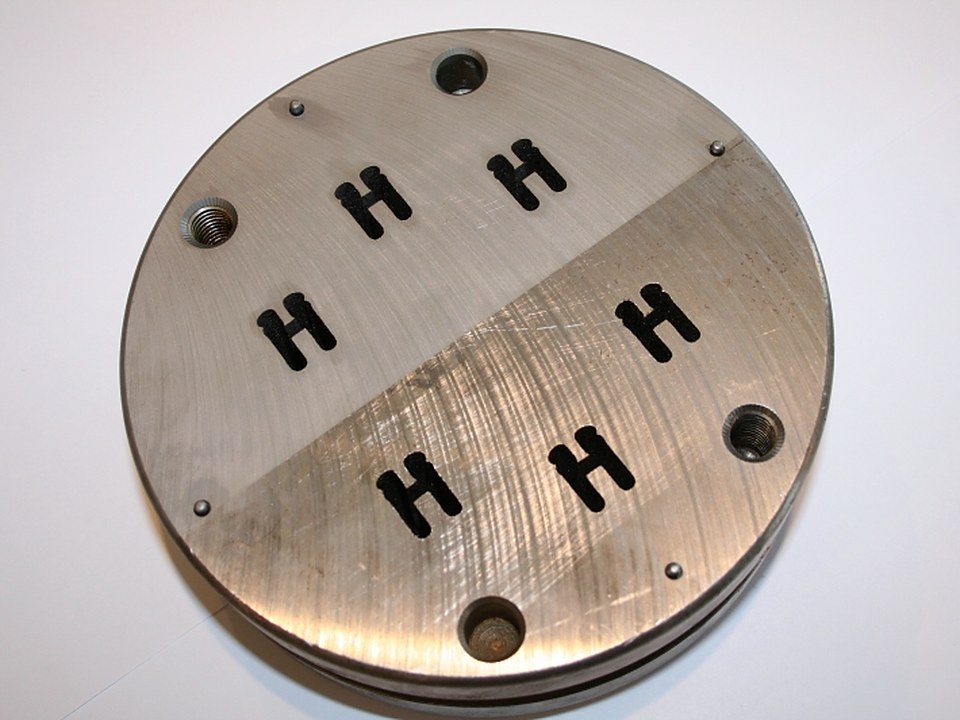
Deposits and production residue build up in the tool, right into the corners and around the profiles. This is the difference on one and the same die.
How it works
Why Phibo recommends wet blasting for moulds and dies
Wet blasting is a cleaning method in which a mixture of water and abrasive, accelerated and atomised by compressed air at an operating pressure of around 4 bar, is projected onto the die in a controlled way. The water is what sets it apart from dry blasting.
Sharp edges and fine profiles stay
The cleaning is extremely controllable and does not damage the substrate. You set it anywhere from an aggressive treatment to precision work on dimensionally sensitive parts.
No grains in the surface
The water cushions the impact, so no beads become embedded in the surface of the die.
Ready for post-treatment
The surface comes out neutral, not contaminated. Any post-treatment can follow straight away.
No dust, no aggressive chemicals
Wet blasting is dust-free and non-toxic, without aggressive chemicals or solvents. The installation works in a closed circuit.
Ultrasonic and cabinet
Ultrasonic cleaning, for fine contours and bores
An industrial ultrasonic cleaner cleans with ultrasonic waves in a heated bath. The waves form microscopic gas bubbles that implode on the surface and loosen the dirt, even in cavities and blind holes. Moulds and casting dies are among the typical parts, precisely because their fine contours must not be damaged.
The high-pressure cabinet, for targeted spraying
In a parts washer cabinet the operator sprays heated water under pressure exactly where the dirt is, inside an enclosed cabinet. It is the choice when the part is too complex or too valuable to place blindly in a basket, like a mould or a die.
Methods compared
Four ways to clean a mould or die
Chemical cleaning, grinding and sandblasting are the conventional methods. Here is how they compare with dry ice blasting, ultrasonic cleaning and wet blasting.
| Method | Advantage | Drawback |
|---|---|---|
| Chemical cleaning, grinding, sandblasting | Well-known methods. | Inefficient and harmful to the environment. |
| Dry ice blasting | The dry ice sublimates, no abrasive is left behind. | Needs its own installation and a supply of dry ice. |
| Ultrasonic cleaner | Cleans right into bores and fine contours without damaging them. | The die must fit completely in the bath. |
| Wet blasting | Controlled and dust-free. Sharp edges and fine profiles are retained. | The part comes out of the cabinet wet and is rinsed with fresh water. |
Swipe the table to the left to see all columns.
References
They already work with Phibo
A selection of Phibo customers, including companies in rubber and plastics and the metals and steel industry.






The installations
Installations for cleaning moulds and dies
Wet blasting is the method Phibo recommends. The ultrasonic cleaner and the high-pressure cabinet add to it, depending on the die and the deposit.
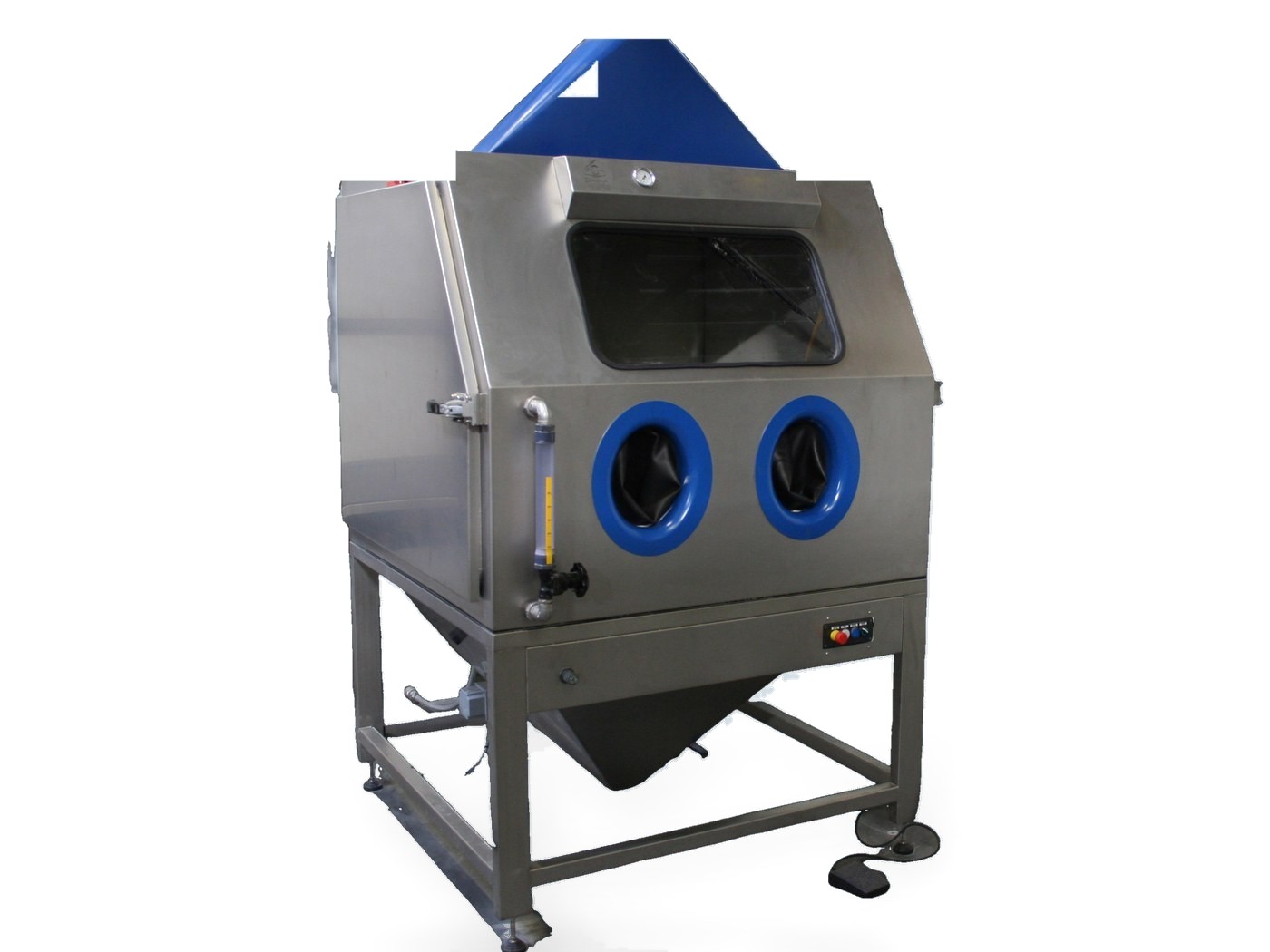
Wet blast cabinets
The compact wet blasting cabinet, the spacious Neptuna and a platform for parts too large for any cabinet.
View wet blasting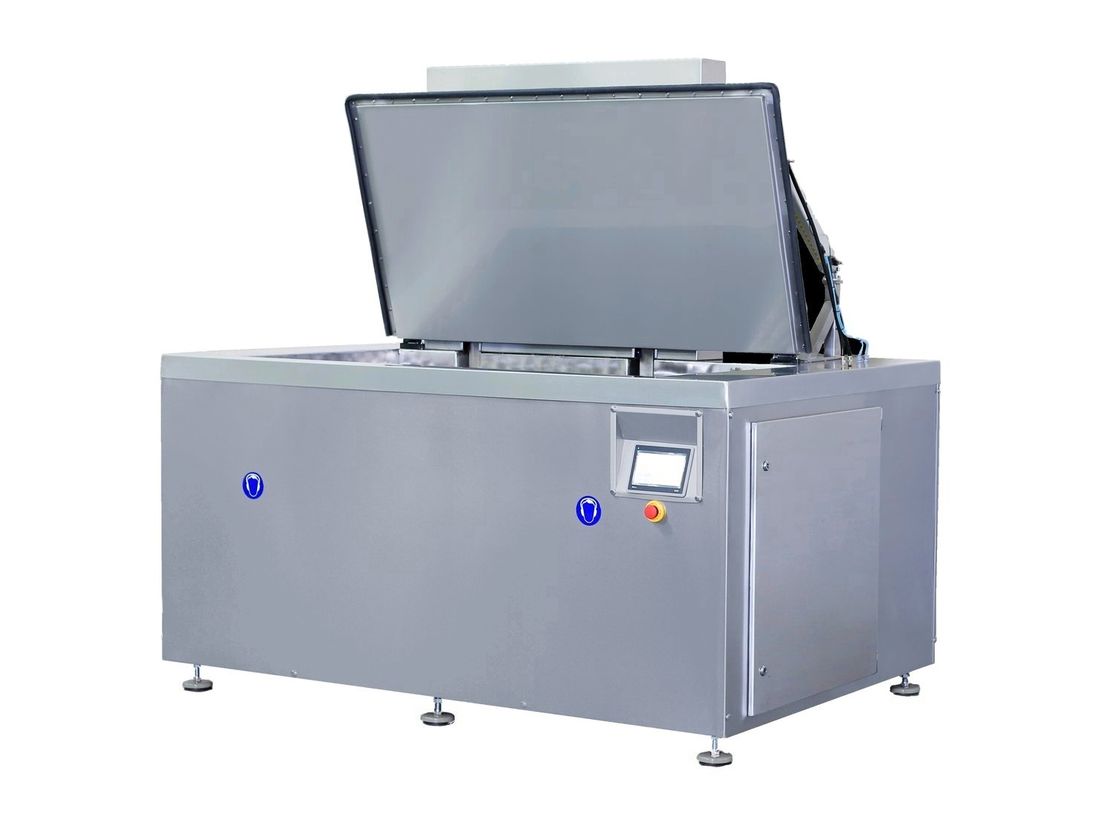
Ultrasonic cleaners
Eight sizes, with a tank of 100 to 2000 litres, at 27 or 40 kHz.
View the ultrasonic cleaners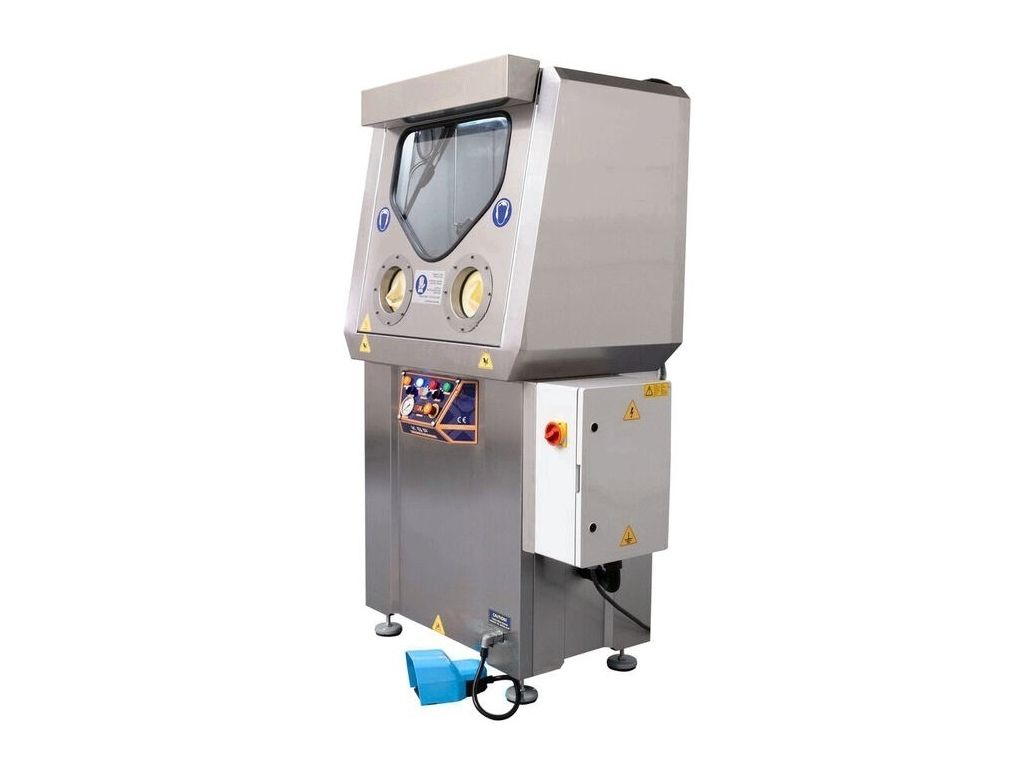
High-pressure parts washer cabinets
Working pressure 60 bar, 150 bar optional, with a work area up to 1300 x 1200 mm.
View the cabinetsFrequently asked questions
Questions about cleaning moulds and dies
Why not clean extrusion dies by sandblasting or with chemicals?
Those conventional methods are inefficient and harmful to the environment. Phibo recommends wet blasting. The mixture of water and abrasive is atomised by compressed air at around 4 bar, which allows extremely controllable cleaning without dust or aggressive chemicals, so sharp edges and fine profiles are retained.
Does wet blasting affect sharp edges and fine profiles?
No. Wet blasting can be set anywhere from an aggressive treatment to precision work on dimensionally sensitive parts. The substrate is not damaged, and sharp edges and fine profiles are retained.
Is abrasive left behind in the die?
The water cushions the impact, so no beads become embedded in the surface. After the treatment you rinse the die with fresh water. We work out with you how to deal with the cooling channels and vents of your die.
What is the best way to clean moulds and dies without damaging them?
Phibo recommends wet blasting, for its extremely controllable cleaning without damage to the substrate. For fine contours, bores and cavities, an ultrasonic cleaner is a useful addition.
Can I clean extruders and glass moulds with the same process?
Yes. Phibo recommends wet blasting for moulds, dies and extruders in the plastics, rubber, aluminium and glass processing industries. The circulation circuit and the filtration principle of the cabinet allow a wide range of blasting media, so one cabinet covers many applications.
Can cleaning, rinsing and drying be automated in one closed-loop machine?
Yes. Wet blasting is available in manual and fully automated versions. A fully automated installation carries out cleaning, rinsing and drying in succession, with pre-programmed treatments in a completely closed circuit, without water drainage to the sewer. We work out with you which version suits your dies.
Consumables
Get the blasting media from Phibo too
Phibo supplies blasting media from its own warehouse, including walnut shell, a soft, natural abrasive for moulds and dies. We help you choose the right media for your die and your installation, and the cleaner for your ultrasonic bath.
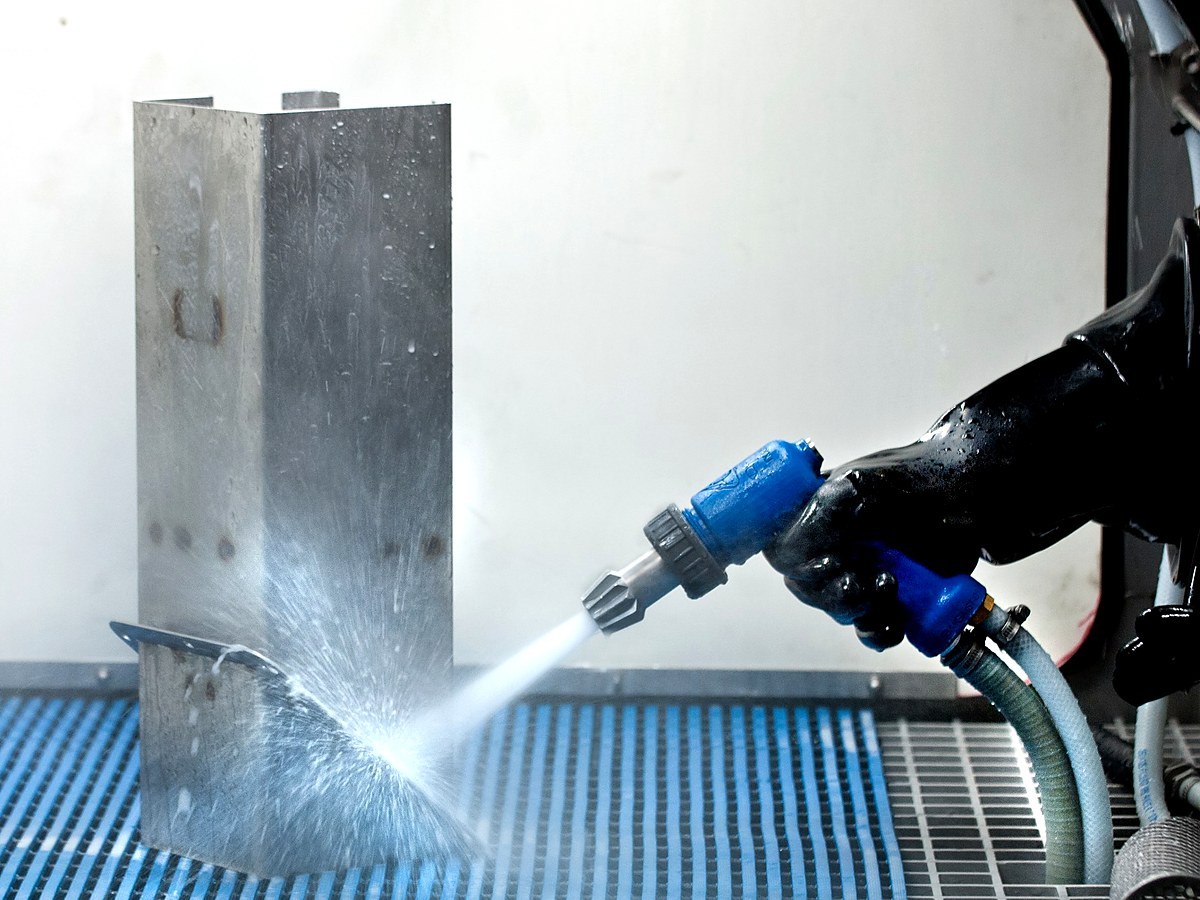
Your installation keeps running
Maintenance, repair and spare parts, directly from Phibo, by our own technicians.
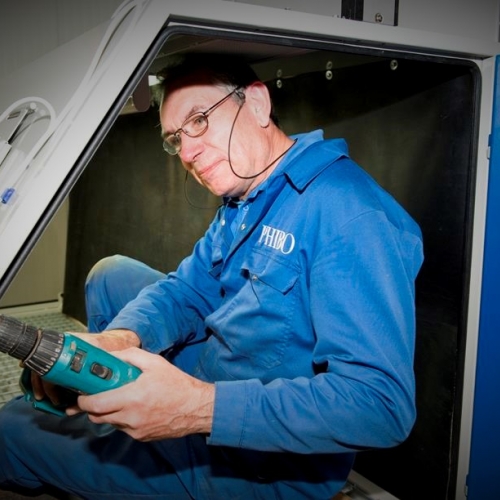
Maintenance
Preventive maintenance in our workshop or at your site. After every service your settings and consumption are reviewed.
More about this service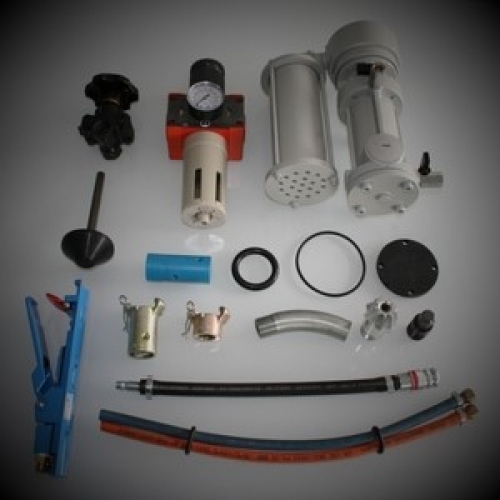
Spare parts
Blast pots, hoses, guns, rubber flaps and filter cartridges from stock. Non-standard parts we make ourselves.
More about this service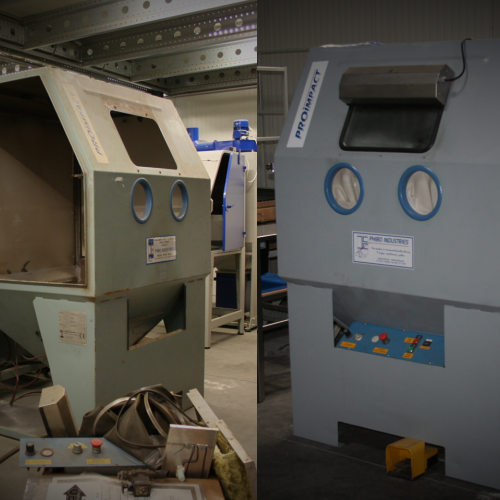
Revision and retrofitting
Modernise an existing installation or convert it to a new process. Revised second-hand installations too.
More about this service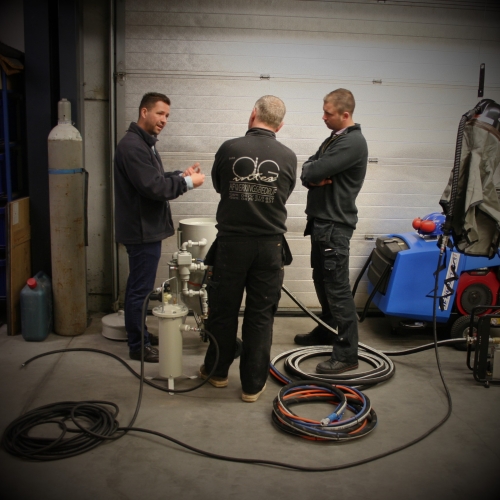
Training
Hands-on training at commissioning, standard with SublimotionProcess® and on request with the other installations. When staff change, we repeat it to suit your team.
More about this serviceRequest
We call you and go through your application
Fill in what you know below, and we go through the rest together on the phone.
- The type of die or mould and the material you process
- The dimensions and weight of the largest die
- The deposit on it and how often you clean
- A photo of a fouled die, via WhatsApp if you like