
The comparison
Room temperature or hot blacking
Many companies still blacken their parts hot, above 140 °C, in house or through subcontracting. The Blackfast process does the same work at around 20 °C, in your own workshop.
- Blacking at around 20 °C, instead of above 140 °C
- No distortion, because no heat is involved
- Cast iron turns black, not brown
- Low start-up costs and low running costs
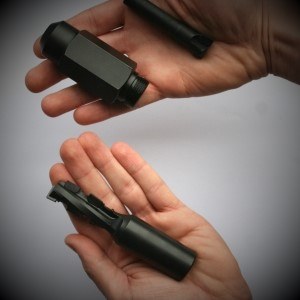
Nine points
The Blackfast process next to hot blacking
| Blackfast process | Hot blacking |
|---|---|
| Blacking at room temperature, 20 °C | Blacking at high temperature, above 140 °C |
| Low energy costs | High energy costs |
| Low running costs | Expensive process |
| Safe chemicals that are simple to use | Extremely hazardous, with splashes and fumes |
| No distortion | Distortion possible through the high temperature |
| Low start-up costs | Expensive and complex installation and extraction systems required |
| Simple in-house system | Serious consequences for the shop floor and its surroundings |
| Blacking cast iron is possible | Cast iron turns brown, not black |
| Easy process to control | Difficult process to control |
Swipe the table to the left to see all columns.
These nine points come from Phibo's Blackfast brochure.
From the brochure
Advantages of room temperature black oxide
The advantages the Blackfast process brings to your parts and to your shop floor.
No dimensional change
No build-up and no material loss, so it suits precision parts that are turned or milled.
High aesthetic value
A uniform deep black colour, with low light reflection.
Better corrosion resistance
The blackened surface resists corrosion better, suitable for indoor applications.
Good lubricating properties
The blackened surface has good lubricating properties, which matters for gears and moving parts.
One minute in the blacking bath
In the blacking fluid, one minute is enough for a uniform black surface. Above 20 °C or with special materials, thirty seconds can be enough.
References
They rely on Phibo for surface treatment






In practice
A blacking line on the shop floor
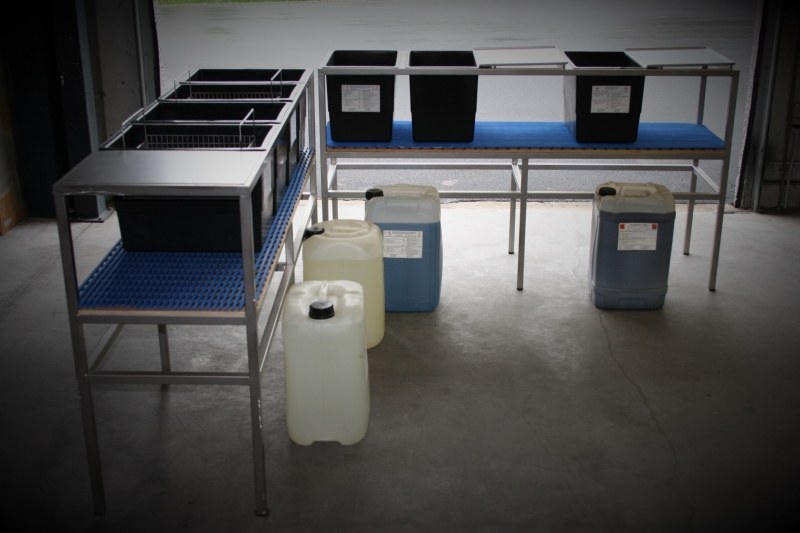
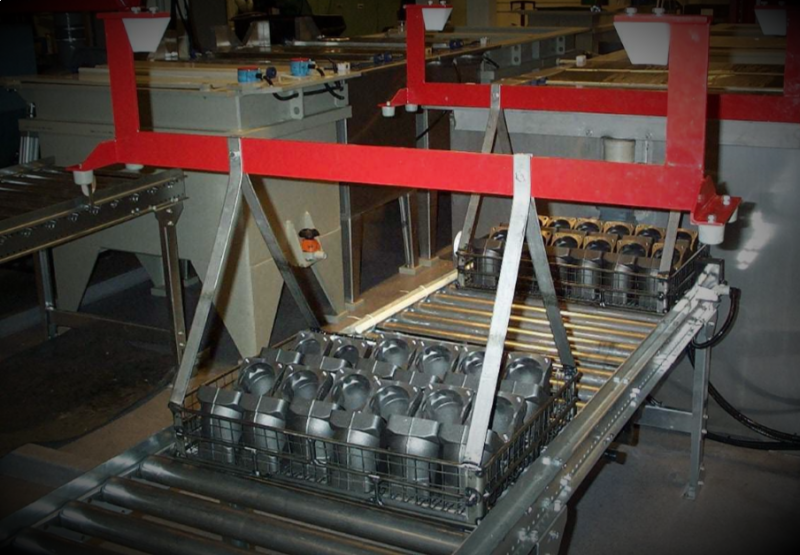
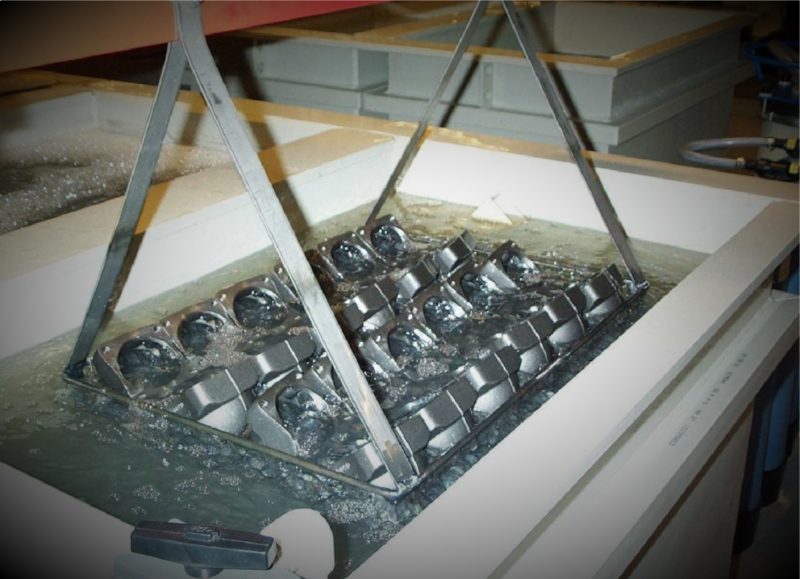
Applications
Where it is used today
Any precision part in steel or cast iron qualifies, turned or milled. Think of gears, bolts and nuts, hydraulic parts and tooling components.
- Machine building
- Tool manufacturing
- Precision engineering
- Hydraulics
- Firearms manufacturing
- Fasteners
- Gears
Consumables
The fluids are part of the choice
If you switch, Phibo also supplies the fluids your line runs on.
From our own warehouse
The process fluids, the blacking paste and the protective equipment are in stock. You order them from the same partner that supplies your line.
- Degreaser and conditioner
- Blacking fluid for steel and cast iron
- Corrosion-protecting, water-displacing oil
- Blacking paste for manual work
Your installation keeps running
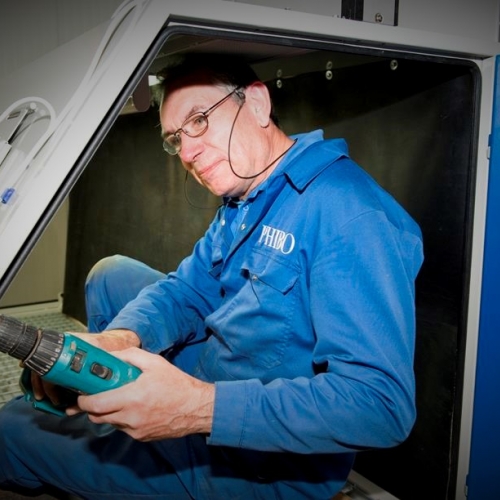
Maintenance, repair and spare parts, directly from Phibo, by our own technicians.
Maintenance
Preventive maintenance in our workshop or at your site. After every service your settings and consumption are reviewed.
More about this service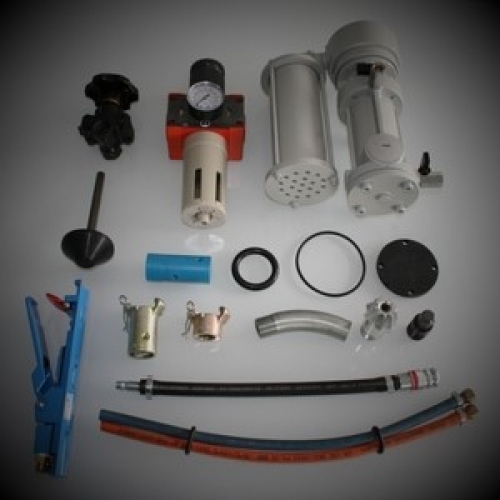
Spare parts
Blast pots, hoses, guns, rubber flaps and filter cartridges from stock. Non-standard parts we make ourselves.
More about this service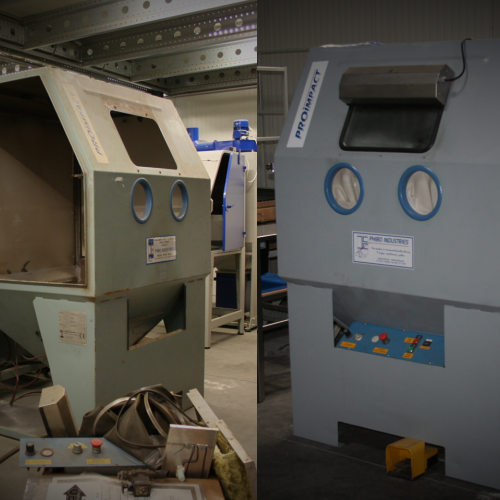
Revision and retrofitting
Modernise an existing installation or convert it to a new process. Revised second-hand installations too.
More about this service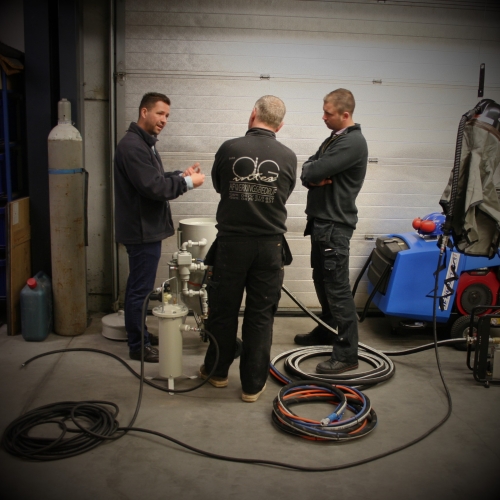
Training
Hands-on training at commissioning, standard with SublimotionProcess® and on request with the other installations. When staff change, we repeat it to suit your team.
More about this serviceWe call you and go through your application
Send us the material of your parts, their dimensions and the number per day. You will receive a proposal with the blacking line that suits your parts. One partner, from the first conversation to the last spare part.