
The comparison
Many companies still blacken their parts hot, above 140 °C, in house or through subcontracting. The Blackfast process does the same work at around 20 °C, in your own workshop. Below are the nine points on which the two differ.
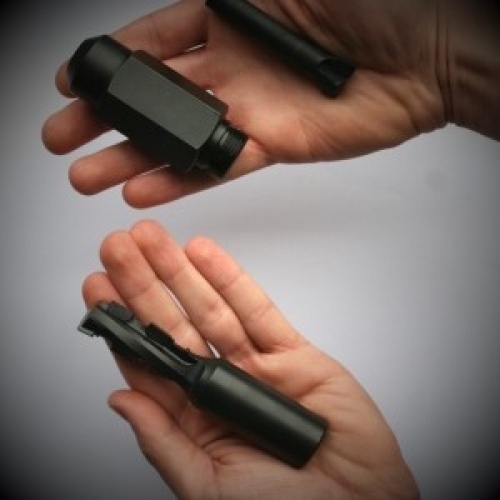
Nine points
These nine points come from Phibo's Blackfast brochure.
From the brochure
The advantages the Blackfast process brings to your parts and to your shop floor.
No build-up and no material loss, so it suits precision parts that are turned or milled.
A uniform deep black colour, with low light reflection.
The blackened surface resists corrosion better, suitable for indoor applications.
The blackened surface has good lubricating properties, which matters for gears and moving parts.
In the blacking fluid, one minute is enough for a uniform black surface. Above 22 °C or with special materials, thirty seconds can be enough.
Rather call us first? +32 55 21 98 99
References
 Automotive
 Aerospace
 Metalworking
 Chemicals
 Rubber and plastics
 Rail
RailIn practice
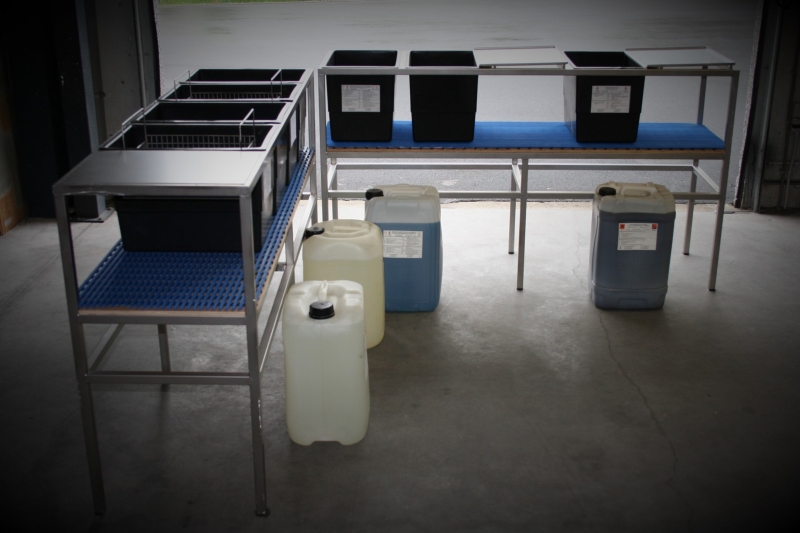
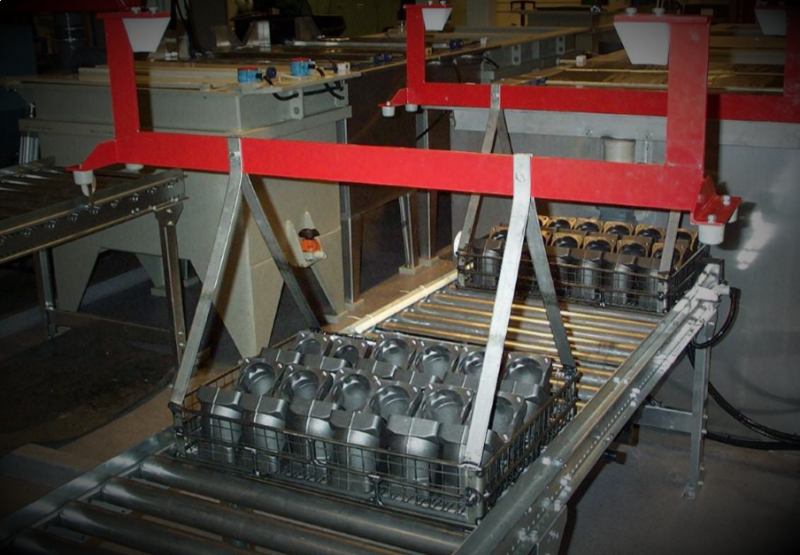
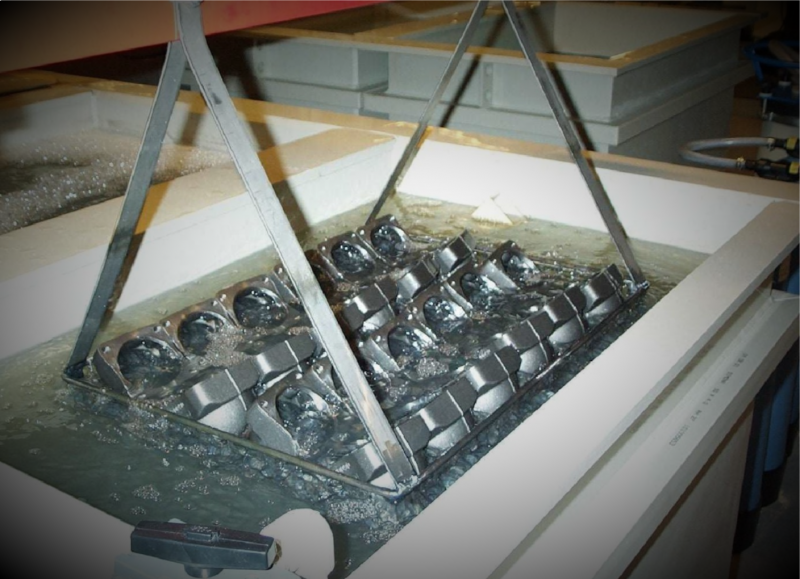
Applications
Any precision part in steel or cast iron qualifies, turned or milled. Think of gears, bolts and nuts, hydraulic parts and tooling components.
Consumables
If you switch, Phibo also supplies the fluids your line runs on.
The process fluids, the blacking paste and the protective equipment are in stock. You order them from the same partner that supplies your line.
Assistance and service
You arrange maintenance, repairs and spare parts directly with Phibo. Our own technicians do the work.
We schedule the inspection of your blacking line and follow it up. The content is agreed with you.
Spare parts come from our own warehouse. Our technicians carry out the repair.
Your operators learn to set, monitor and adjust the baths, from commissioning onwards.
Send us the material of your parts, their dimensions and the number per day. You will receive a proposal with the blacking line that suits your parts. One partner, from the first conversation to the last spare part.