Application for overhaul, maintenance and industry
Industrial paint stripping: the paint comes off, the substrate stays
Industrial paint stripping is the controlled removal of paint layers and coatings without damaging the material underneath, layer by layer where needed. Phibo supplies soft and hard blasting media and the installations, dry or wet, stationary or mobile.
- Dry blasting or wet blasting
- Stationary or mobile
- Hand blast cabinet or fully automated installation
- Surface technology specialist since 1988
How it works
Stripping paint by blasting
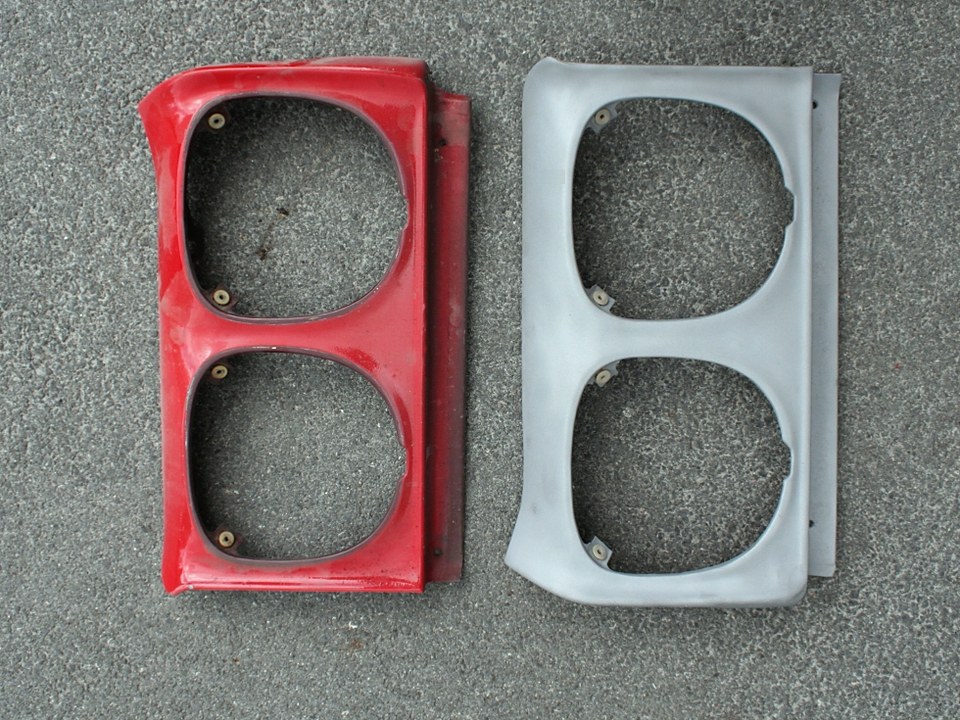
Industrial paint stripping is removing paint or coating in a controlled way without damaging the substrate of the part. That sounds simple, but in practice it is a delicate job. With the wrong method it becomes expensive and harmful to the environment. Depending on the application and the result you want, Phibo opts for a dry blast or a wet blast process.
Define layer and substrate
Which layer has to go, and what has to stay? The metal, the primer or an anodised layer.
Choose process and medium
Dry or wet, with a grain that is harder than the layer but softer than the substrate.
A test area
You set the parameters on a spot that will not be seen, before you start on the visible side.
Blast
In a cabinet, in a fully automated installation or with a mobile system on site.
Methods compared
Five ways to strip paint
The most common methods are based on chemicals. Blasting works without a chemical stripper. This is how the methods differ.
| Method | Advantage | Drawback |
|---|---|---|
| Chemical stripping | No blasting installation needed. | Can damage the parts and does not always clean thoroughly. Chemical waste and rinse water, and harsh conditions for the operator. |
| Sanding | Little equipment needed. | A lot of manual work, hard to keep even on large surfaces. |
| Aluminium oxide or steel grit | Fast, and roughens the surface for a new coating. | Removes material, too aggressive for thin aluminium and composites. |
| Plastic media | Removes the layer and leaves the substrate and the anodised layer intact. | Meant for paint and coatings, not for heavy rust or mill scale. |
| Wet blasting | Removes all the paint, or only the loose and flaking paint. Old paint layers can also be matted before overpainting. | The part comes out of the cabinet wet and is rinsed with fresh water. |
Swipe the table to the left to see all columns.
Applications
What selective paint stripping is used for
Paint stripping comes up in many industries. These are the parts we see most often.
Aircraft parts
Paint off aluminium and composites, while the anodised layer stays. More on aerospace applications.
Car bodies and vehicles
Stripping paint from body panels while keeping the gelcoat and filler.
Pumps and valves
Paint, rust and chemical deposits off in one pass, by wet blasting.
Wood, natural stone and glass
Paint and graffiti removed by air-gumming at low pressure, with the MCS². More on air-gumming wood.
Not sure which method fits? Send a photo of the part and the layer that has to go. We will tell you how best to strip it.
References
They already work with Phibo
NMBS, De Lijn, Belgian Defence, TVH, Bolier and ENGIE, among others, work with Phibo.






The installations
Which installation suits your work
Stationary or mobile, as a hand blast cabinet or as a fully automated installation. If you want your own air-gumming hall, we help with the design and supply the ventilation, transport and recovery systems.
Blast cabinets
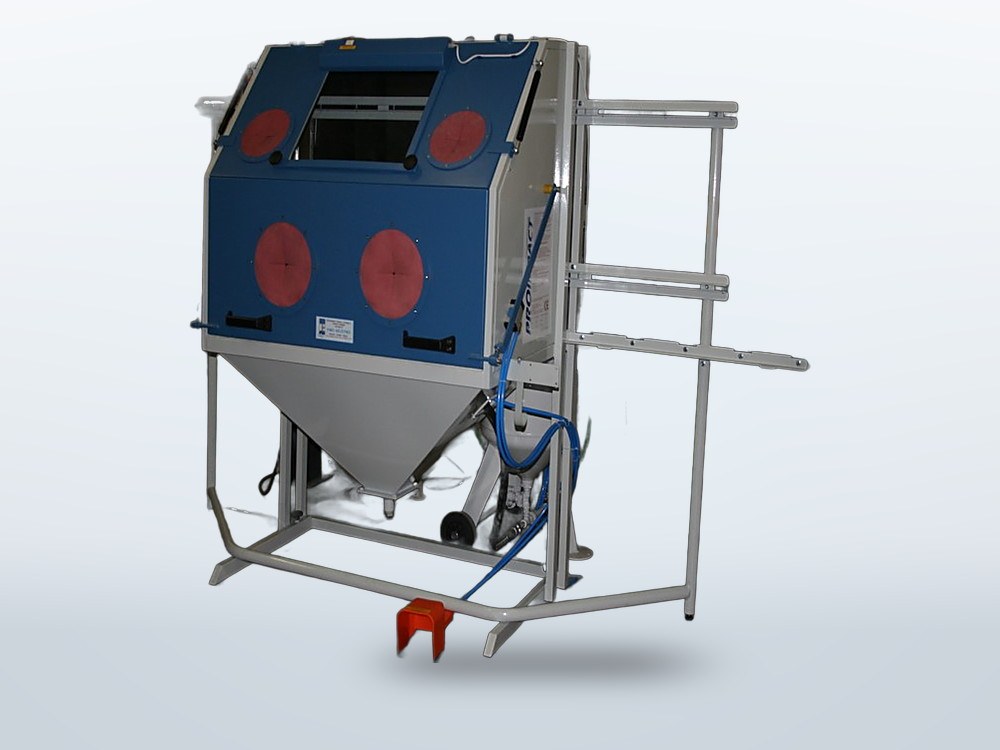
PRO-impact and ONE-impact, eleven sizes, for loose parts. The abrasive goes back into circulation through the recovery unit.
View the blast cabinets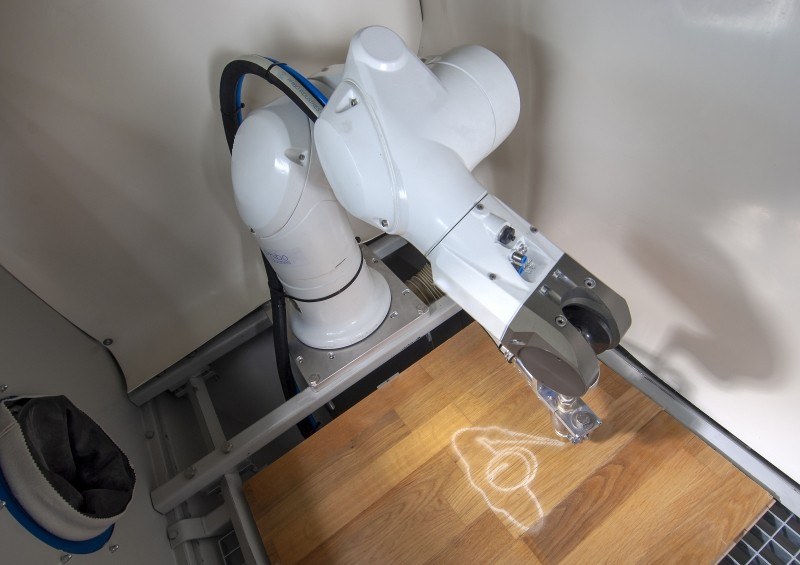
Automated dry blasting installations
Transit, satellite, barrel and oscillation, up to a robot cell.
View the automated installations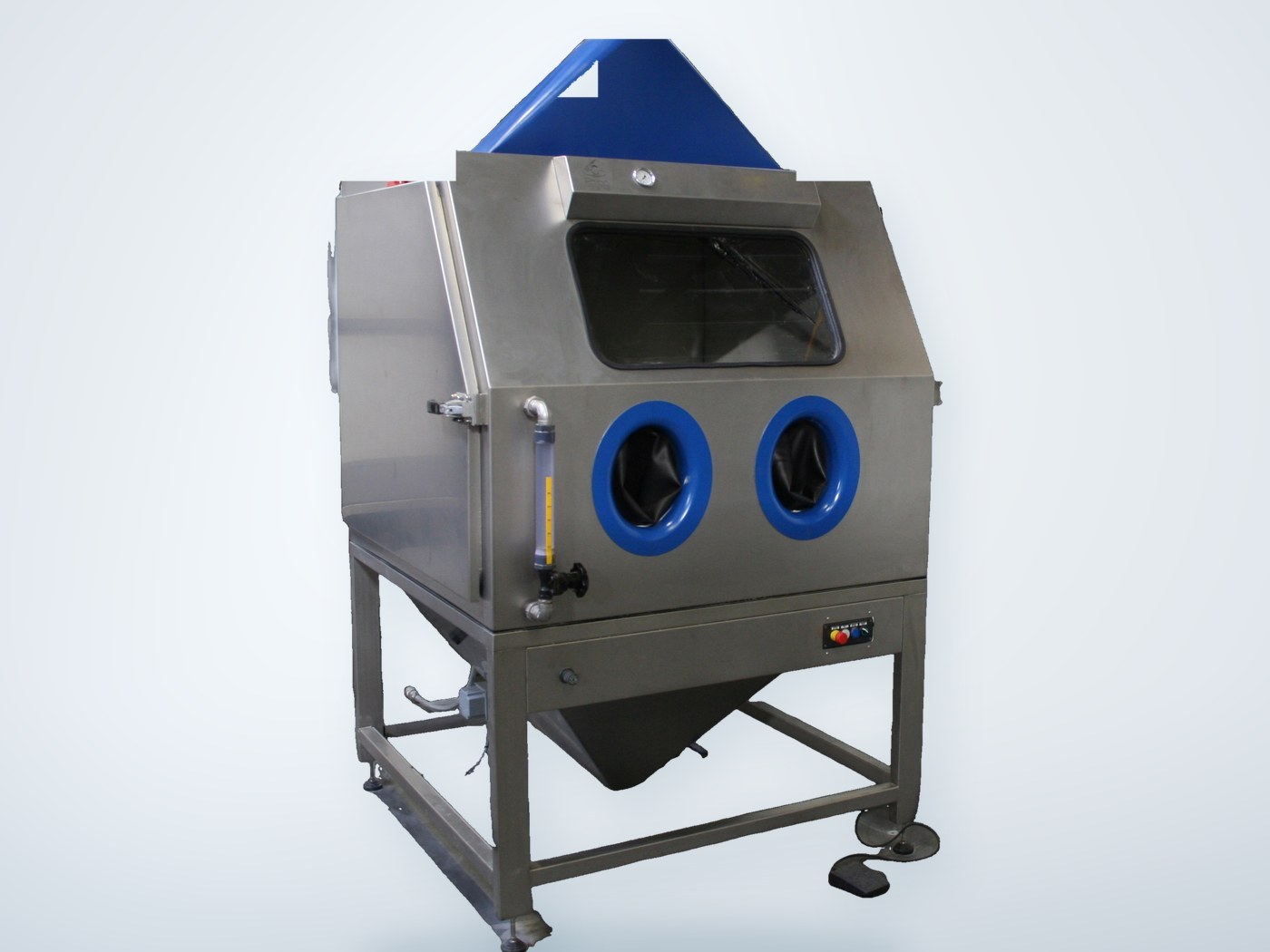
Wet blast cabinets
The compact wet blasting cabinet, the Neptuna and the wet blasting platform, without dust.
View wet blasting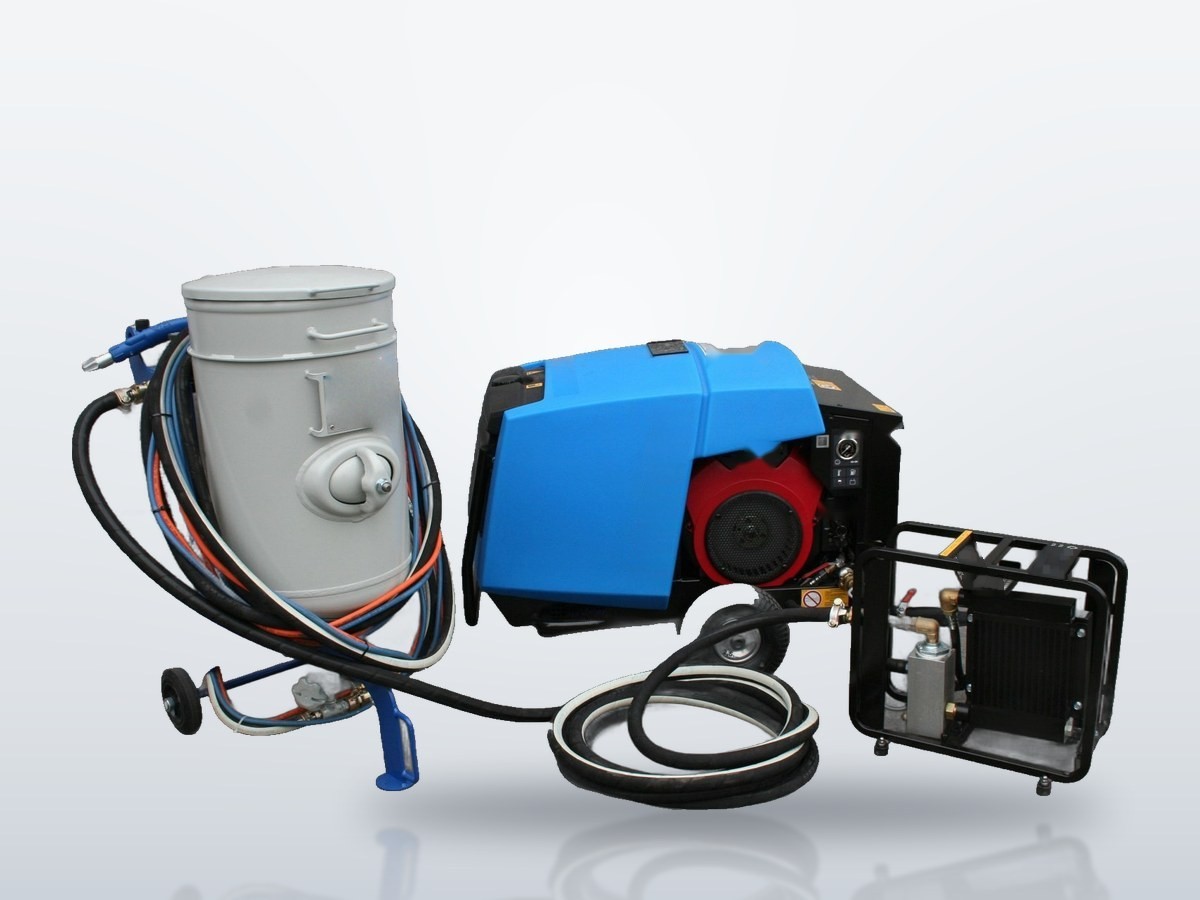
MCS² air-gumming system
Mobile blasting at low pressure, between 2.5 and 4 bar, for wood, natural stone, metal and glass.
View the MCS²Frequently asked questions
Questions about paint stripping
What is industrial paint stripping?
Industrial paint stripping is the controlled removal of paint layers and coatings without damaging the substrate of the part. At Phibo this is done by dry or wet blasting, not with chemicals.
Can paint be removed selectively without damaging the substrate?
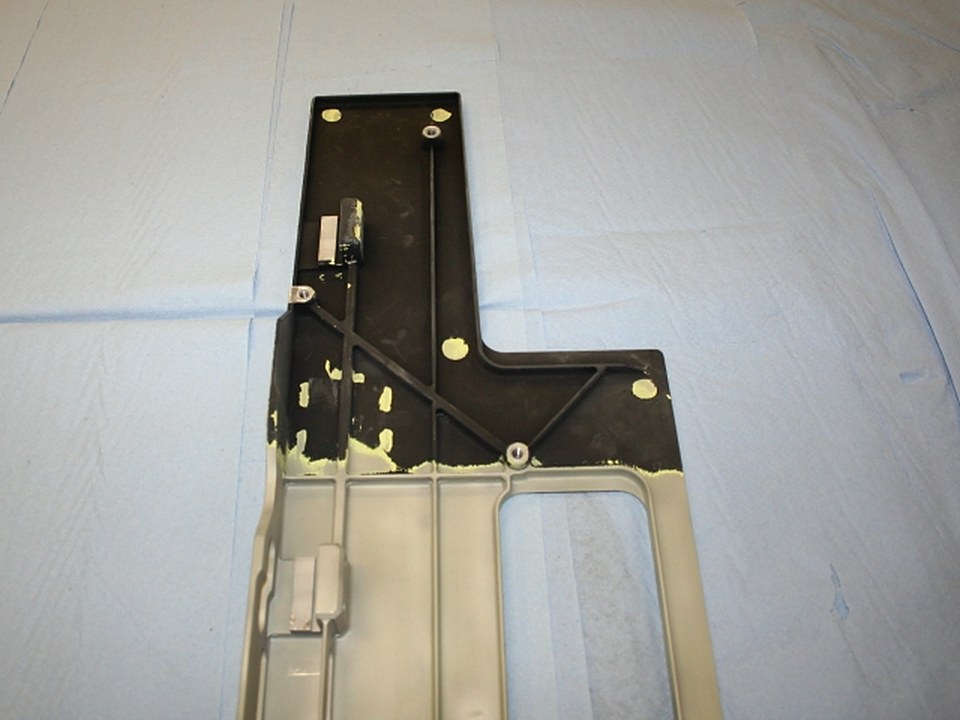
Yes. You choose a blasting medium and a pressure that knock the layer loose and spare the substrate. On the panel above, the black paint is gone and the primer stays. With wet blasting you remove the paint completely, or only the loose and flaky paint.
How do I strip paint from aluminium or composites?
With a grain that is harder than the layer but softer than the substrate. Plastic media removes paint or coating from aluminium and composites and leaves, for example, an anodised layer intact. It is blasted at low pressure, usually between 1 and 3 bar.
Can I strip aircraft wheels this way too?
Yes. Small wheels and components in a blast cabinet, large ones in a walk-in cabin or a blast room. The right abrasive depends on the substrate, as in the question above. More on aerospace applications.
When should I choose wet blasting and when dry blasting for paint removal?
If degreasing and stripping have to happen together and no dust may be released, choose wet blasting. Dry blasting also leaves a rougher profile for the next layer.
Is blasting an alternative to chemical paint strippers?
Yes. Blasting works without a chemical stripper. Chemical stripping can damage the parts and produces chemical waste and rinse water.
Which blasting media are used for paint stripping?
Plastic media, ceramic beads and walnut shell, dry and wet, and rose aluminium oxide in wet blasting. For rust and hard coatings on steel, a harder grain such as aluminium oxide or MTC Metalcleaner.
Consumables
Get the blasting media from Phibo too
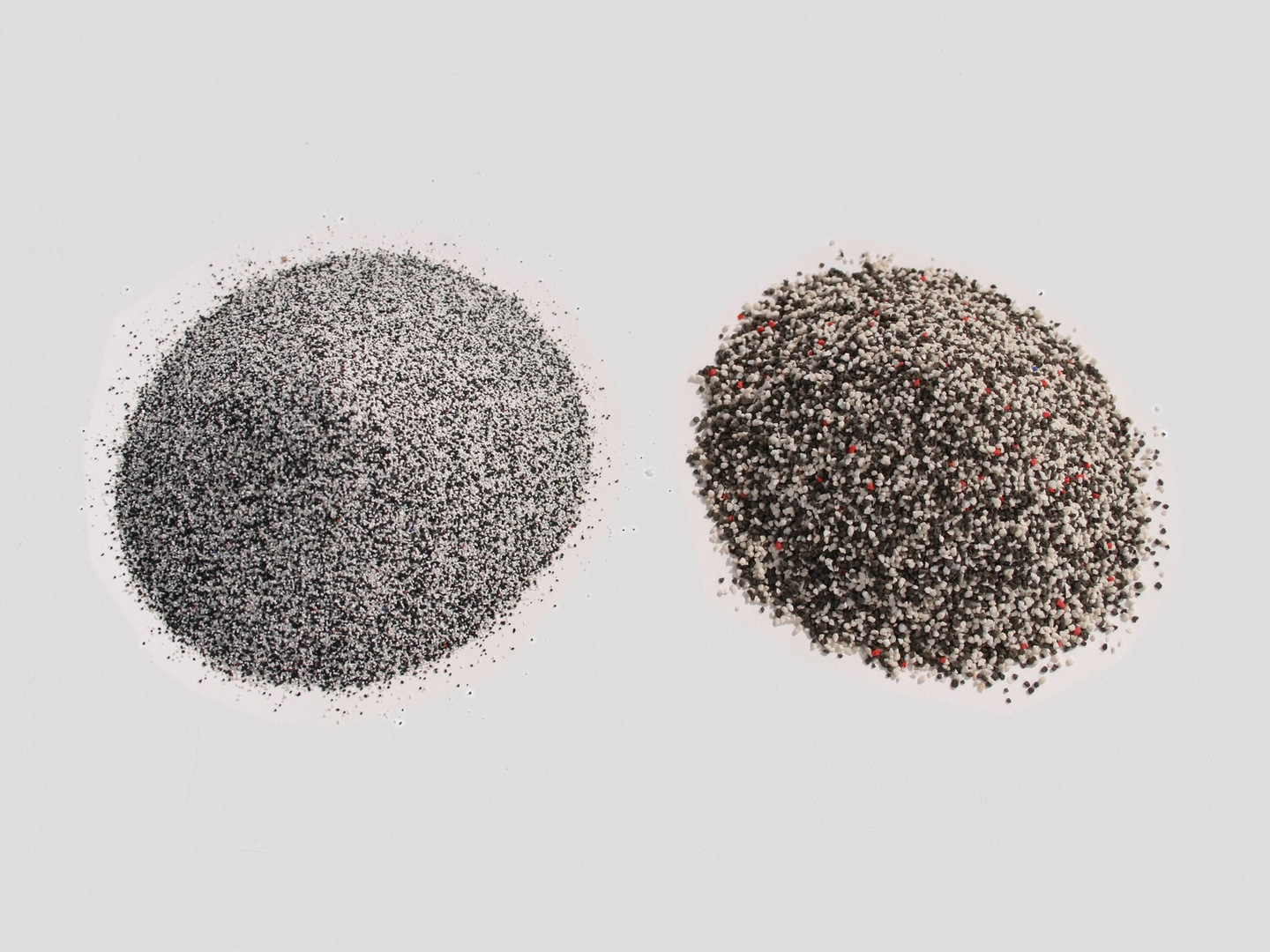
Phibo supplies plastic media, aluminium oxide, walnut shell and the other blasting media from its own warehouse, plus masking tapes and masking material. We help you choose the medium and grain size that remove the layer and spare the substrate.
Your installation keeps running
Maintenance, repair and spare parts, directly from Phibo, by our own technicians.
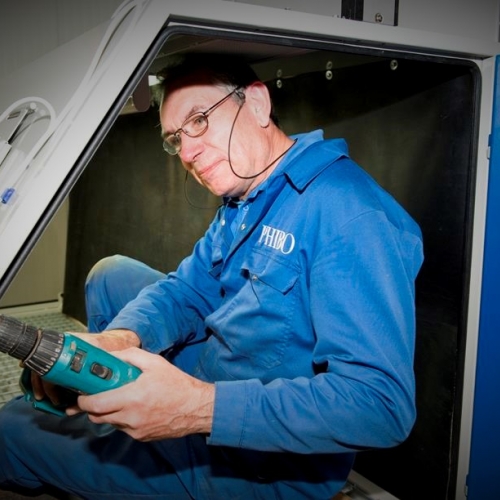
Maintenance
Preventive maintenance in our workshop or at your site. After every service your settings and consumption are reviewed.
More about this service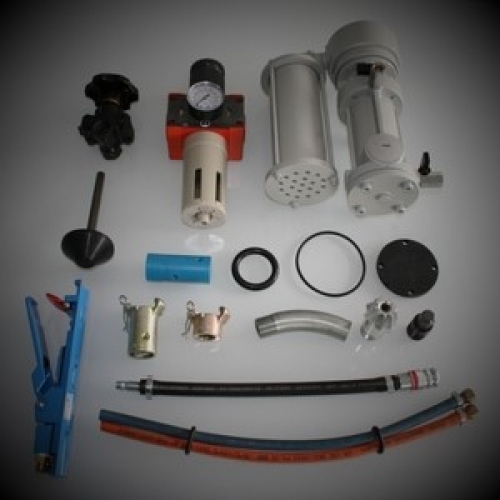
Spare parts
Blast pots, hoses, guns, rubber flaps and filter cartridges from stock. Non-standard parts we make ourselves.
More about this service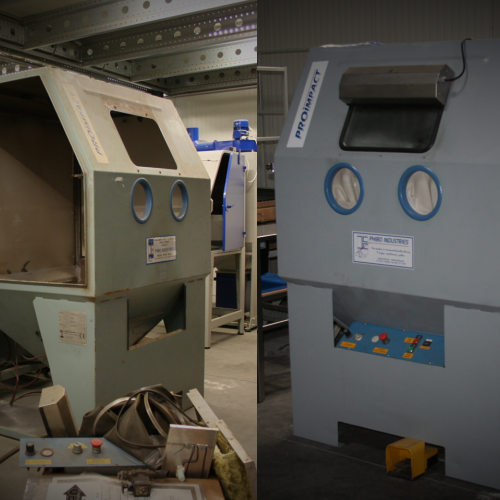
Revision and retrofitting
Modernise an existing installation or convert it to a new process. Revised second-hand installations too.
More about this service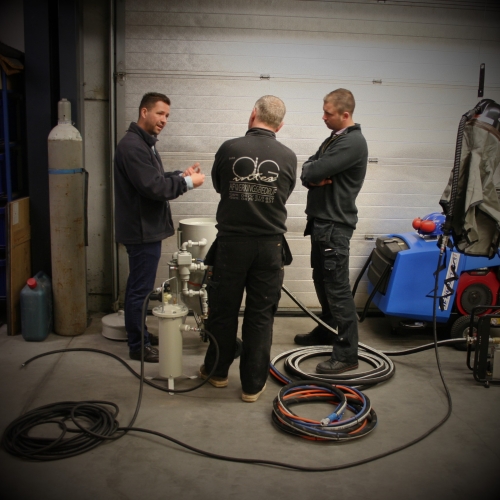
Training
Hands-on training at commissioning, standard with SublimotionProcess® and on request with the other installations. When staff change, we repeat it to suit your team.
More about this serviceRequest
We call you and go through your application
Fill in what you know below, and we go through the rest together on the phone.
- Which parts you strip, and in which material
- Which layer has to go, and what has to stay
- The dimensions of the largest part, or the surface in m²
- A photo of the part, via WhatsApp if you like