
Application for stainless steel fabricators and kitchen builders
Glass bead blasting stainless steel for a uniform satin finish
Glass bead blasting is dry blasting with small, round glass beads: it gives stainless steel a uniform satin finish and removes heat tint and oxide layers. Phibo supplies the right blast cabinet, clean glass beads, and SublimotionProcess® where it is the better fit.
- Blast cabinets from 80 cm to 2.5 metres wide
- Suction or pressure blasting, with abrasive recovery
- Iron-free glass beads from our own warehouse
- Surface technology specialist since 1988
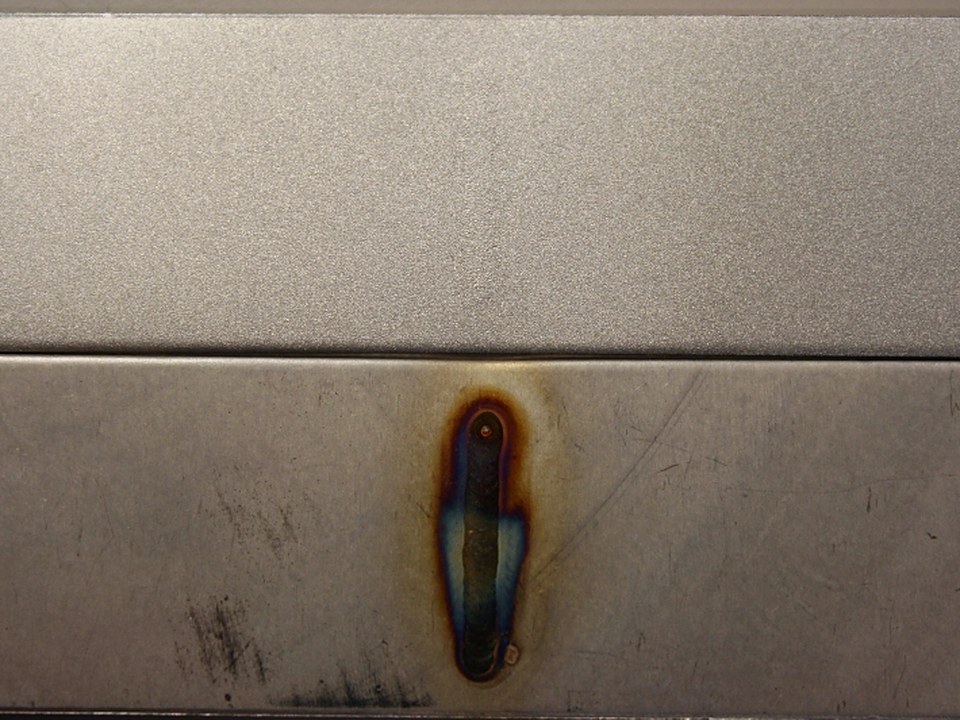
After welding
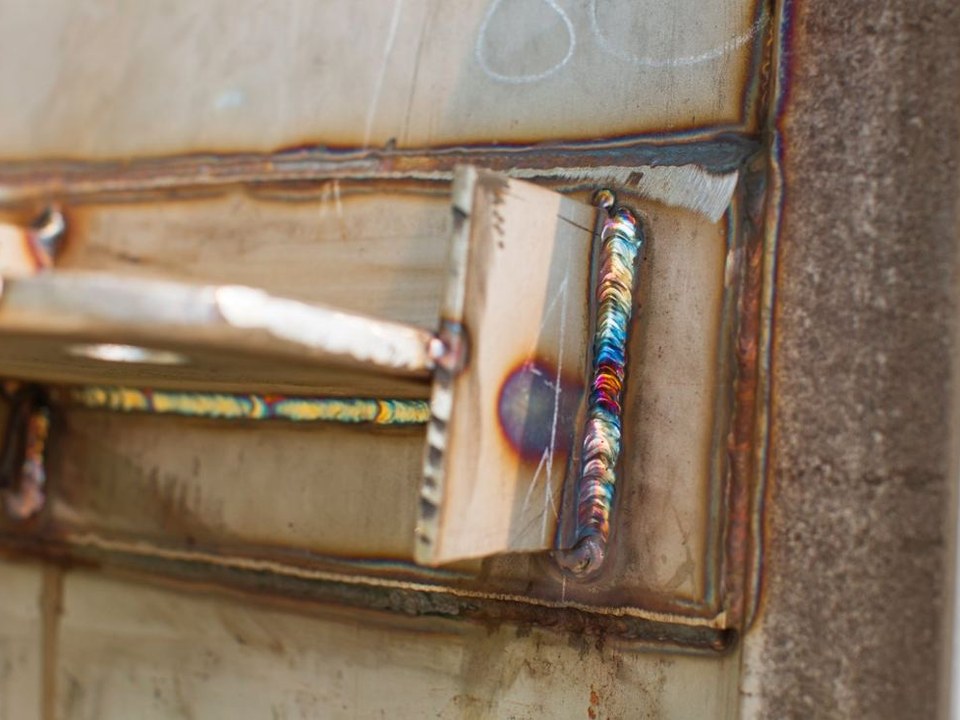
Weld discolouration, scratches and uneven gloss
After welding and bending, a stainless steel construction rarely looks uniform. Blue and brown heat tint, scratches, impurities and fingerprints. For a kitchen, a machine or a facade, the surface has to look the same everywhere.
How it works
Glass bead blasting in a blast cabinet
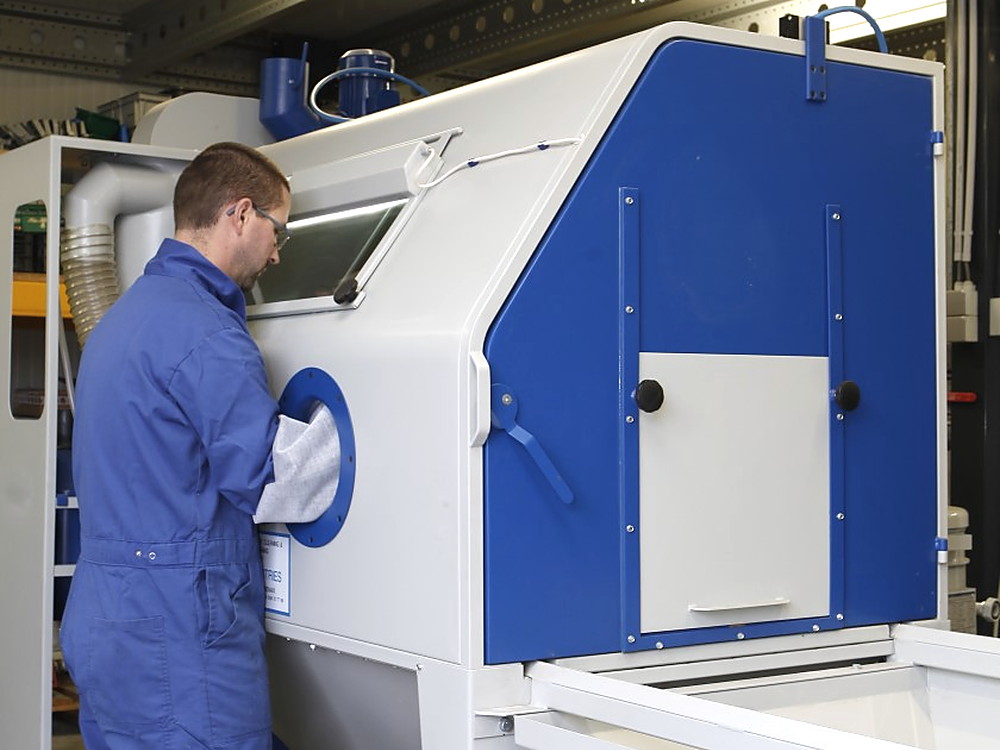
Glass bead blasting, also called bead blasting, is dry blasting with small, round glass beads. A round grain does not cut, it peens: it cleans and satin-finishes the surface without removing much material. Glass beads are iron-free, which makes them suitable for stainless steel.
Degrease
A greasy part gives a patchy result. Degrease it first.
Part in the cabinet
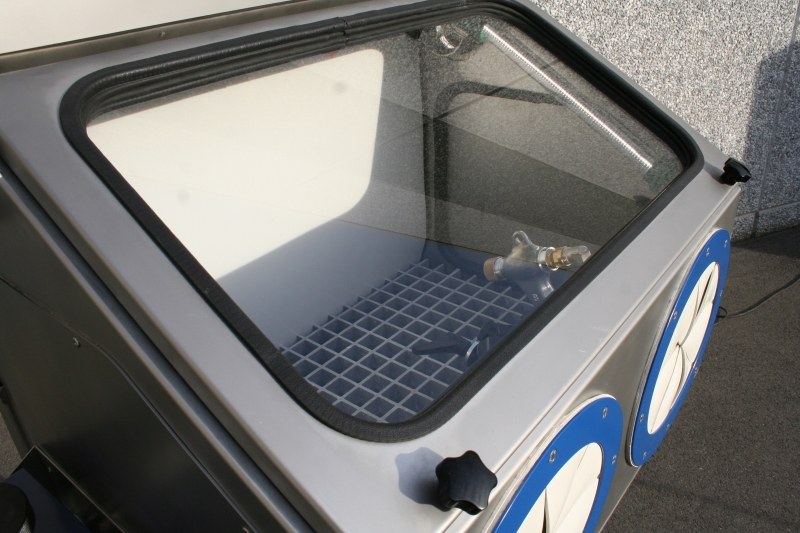
The part goes through the side door onto the work grid. You blast through the gloves of the cabinet.
Blast
Blast at an angle, between 30 and 60 degrees. The recovery unit separates dust and broken beads and sends the rest back into circulation.
Blow off and check
With the air gun inside the cabinet you blow the part clean. Check the finish, in the corners too.
Methods compared
Four ways to finish stainless steel
Each method gives a different result. For stainless steel in food or pharma, cleanability matters too.
| Method | Advantage | Drawback |
|---|---|---|
| Brushing and grinding | Targets the weld. | Manual work. A different scratch pattern from the rest of the sheet. |
| Pickling and passivation | Removes heat tint and iron particles and restores the protective oxide layer after welding. | Works with acids, which you have to handle safely and have disposed of separately. |
| Glass bead blasting | A uniform satin finish over the whole part, without acids. Heat tint and oxide layers come off, light scratches show less. | For full corrosion protection, have the weld zone pickled or passivated afterwards. |
| SublimotionProcess® | Cleans and conditions stainless steel without acids. The surface becomes smooth and homogeneous, across the weld too. | A dedicated installation, the Mistral cabinet or the Tornado platform. |
Swipe the table to the left to see all columns.
Never blast stainless steel with steel grit or with an abrasive used before on ordinary steel. The iron particles left behind cause rust stains later. Use a dedicated cabinet with clean glass beads for stainless steel.
Other work too
More than matting stainless steel
With a second cabinet and another abrasive, you do more than matt stainless steel.
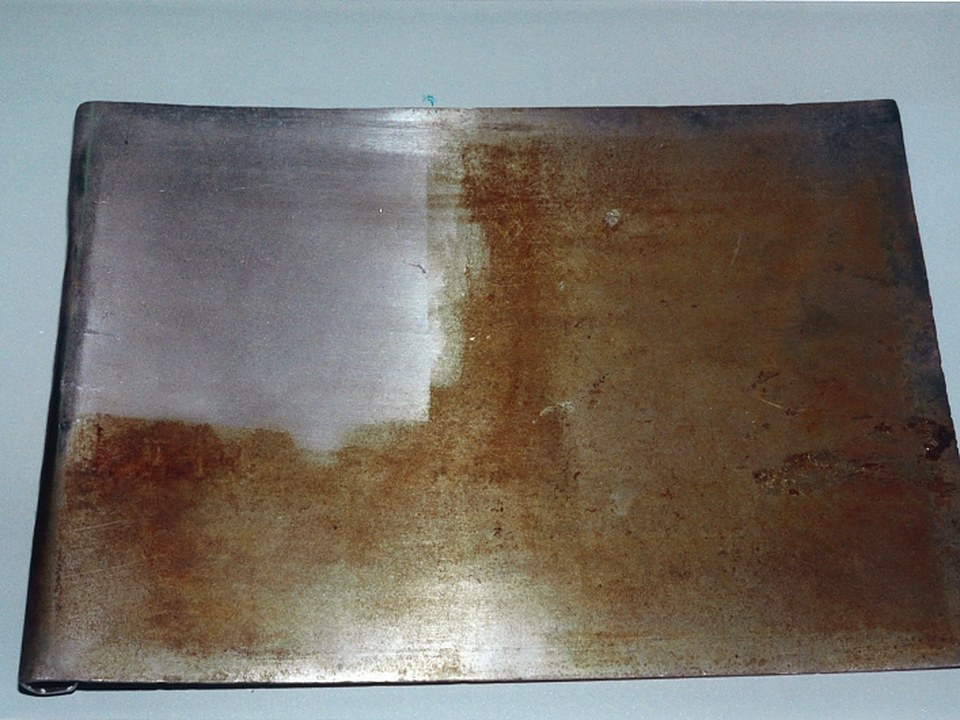
Rust and paint removal
Steel and cast iron, with an angular abrasive in a second cabinet. See industrial paint stripping.
Preparing for a coating
With an angular abrasive, a rough and clean surface that paint and powder adhere to. See surface preparation for coating.
Matting aluminium
Glass beads also give aluminium a uniform matt texture, without leaving iron behind.
Shot peening
Round grains peen the surface of parts.
Not sure which cabinet fits? Send a photo of your stainless steel parts. We will tell you which cabinet you need.
Benefits
What a blast cabinet gives you
Blasting in a closed cabinet
The dust stays in the cabinet and the filter. Your workshop stays clean.
The abrasive goes round again
The glass beads are collected and reused until they are too fine.
A uniform finish
Every sheet, tube or weld gets the same matt texture, part after part.
Suction or pressure blasting
Suction blasting for work that does not run all day, pressure blasting for continuous use.
A cabinet sized to your parts
From the compact PRO 0806 to the PRO 2510, with a blast chamber 2.5 metres wide.
No acids on the shop floor
Glass beads and compressed air, without pickling paste or acid bath.
References
They already work with Phibo
A selection of Phibo customers, including companies in food, pharma and medical.






The machines
Which cabinet suits your parts
Choose the cabinet by your largest part. The part has to pass through the door opening, which decides what you can load. If the stainless steel must be hygienic, there is SublimotionProcess®.
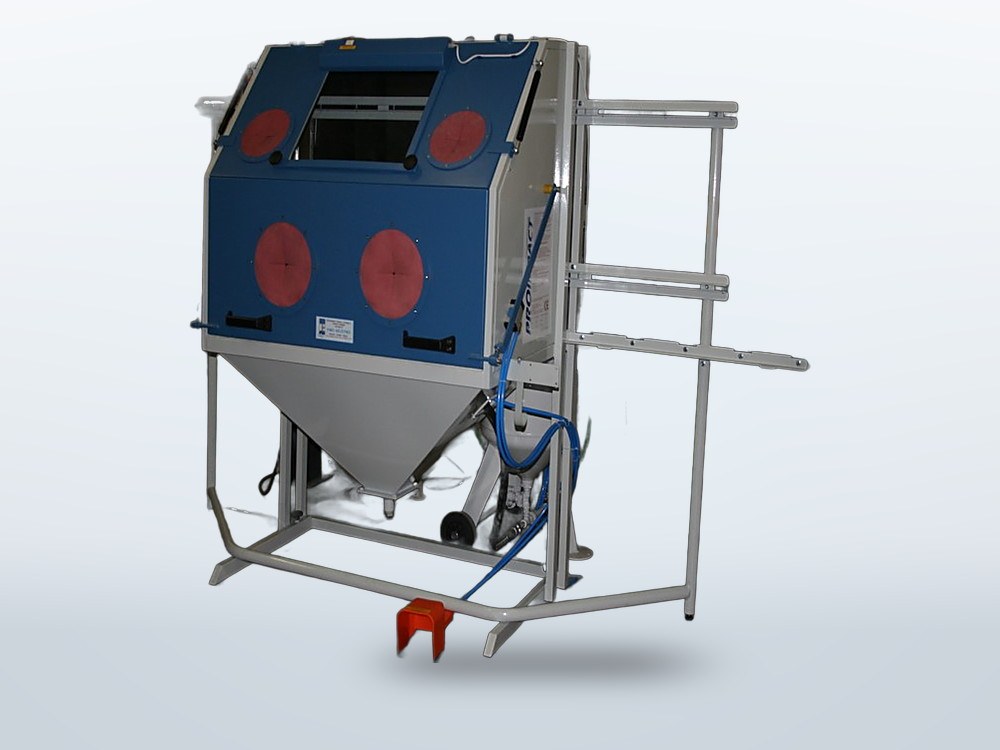
PRO-impact blast cabinets
Five sizes, from the PRO 0806 to the PRO 2510. Every size in suction (S) or pressure (P) blasting.
View the PRO-impact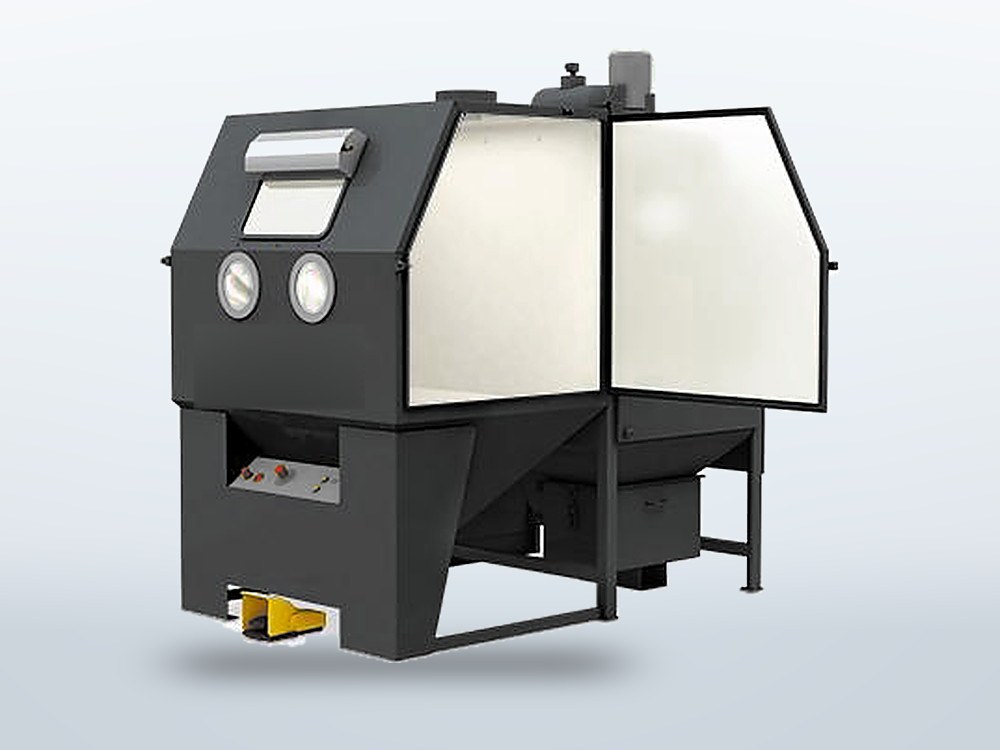
ONE-impact blast cabinets
The ONE 0907, 0909, 1310 and 1313, with a Duo version with two filter cartridges for the two large sizes.
View the ONE-impact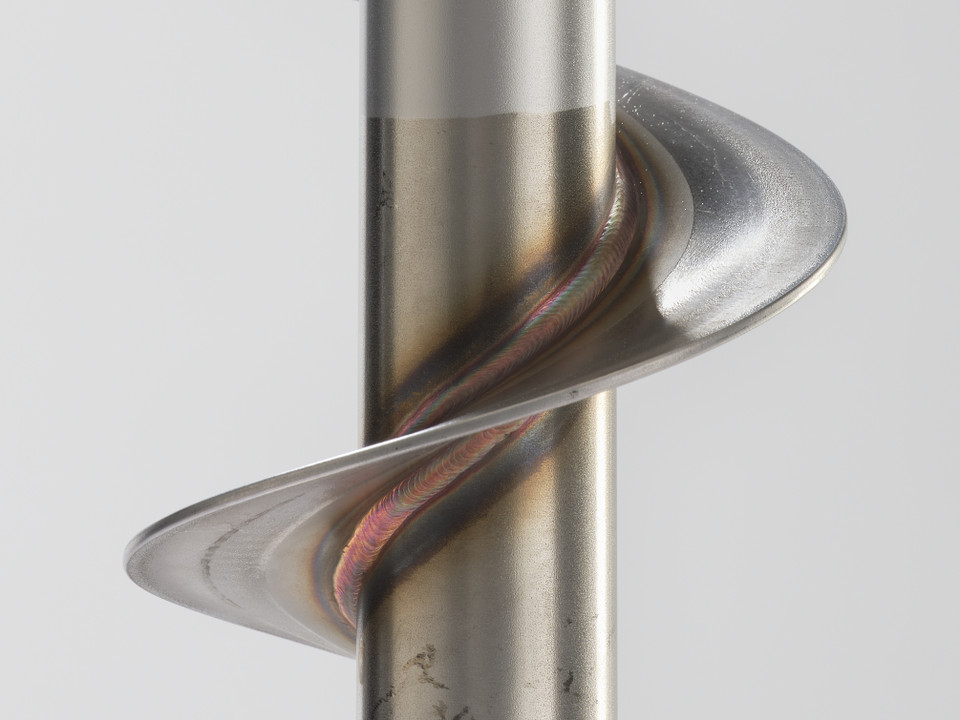
SublimotionProcess®
Hygienic finishing of stainless steel without acids, in the Mistral cabinet or on the Tornado platform.
View SublimotionProcess®The blast cabinets side by side: dimensions and weight
| Model | Blast chamber W x D x H | Weight |
|---|---|---|
| PRO 0806 | 800 x 550 x 750 mm | 100 kg |
| ONE 0907 | 910 x 700 x 965 mm | 350 kg |
| ONE 0909 | 925 x 905 x 995 mm | 460 kg |
| PRO 1208 | 1150 x 750 x 850 mm | 150 kg |
| ONE 1310 | 1290 x 1020 x 1150 mm | 580 kg |
| ONE 1313 | 1290 x 1320 x 1150 mm | 650 kg |
| PRO 1510 | 1390 x 1000 x 970 mm | 200 kg |
| PRO 2010 | 2000 x 1000 x 970 mm | 250 kg |
| PRO 2510 | 2500 x 1000 x 950 mm | 350 kg |
Swipe the table to the left to see all columns.
Approximate values from the technical data sheets. All data per model is on the blast cabinets page.
Frequently asked questions
Questions from stainless steel fabricators
Does glass bead blasting remove weld discolouration completely?
It removes the visible heat tint and gives a uniform look. Under the discolouration lies a chromium-depleted layer, and that does not always disappear completely. For full corrosion protection, have the weld zone pickled or passivated afterwards.
Do I still need to passivate stainless steel after glass bead blasting?
For the weld zone, yes, if it needs full corrosion protection. Glass bead blasting gives the whole part a uniform finish without acids, but it does not replace pickling or passivation. If the stainless steel must be hygienic and you want to avoid acids, look at SublimotionProcess®.
How do you avoid iron contamination when blasting stainless steel?
Use iron-free glass beads that have never been used on ordinary steel, and blast stainless steel in a dedicated cabinet. Steel grit and steel shot leave iron particles in the surface, and those rust later.
Which glass bead size should I choose?
Glass beads come in nine grain sizes, covering 0 to 850 µm. Choose the finest size that still does the job. A sample of the finish you are after helps us choose together.
Is a bead blasted surface easy to clean?
The peening effect leaves small peaks in the surface. In the cleanability test of the EHEDG laboratory ACTALIA, traces of micro-organisms remained on glass bead blasted stainless steel after CIP cleaning. For stainless steel in food and pharma, there is SublimotionProcess®.
How much compressed air do I need to bead blast stainless steel?
That depends on the cabinet, the nozzle and the pressure. We calculate it with you, and check whether your compressor is sufficient.
Consumables
Get the glass beads from Phibo too
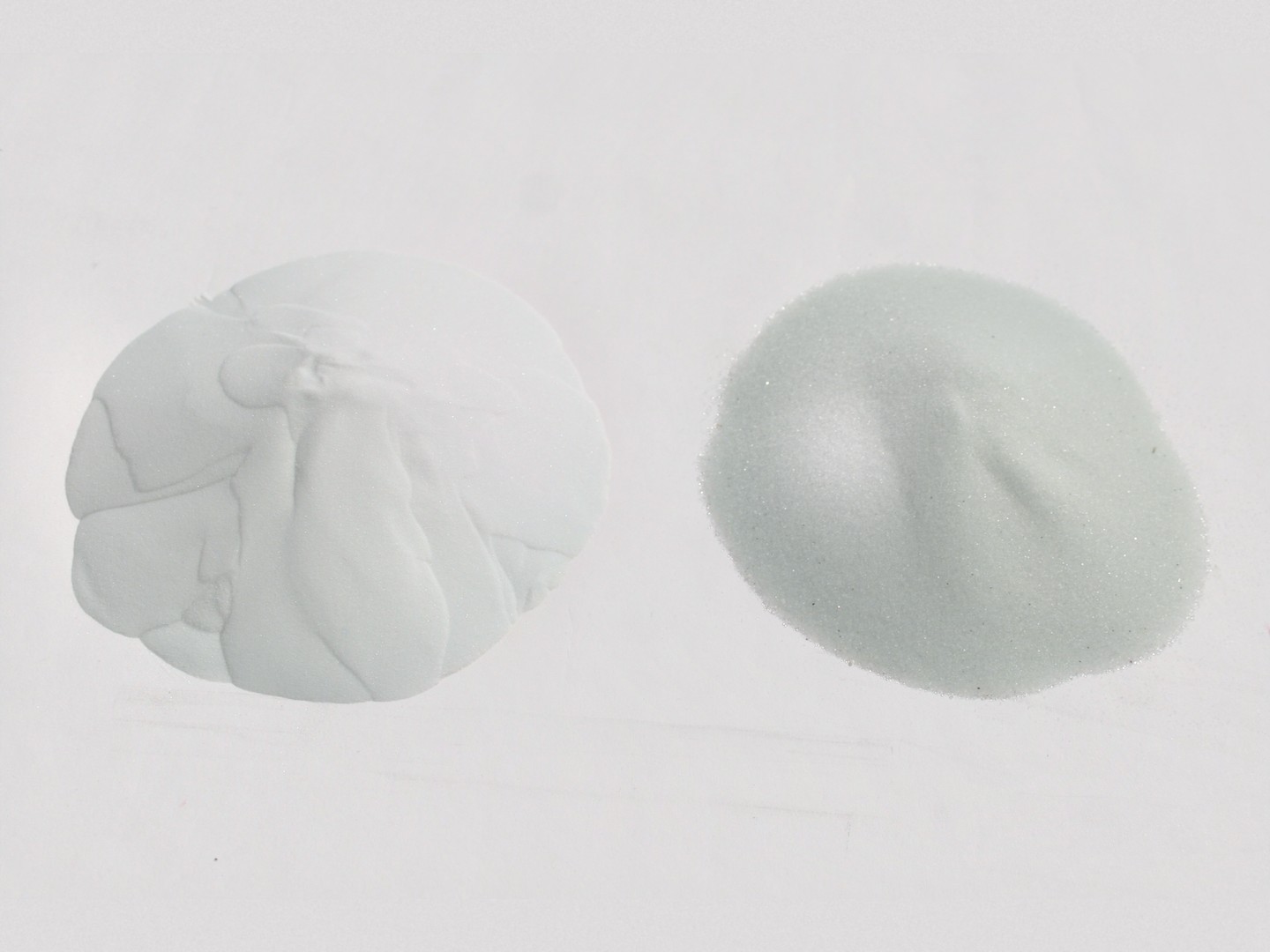
Phibo supplies glass beads and ceramic beads from its own warehouse, round and iron-free. We help you choose the grain size for the finish you are after. All blasting media at a glance.
Your installation keeps running
Maintenance, repair and spare parts, directly from Phibo, by our own technicians.
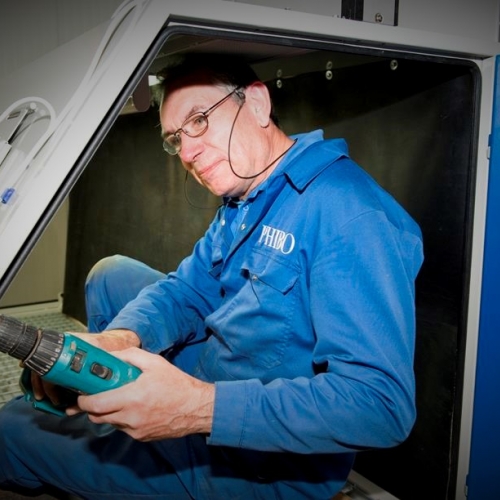
Maintenance
Preventive maintenance in our workshop or at your site. After every service your settings and consumption are reviewed.
More about this service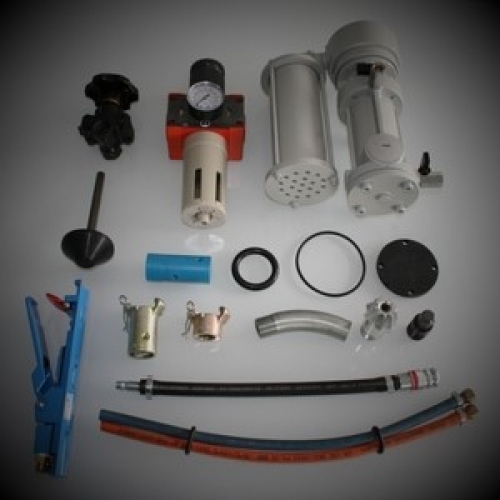
Spare parts
Blast pots, hoses, guns, rubber flaps and filter cartridges from stock. Non-standard parts we make ourselves.
More about this service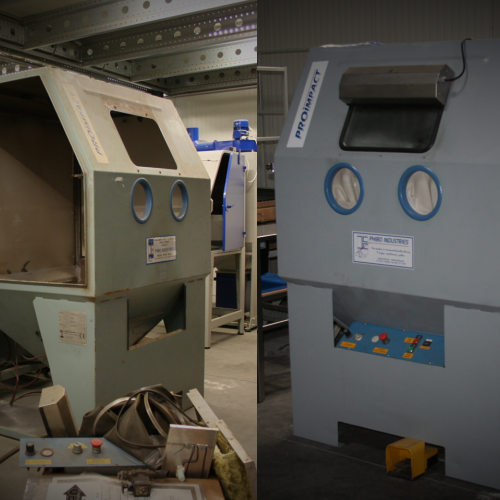
Revision and retrofitting
Modernise an existing installation or convert it to a new process. Revised second-hand installations too.
More about this service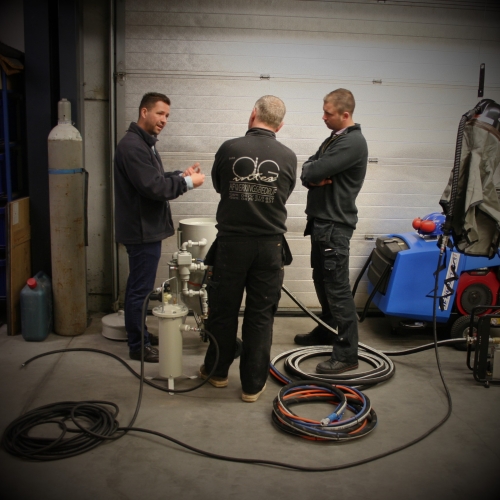
Training
Hands-on training at commissioning, standard with SublimotionProcess® and on request with the other installations. When staff change, we repeat it to suit your team.
More about this serviceRequest
We call you and go through your application
Fill in what you know below, and we go through the rest together on the phone.
- Which parts you blast and how large the largest part is
- How many parts per day or per week
- The finish you are after, with a photo or a sample if you have one
- Whether you already have compressed air, and how much