
Application for machine building, tooling and precision engineering
Cold chemical blacking at room temperature
Chemical blacking at room temperature, also called cold blackening, turns steel and cast iron parts black in process baths, without a boiling bath or dimensional change. The Blackfast immersion process for regular work and the blacking paste for single parts.
- Blacking at around 20 °C, instead of above 140 °C
- No build-up and no material loss
- One minute in the blacking bath is enough
- Surface technology specialist since 1988
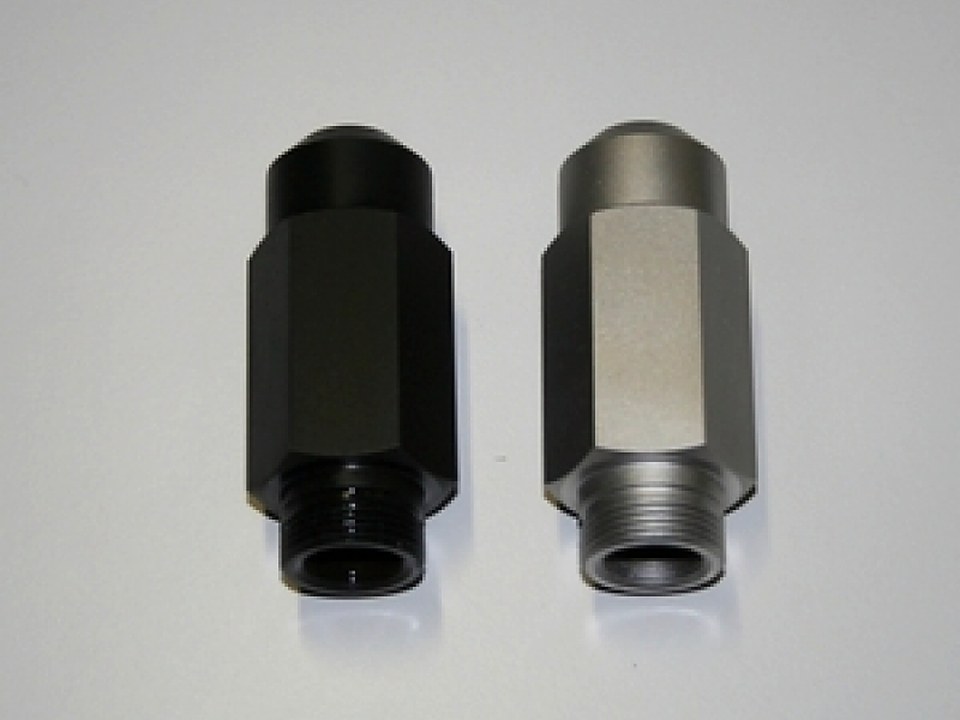
How it works
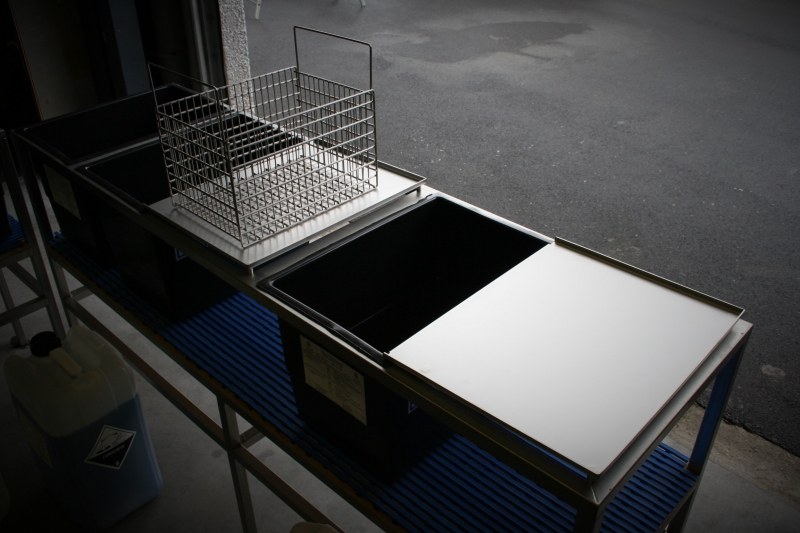
Blacking a steel part in four baths
In the Blackfast process, steel and cast iron parts go through four process baths in a fixed order, at around 20 °C. Hot blacking happens above 140 °C, in a boiling bath.
Degrease
The surface is cleaned and degreased, free of oil, grease, mill scale and rust. Without this step you will not get an even black.
Condition
After degreasing and a water rinse, the conditioner lowers the pH value of the surface.
Blacken
In the blacking fluid, one minute is enough for a uniform black surface. Above 20 °C or with special materials, thirty seconds can be enough.
Protect
A water-displacing oil drives out the water and leaves a protective layer after drying.
Methods compared
Three ways to blacken steel
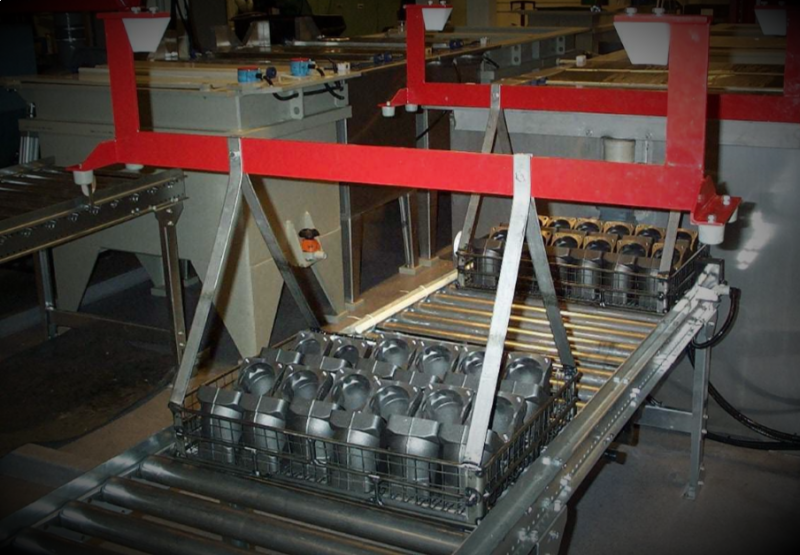
Hot blacking is often done by a subcontractor. At room temperature you blacken in-house, by immersion or with the blacking paste.
| Method | Advantage | Drawback |
|---|---|---|
| Hot blacking, above 140 °C | Possible through a subcontractor, without your own installation. | A boiling bath with splashes and fumes. Distortion is possible, and cast iron turns brown. |
| Blackfast immersion process | One minute in the blacking bath, no dimensional change, cast iron included. The system stays ready to run. | Needs a blacking line with process tanks in your workshop. |
| Blacking paste | No bath needed. After thorough degreasing you apply the paste with a brush. | Manual work, meant for single parts and local touch-ups. |
Swipe the table to the left to see all columns.
If you blacken parts regularly, the immersion process is the better choice. If you only treat a part now and then, the blacking paste is enough.
Advantages
What room temperature blacking gives you
No dimensional change
No build-up and no material loss, even on fits and threads.
Simple and fast
One minute in the blacking bath, with safe chemicals that are simple to use.
A deep, even black
A uniform deep black colour with low light reflection, on cast iron too.
Good lubricating properties
The blackened surface has good lubricating properties, which matters for gears and moving parts.
Better corrosion resistance
The blackened surface resists corrosion better, enough for indoor use.
Cost-effective
No boiling bath and no complex extraction. Start-up and running costs stay low.
Applications
Which parts you blacken
The process suits any precision part in steel or cast iron, turned or milled, in machine building, tooling, precision engineering and hydraulics.
Gears
Turned or milled, the teeth stay true to size.
Bolts and nuts
No build-up on the threads, so bolt and nut still fit together.
Hydraulic parts
The original dimensions and fits stay unchanged.
Tooling components
Cast iron parts turn deep black too, not brown.
Not sure your part is suitable? Send a photo of the part. We'll tell you whether the immersion process or the blacking paste fits.
References
They already work with Phibo
A selection of Phibo customers, including companies in the metals and steel industry.






Blackfast
From the fluids to the complete blacking line
The Blackfast process comes as an immersion process, from manual to fully automatic, and as a paste. Phibo supplies the line and the fluids.
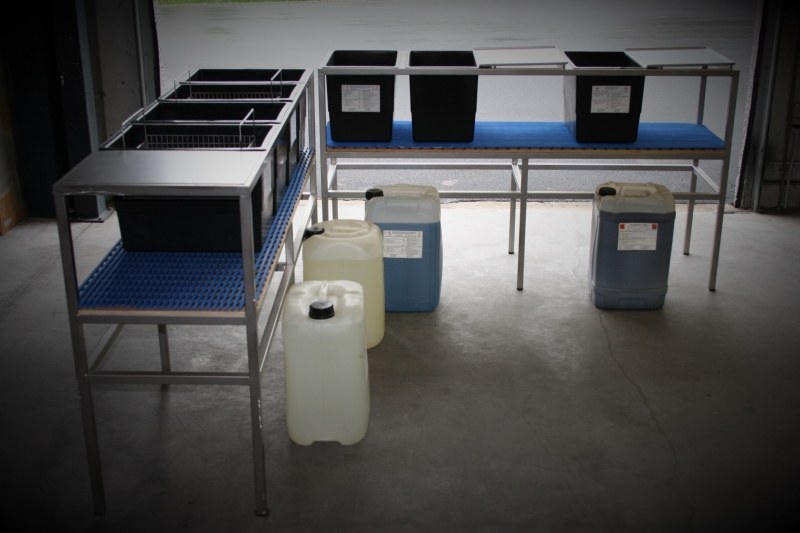
Blackfast black oxide
The immersion process and the blacking paste side by side, with the applications.
View Blackfast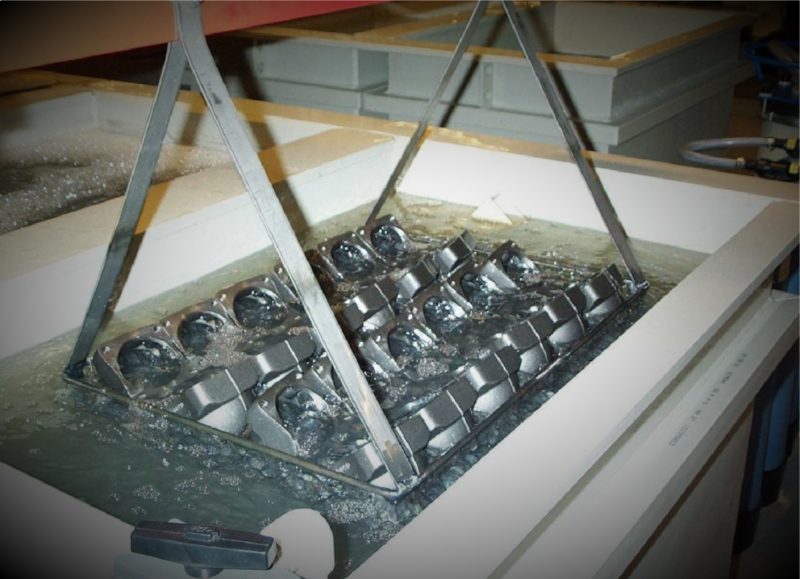
Standard 25 litre blacking line
The entry-level set-up for blacking parts up to 300 x 200 x 200 mm by hand.
View the line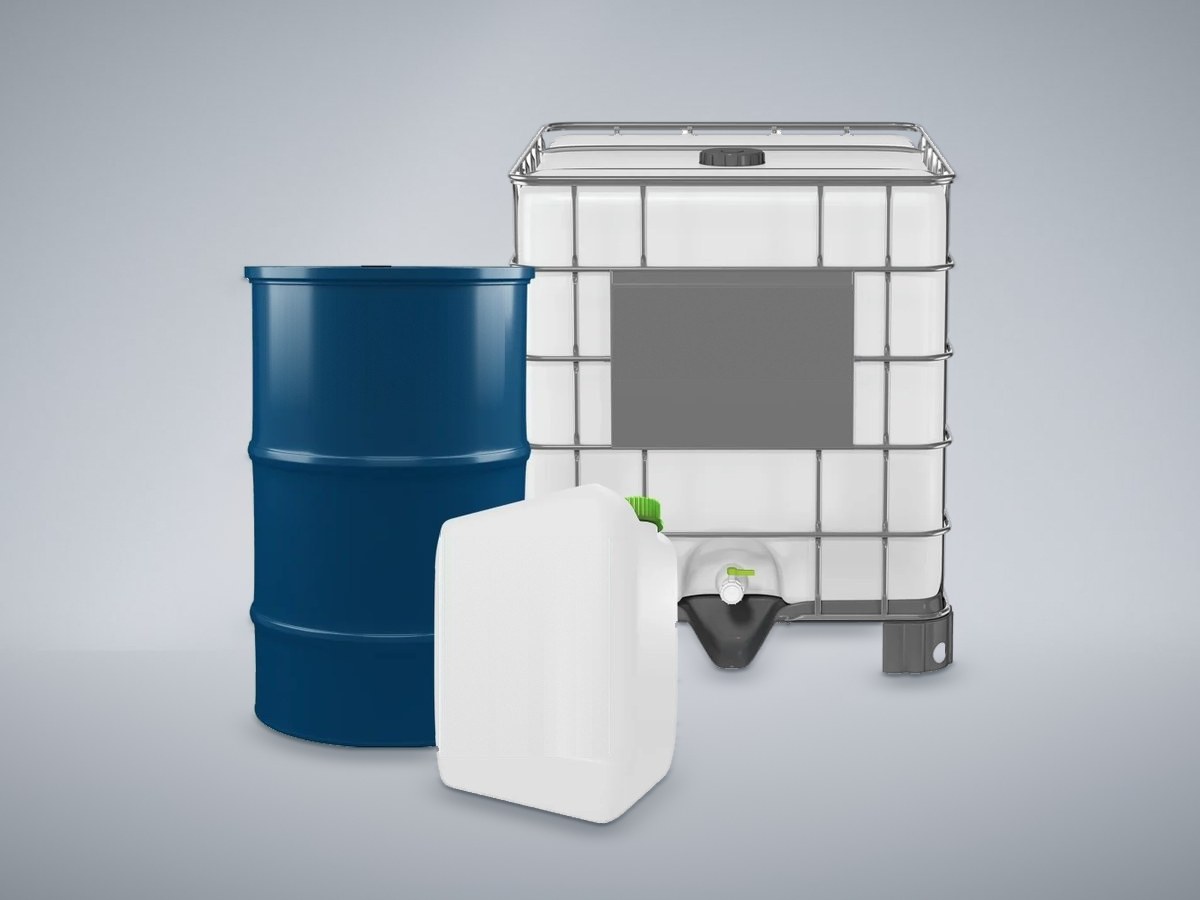
Process fluids
Degreaser, conditioner, blacking fluid and corrosion protector, plus the process tanks.
View the fluids
Versus hot blacking
Nine differences, from temperature to the colour of cast iron.
View the comparisonFrequently asked questions
Questions about chemical blacking
How do I blacken steel parts at room temperature?
The parts go through four process baths in a fixed order, at around 20 °C. First degreasing, then after a water rinse the conditioner, one minute in the blacking fluid, and finally a water-displacing oil that protects the surface. For single parts, you apply blacking paste with a brush after thorough degreasing.
Is cold blacking the same as black oxide?
Cold blacking, chemical blacking and room temperature black oxide are names used for blackening steel and cast iron in process baths at around 20 °C. Hot blacking works in a boiling bath above 140 °C. At Phibo the room temperature process is called Blackfast.
Does chemical blacking change the dimensions of the part?
No. There is no build-up and no material loss, even on fits and threads. That is why the process suits precision parts that are turned or milled.
How corrosion resistant is a blackened part?
Blacking improves the corrosion resistance of the surface, enough for indoor use. The last step, a water-displacing oil, leaves a protective layer after drying.
When should I choose the immersion process and when the blacking paste?
If you blacken parts regularly, choose the immersion process, a series of process baths that is always ready to run, by hand, semi-automatically or fully automatically. If you only treat a part now and then, or want to touch up a machined area, use the blacking paste.
Can cast iron be blackened too?
Yes. At room temperature cast iron takes on a uniform deep black colour. In hot blacking, cast iron turns brown.
Consumables
Get the fluids from Phibo too
Phibo supplies the Blackfast blacking fluids in 25 litre cans and the blacking paste in 5 kg buckets, usually from stock. View the cleaners and blacking fluids. If your parts need thorough cleaning first, you will find the techniques under degreasing and cleaning parts.
Your installation keeps running
Maintenance, repair and spare parts, directly from Phibo, by our own technicians.
Maintenance
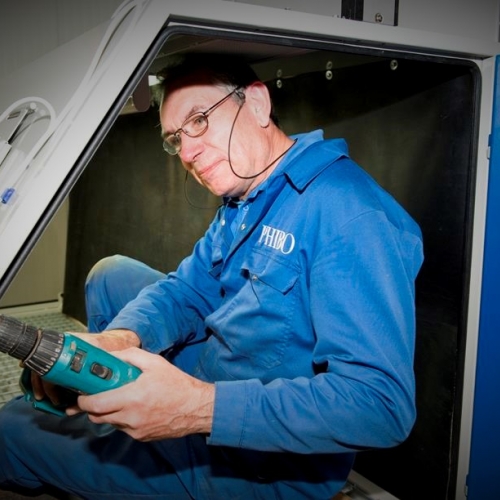
Preventive maintenance in our workshop or at your site. After every service your settings and consumption are reviewed.
More about this service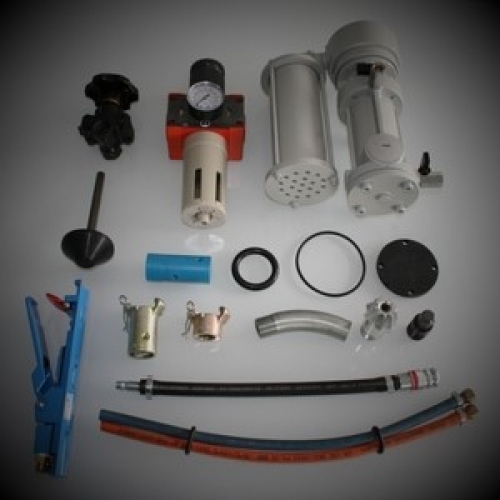
Spare parts
Blast pots, hoses, guns, rubber flaps and filter cartridges from stock. Non-standard parts we make ourselves.
More about this service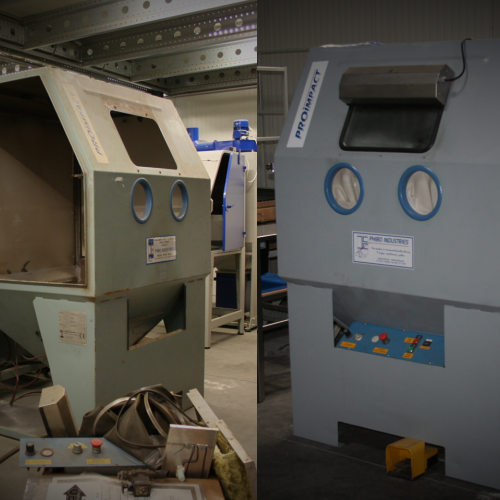
Revision and retrofitting
Modernise an existing installation or convert it to a new process. Revised second-hand installations too.
More about this service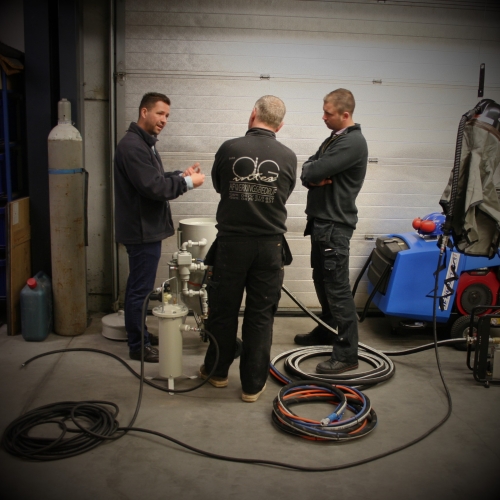
Training
Hands-on training at commissioning, standard with SublimotionProcess® and on request with the other installations. When staff change, we repeat it to suit your team.
More about this serviceRequest
We call you and go through your application
Fill in what you know below, and we go through the rest together on the phone.
- The material: steel or cast iron
- The dimensions of your largest part
- How many parts you blacken per day or per week
- A photo of the part, via WhatsApp if you like